


 Click & collect
Ще се изтрие най-старият артикул от любими и ще се добави новият
-15%
In stock
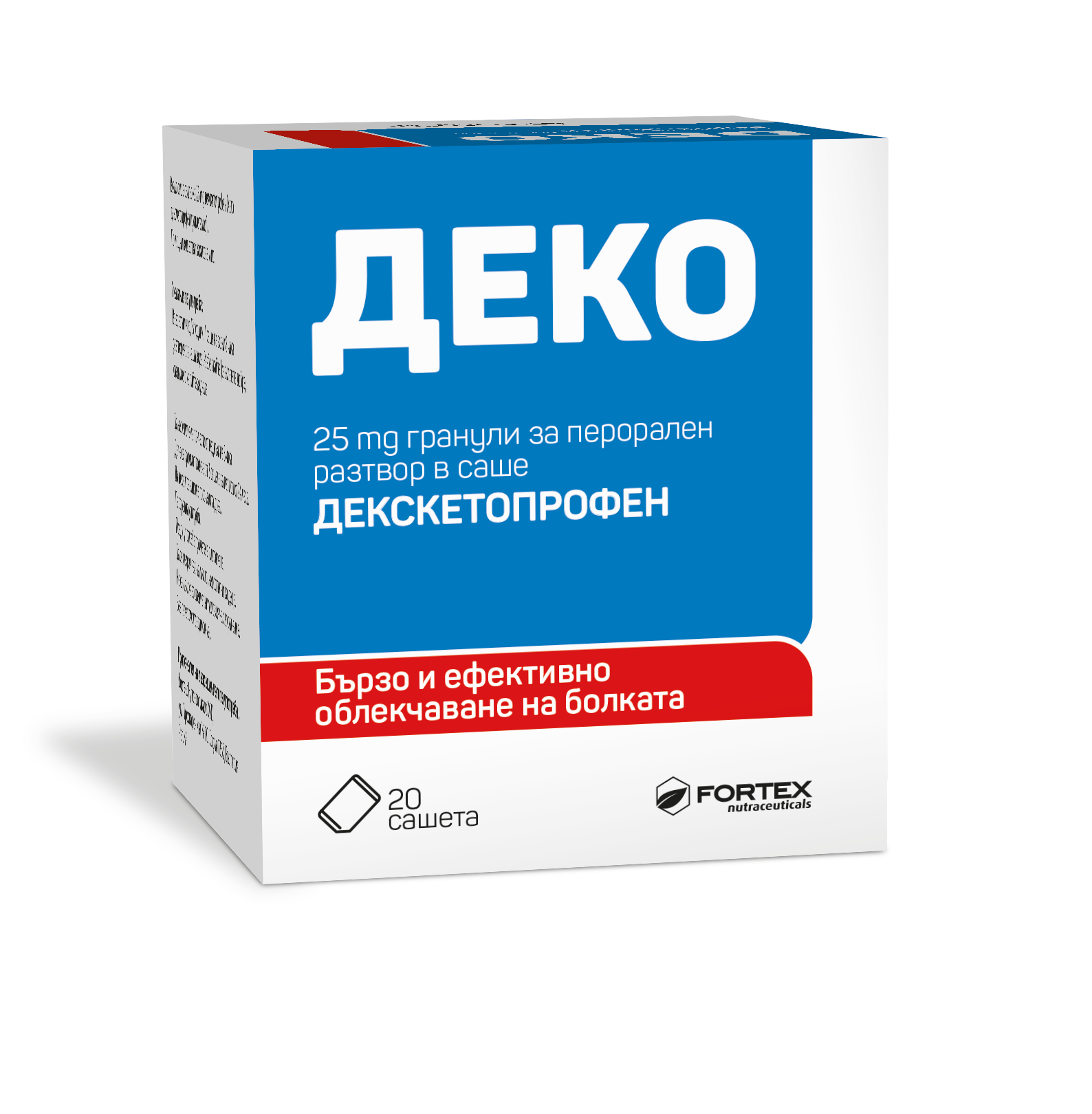
FORTEX DEKO for pain relief x 20 sachets
лекарствена информация 7.90 €
Regular price:
9.29 €
Add to Favourites
FORTEX DEKO for pain relief x 20 sachets
1. What is DEKO and what is it used for?
DEKO is an analgesic medicinal product from the group of non-steroidal anti-inflammatory drugs (NSAIDs).
DEKO is used for short-term symptomatic treatment of acute mild to moderate muscle and joint pain, painful menstruation (dysmenorrhea) and toothache.
If after 3-4 days you do not feel better or your condition worsens, you should seek medical help.
2. What you need to know before you take DEKO
Do not take DEKO if:
- you are allergic (hypersensitive) to dexketoprofen trometamol or to any of the other ingredients of DEKO (listed in point 6);
- you are allergic to acetylsalicylic acid or other non-steroidal anti-inflammatory drugs (NSAIDs);
- you have asthma or if you have had asthma attacks, acute allergic rhinitis (inflammation of the nose for a short period), nasal polyps (growths in the nose due to allergy), urticaria (skin rash), angioedema (swelling of the face, eyes, lips or tongue or respiratory failure), wheezing after taking acetylsalicylic acid or other non-steroidal anti-inflammatory drugs (NSAIDs);
- you have experienced photoallergic or phototoxic reactions (a specific reaction of reddening of the skin and/or blistering after exposure to sunlight) when taking ketoprofen (a non-steroidal anti-inflammatory drug) or fibrates (medicines used to lower blood lipid levels );
- you have peptic ulcer/stomach or intestinal bleeding or have previously had stomach or intestinal bleeding, ulcer or perforation;
- you have chronic digestive disorders (e.g. indigestion, heartburn);
- you have or have had stomach or intestinal bleeding or perforation as a result of previous use of non-steroidal anti-inflammatory drugs (NSAIDs) used for pain;
- you have an intestinal disease with chronic inflammation (Crohn's disease or ulcerative colitis);
- you suffer from serious heart failure, moderate to severe kidney problems or serious liver problems;
- you have disorders related to bleeding or blood clotting;
- you are severely dehydrated (ie if you have lost a lot of body fluids) due to vomiting, diarrhea or insufficient fluid intake;
- you are pregnant in the third trimester or breastfeeding.
Warnings and precautions
Talk to your doctor or pharmacist before taking DEKO if:
- you have an allergy or have had allergic manifestations in the past;
- you have kidney, liver or heart problems (hypertension and/or heart failure), as well as fluid retention, or if you have suffered from any of the listed problems in the past;
- you are taking diuretics or you are dehydrated and have reduced blood volume due to excessive fluid loss (e.g. frequent urination, diarrhea or vomiting);
- you have heart problems, have had a stroke or think you may be at risk of these conditions (e.g. if you have high blood pressure, diabetes, high cholesterol or are a smoker), you should discuss your treatment with your doctor or pharmacist . Medicines such as DECO may be associated with a slightly increased risk of heart attack ("myocardial infarction") or cerebrovascular accident (stroke). Any risk is more likely with high doses or long-term treatment. Do not exceed the recommended dose and duration of treatment;
- you are elderly, as you may be more prone to side effects (see point 4). If any adverse drug reaction occurs, consult your doctor immediately;
- you are a woman who has problems conceiving (DEKO can impair your reproductive capacity. Therefore, it should not be taken in case you are planning a pregnancy or having infertility tests);
- you suffer from a disorder in blood formation or the formation of blood cells;
- you suffer from systemic lupus erythematosus or mixed connective tissue disease (disorders of the immune system that affect connective tissue);
- you have had chronic intestinal inflammation (ulcerative colitis or Crohn's disease) in the past;
- you have or have suffered in the past from other stomach or intestinal disorders;
- you have chicken pox, as exceptionally NSAIDs can worsen the infection;
- you are taking other medicinal products that increase the risk of peptic ulcer or bleeding (e.g. oral corticosteroids, certain antidepressants (those of the SSRI type, so-called serotonin reuptake inhibitors)), anti-inflammatory medicinal products (e.g. acetylsalicylic acid or anticoagulants such as warfarin). In these cases, consult your doctor before taking DEKO. Your doctor may advise you to take an additional medicine to protect the stomach (eg misoprostol or medicines that suppress the secretion of stomach acid).
Children and adolescents
The safety and efficacy of DEKO in children and adolescents have not been established. Therefore, DEKO should not be taken by children and adolescents.
Other medicines and DECO
You should tell your doctor or pharmacist if you are taking, have recently taken or might take any other medicines, including medicines obtained without a prescription. Some medicines should not be taken with others or a change in dose is required if they are used at the same time.
Always inform your doctor or pharmacist if you are taking any of the following medicines at the same time as DEKO:
Combinations not recommended:
• acetylsalicylic acid, corticosteroids or other anti-inflammatory medicinal products;
• warfarin, heparin or other anticoagulants;
• lithium, used to treat certain mood disorders;
• methotrexate (a medicine used against cancer or to suppress the immune system) in high doses of 15 mg/week;
• hydantoin and phenytoin, used in epilepsy;
• sulfamethoxazole, used for bacterial infections.
Combinations that require special precautions:
• ACE inhibitors, diuretics, beta-blockers and angiotensin-II antagonists used for high blood pressure and heart problems;
• pentoxifylline and oxpentifylline, used to treat chronic venous ulcers;
• zidovudine, used to treat viral infections;
• aminoglycoside antibiotics used to treat bacterial infections;
• chlorpropamide and glibenclamide, used in diabetes;
• methotrexate used in low doses, below 15 mg/week.
Combinations to be used with caution:
• quinolone antibiotics (eg ciprofloxacin, levofloxacin) used for bacterial infections;
• cyclosporine or tacrolimus, used in the treatment of diseases of the immune system and in organ transplantation;
• streptokinase and other thrombolytic or fibrinolytic drugs, i.e. medicines to break up blood clots;
• probenecid used for gout;
• digoxin used in the treatment of chronic heart failure;
• mifepristone, used to induce abortion (termination of pregnancy);
• antidepressants from the group of selective serotonin reuptake inhibitors (SSRIs);
• antiplatelet drugs used to suppress platelet aggregation and the formation of blood clots;
• beta-blockers used for high blood pressure and heart problems.
If you have doubts about taking other medicines and DEKO, consult your doctor or pharmacist.
DECO with food, drinks and alcohol
In case of acute pain, the sachet is taken on an empty stomach, 15 minutes before a meal. This will slightly increase the effect of the medicinal product.
Pregnancy, lactation and fertility
If you are pregnant or breast-feeding, think you may be pregnant or are planning to become pregnant, ask your doctor or pharmacist for advice before using this medicine.
Do not take DECO if you are in the last three months of pregnancy, as it may harm your unborn baby or cause problems at birth. It can cause kidney and heart problems in your unborn baby. It can affect your and your baby's tendency to bleed and can cause labor to start later or take longer than expected. You should not take DEKO during the first 6 months of pregnancy, unless absolutely necessary and on the recommendation of your doctor. If you need treatment during this period or while trying to conceive, the lowest dose should be used for the shortest possible time. From the 20th week of pregnancy, DEKO can cause kidney problems in your unborn baby if taken for more than a few days, which can lead to a reduced amount of amniotic fluid that surrounds the baby (oligohydramnios). If you need treatment for more than a few days, your doctor may recommend additional follow-up.
For possible effects on female fertility, see section 2 "Warnings and precautions".
Driving and using machines
It is possible that DEKO may slightly affect your ability to drive and use machines, due to the possible occurrence of dizziness, drowsiness or visual disturbances. If you notice the appearance of such side effects, do not drive or use machines until the symptoms subside. Consult your doctor.
DEKO contains sucrose
If you have an intolerance to some sugars, consult your doctor before taking this medicine.
DEKO contains 2.414 g of sucrose per dose. It should be considered when taking by patients with diabetes mellitus.
3. How to take DEKO
Always take this medicine exactly as your doctor or pharmacist has told you. If you are not sure, ask your doctor or pharmacist.
Adults over 18 years old
Dissolve the contents of the sachet in a glass of water, mix/shake well, then drink immediately.
The recommended dose is 1 sachet (25 mg) every 8 hours, but no more than 3 sachets daily (75 mg).
Consult your doctor if after 3-4 days you do not feel better or your condition worsens. Your doctor will tell you how many sachets you should take per day and for how long. The dose of DEKO depends on the type, strength and duration of the pain.
If you are elderly or if you suffer from kidney or liver problems, you should start treatment with a total daily dose of no more than 2 sachets (50 mg).
In elderly patients, the initial dose can be increased to the total recommended daily dose (75 mg dexketoprofen) if DEKO is well tolerated by the body.
In case the pain is intense and you need quick relief, take the sachet on an empty stomach (at least 15 minutes before a meal) as it will be absorbed faster (see point 2).
Use in children and adolescents
Do not take DEKO if you are under 18 years of age.
If you have taken more than the required dose of DEKO
Tell your doctor or pharmacist straight away or go to the emergency department of the nearest hospital if you have taken more than the recommended adult dose. Do not forget to take the package of the medicinal product or the leaflet with you.
If you forget to take DEKO
Do not take a double dose to make up for a missed dose. Take the next regular dose as directed (see section 3).
If you have stopped taking DEKO
If you have any further questions about the use of this medicine, ask your doctor or pharmacist.
4. Possible side effects
Like all medicines, DEKO can cause side effects, although not everybody gets them.
Possible side effects are listed according to their frequency of occurrence. The description is made according to the occurrence of adverse drug reactions from the tablet form of dexketoprofen trometamol. DEKO granules are absorbed faster than tablets, so it is possible that the current frequency of side effects (gastrointestinal) is higher.
Common side effects: may affect up to 1 in 10 people
Nausea and/or vomiting, pain mainly in the upper abdomen, diarrhoea, digestive problems (dyspepsia).
Uncommon side effects: may affect up to 1 in 100 people
Dizziness (vertigo), dizziness, drowsiness, sleep disturbances, nervousness, headache, palpitations, flushing, inflammation of the stomach lining (gastritis), constipation, dry mouth, flatulence, skin rash, fatigue, pain, chills and chills, general weakness (fatigue).
Rare side effects: may affect up to 1 in 1,000 people
Peptic ulcer, perforation or bleeding of a peptic ulcer (which may present as vomiting blood and black stools), feeling sick, high blood pressure, slow breathing, fluid retention and peripheral edema (eg swollen ankles), swelling of the larynx, loss of appetite (anorexia), unusual feeling, itchy rash, acne, increased sweating, back pain, frequent urination, menstrual disorders, problems with the prostate, abnormalities in liver function tests (blood tests), liver cell damage (hepatitis), acute kidney failure.
Very rare side effects: may affect up to 1 in 10,000 people
Anaphylactic reaction (a hypersensitivity reaction that can also lead to loss of consciousness), open sores on the skin, mouth and genital area (Stevens-Johnson syndrome and Lyle syndrome), swelling of the face or lips and throat (angioedema ), difficulty breathing due to narrowing of the airways (bronchospasm), shallow breathing, rapid heartbeat, low blood pressure, inflammation of the pancreas, blurred vision, tinnitus (tinnitus), sensitive skin, sensitivity to light, itching, kidney problems. Decreased number of white blood cells (neutropenia), decreased number of platelets in the blood (thrombocytopenia).
Tell your doctor immediately if you experience any stomach/intestinal side effects at the start of treatment (eg stomach pain, heartburn or bleeding), if you have previously suffered from any of the side effects due to long-term use of anti-inflammatory drugs, and especially if you are elderly age.
Stop using DEKO as soon as you notice the appearance of a skin rash, lesions on the mucous membrane of the mouth or genitals, or any sign of allergy.
Fluid retention and edema (especially of the ankles and feet), increased blood pressure and heart failure have been reported during treatment with non-steroidal anti-inflammatory drugs (NSAIDs).
Medicines such as DECO are associated with a slightly increased risk of heart attack (myocardial infarction) or cerebrovascular accident (stroke).
In patients with disorders of the immune system that affect the connective tissue (systemic lupus erythematosus or mixed connective tissue disease), anti-inflammatory drugs may rarely increase the temperature, cause headache and stiff neck.
The most frequently observed side effects are gastrointestinal in origin. They may appear
peptic ulcers, perforation or gastrointestinal bleeding, sometimes fatal, especially in the elderly.
Nausea, vomiting, diarrhea, abdominal gas, constipation, indigestion, abdominal pain, black stools, vomiting blood, ulcerative stomatitis, worsening of colitis or Crohn's disease have been reported following administration.
As with other NSAIDs, hematological reactions (purpura, aplastic and hemolytic anemia and rarely - agranulocytosis and bone marrow hypoplasia) may occur.
Reporting adverse reactions
If you get any side effects, tell your doctor or pharmacist. This includes all possible side effects not described in this leaflet. You can also report side effects directly by:
The Medicines Executive Agency
St. "Damyan Gruev" #8
1303 Sofia
phone: +359 2 890 34 17
website: www.bda.bg
By reporting side effects, you can contribute to getting more information about the safety of this medicine.
5. How to store DEKO
Keep out of the reach of children.
This medicinal product does not require special storage conditions.
Do not use this medicine after the expiry date which is stated on the carton and sachets after EXP. The expiration date corresponds to the last day of the specified month.
Do not dispose of medicines down the drain or in the household waste container. Ask your pharmacist how to dispose of medicines you no longer use. These measures will help protect the environment.
6. Contents of the package and additional information
What does DEKO contain?
- Active substance: each sachet of granules for oral solution contains 25 mg of dexketoprofen (as dexketoprofen trometamol).
- Excipients: ammonium glycyrrhizate, neohesperidin-dihydrochalcone, sucrose, colloidal anhydrous silicon dioxide, lemon flavor.
What DEKO looks like and what the package contains
Granules for oral solution are available as unit doses in heat-sealed triple layer sachets (PE/Al/PAP).
DEKO is available in packages containing 10 and 20 sachets.
Not all types of packaging can be marketed.
Marketing Authorization Holder and Manufacturer
Fortex Nutraceuticals Ltd
St. Cool corner #10,
Sofia 1362, Bulgaria
Express Delivery (within 2 hours)
- Valid only for the city of Sofia
- Valid only for orders over €25.56 | 50.00 BGN
- Valid only for cash on delivery (cash or card payment upon receipt)
Delivery to a Pharmacy
- Completed within up to 2 business days
- Valid for Sofia, Bozhurishte, and Mramor
- Free delivery
- Valid only for online payment
Courier Delivery to an Address
- Completed within up to 3 business days
- €2.30 | 4.50 BGN for orders under €25.56 | 50.00 BGN
- Free for orders over €25.56 | 50.00 BGN
Delivery to a Speedy Office
- Completed within up to 3 business days
- €2.30 | 4.50 BGN for orders under €25.56 | 50.00 BGN
- Free for orders over €25.56 | 50.00 BGN
BOX NOW
- Completed within up to 3 business days
- €1.53 | 2.99 BGN for orders under €25.56 | 50.00 BGN
- Free delivery for orders over €25.56 | 50.00 BGN
* Delivery times may change during large-scale campaigns and busy periods (Black Friday, public holidays, etc.).
* When ordering to a Speedy office, the customer has 5 business days from the delivery date to collect their order. After this period, the order is canceled and returned to the warehouse at subra.bg.

Express delivery for Sofia city Learn more

Free shippingover 50.00 lv / 25.56 €

Click and collect Learn more

Check the shipment Learn more
Book and collect from pharmacy
Availability in store
FORTEX DEKO for pain relief x 20 sachets
Please add your email, to receive notification when the product is in stock