


 Click & collect

Ще се изтрие най-старият артикул от любими и ще се добави новият
Prescription drugs

Coming soon
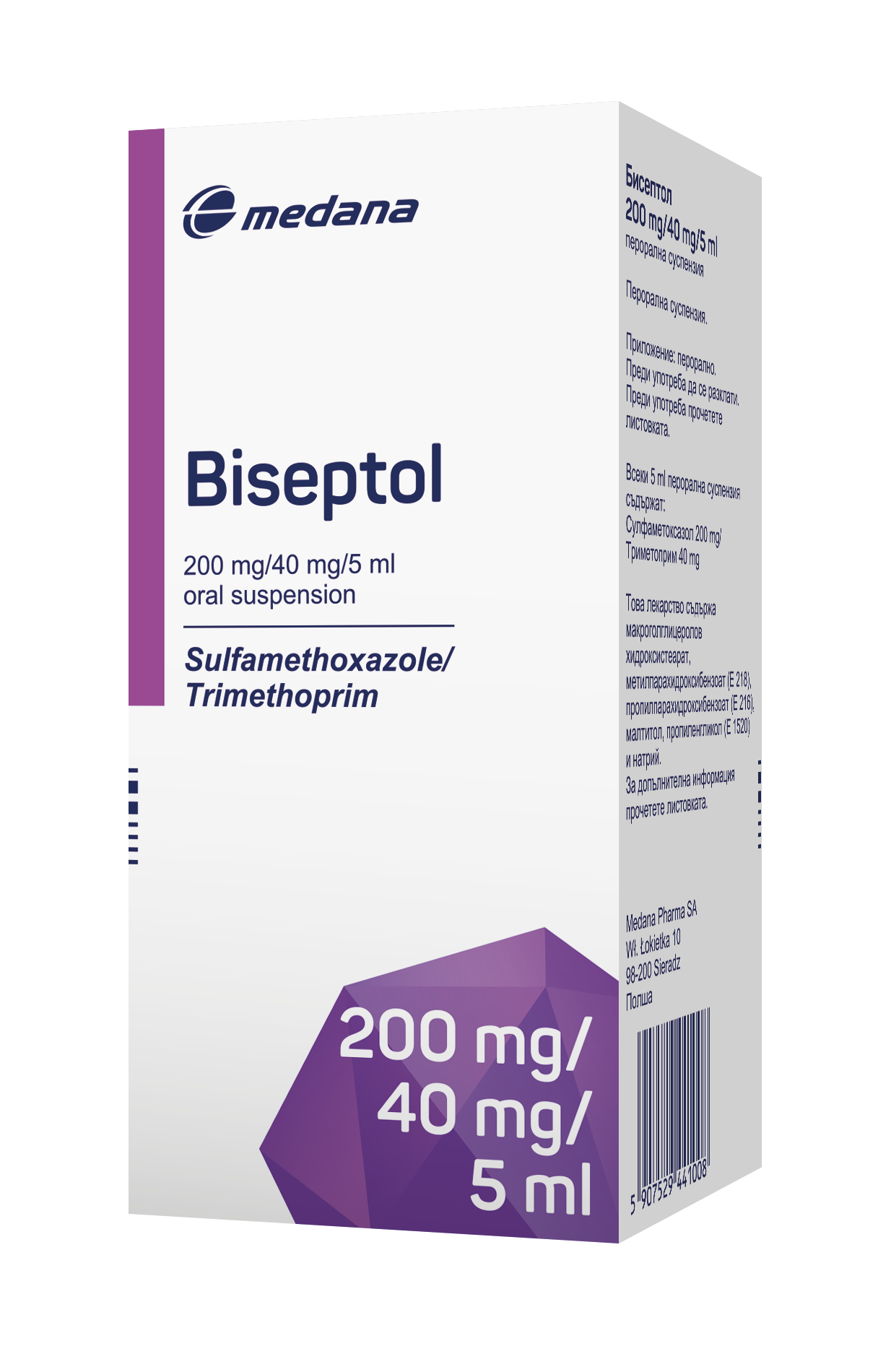
BISEPTOL 240mg/5ml susp 80ml
лекарствена информация
It is not sold online
Add to Favourites
BISEPTOL 240mg/5ml susp 80ml
Leaflet: information for the user
Biseptol 200 mg/40 mg/5 ml oral suspension
Sulfamethoxazole/Trimethoprim
Biseptol 200 mg/40 mg/5 ml oral suspension
Sulfamethoxazole/Trimethoprim
Read all of this leaflet carefully before you start taking this medicine because it contains important information for you.
- Keep this leaflet. You may need to read it again.
- If you have any further questions, ask your doctor or pharmacist.
- This medicine has been prescribed for you personally. Do not pass it on to others. It may harm them, even if their symptoms are the same as yours.
- If you get any side effects, tell your doctor or pharmacist. This includes any possible side effects not listed in this leaflet. See section 4.
What this leaflet contains
1. What Biseptol is and what it is used for
2. What you need to know before you take Biseptol
3. How to take Biseptol
4. Possible side effects
5. How to store Biseptol
6. Contents of the pack and other information
1. What Biseptol is and what it is used for
Biseptol 200 mg/40 mg in 5 ml oral suspension (called Biseptol in this leaflet) is made up of two different medicines called sulfamethoxazole and trimethoprim. These medicines are sometimes called co-trimoxazole. Both ingredients belong to a group of medicines called antibiotics. They are used to treat infections caused by bacteria. Like all antibiotics, Biseptol only works on certain types of bacteria. This means that it is suitable for treating only certain types of infections.
Biseptol can be used for treatment and prevention in the following cases:
- Lung infections (pneumonia or pneumonitis) caused by a bacterium called Pneumocystis jiroveci (formerly called Pneumocystis carinii) - PCP.
- Infections caused by a parasite called Toxoplasma gondii (toxoplasmosis).
Biseptol can be used to treat:
- Urinary tract infections
- Lung infections such as bronchitis
- Middle ear infections (otitis media)
Otitis media: Treatment of acute otitis media when there is a compelling reason to prefer co-trimoxazole to a single antibiotic.
- An infection called nocardiosis, which affects the lungs, skin and brain.
Biseptol is indicated in adults, adolescents, children and infants aged 6 weeks and older.
2. What you need to know before you take Biseptol
Do not take Biseptol if:
• if you are allergic to sulfamethoxazole, trimethoprim or co-trimoxazole, or any of the other ingredients of this medicine (listed in section 6).
• if you are allergic to sulfonamides – for example, sulfonylureas (such as gliclazide and glibenclamide) or thiazide diuretics (such as bendroflumethiazide).
• you have serious kidney or liver problems.
• you have or have had blood problems.
Co-trimoxazole should not be given to children younger than 6 weeks old.
If you are not sure if the above conditions apply to you, talk to your doctor or pharmacist for advice before taking Biseptol.
Warnings and precautions
Talk to your doctor before taking Biseptol in the following cases:
• if you have severe allergies or asthma
• if you have a rare blood disease called porphyria, which affects the skin or nervous system
• if you have a folic acid deficiency – the condition is called anemia and leads to pale skin, feeling tired, weak and short of breath
• if you have had jaundice – it causes yellowing of the skin and whites of the eyes
• if you have a metabolism problem called phenylketonuria and are not on a special diet
• in cases of malnutrition
• if you have high levels of potassium in your blood. Taking Biseptol with certain medicines, potassium supplements and food rich in potassium can lead to severe hyperkalaemia (high levels of potassium in the blood). Symptoms of severe hyperkalaemia may include muscle cramps, irregular heartbeat, diarrhoea, nausea, dizziness or headache.
Potentially life-threatening skin rashes (Stevens-Johnson Syndrome, toxic epidermal necrolysis) have been reported with the use of Biseptol, which manifest as the appearance of reddish target-like spots or round spots on the body, often with a blister in the center.
Additional symptoms to watch for include sores in the mouth, throat, nose, genitals, and conjunctivitis (redness and inflammation of the eyes).
These potentially life-threatening skin rashes are often accompanied by flu-like symptoms. The rash can progress to widespread blistering or peeling of the skin.
The risk of serious skin reactions is highest during the first weeks of treatment.
If you develop Stevens-Johnson syndrome or toxic epidermal necrolysis while using Biseptol, you should never be treated with Biseptol again.
If you get a rash or any of the listed skin symptoms, stop taking Biseptol and seek emergency medical attention, and tell the doctor that you have taken this medicine.
If you experience unexpected worsening of your cough and shortness of breath, tell your doctor immediately.
Hemophagocytic lymphohistiocytosis
Very rarely, there have been reports of overreactions of the immune system due to dysregulation of white blood cell activation leading to inflammation (haemophagocytic lymphohistiocytosis), which can be life-threatening if not diagnosed and treated early. If you experience multiple symptoms such as fever, swollen lymph nodes, feeling weak, dizziness, shortness of breath, easy bruising or skin rash at the same time or with a slight delay, contact your doctor immediately.
If you are not sure whether the above conditions apply to you, please consult your doctor or pharmacist before taking Biseptol.
Other medicines and Biseptol
Tell your doctor if you are taking, have recently taken or might take any other medicines, especially:
• diuretics (increase urine production)
• pyrimethamine, used to treat malaria and also for diarrhea
• ciclosporin, used after an organ transplant or to suppress the immune system
• warfarin or other anticoagulants (medicines that reduce the ability of the blood to clot)
• phenytoin, used for epilepsy
• medicines used to treat diabetes such as glibenclamide, glipizide or tolbutamide (sulfonylureas)
• digoxin or procainamide, used for heart problems
• amantadine, used to treat Parkinson's disease, multiple sclerosis, influenza or shingles
• zidovudine and lamivudine, used to treat AIDS
• medications that can lead to increased plasma potassium levels – diuretics, steroids and digoxin
• methotrexate, used to treat cancer and to affect the immune system
• spironolactone: should be used with caution in patients receiving any other drugs that may cause hyperkalemia (see Warnings and precautions above).
If you are not sure whether the above conditions apply to you, please consult your doctor or pharmacist before taking Biseptol.
Biseptol with food and drink
You should take Biseptol with food or water. This will prevent possible nausea or diarrhea. Although it is better to take Biseptol this way, you can also take it without food. It is important to drink plenty of fluids during treatment.
Pregnancy and lactation and fertility
If you are pregnant or breast-feeding, think you may be pregnant or are planning to become pregnant, ask your doctor for advice before using this medicine.
Driving and using machines
No studies have been conducted to investigate the effect of Biseptol on the ability to drive and use machines. In addition, the effect on these activities cannot be predicted based on the pharmacology of the drug. However, the clinical condition of the patient and the adverse drug reaction profile of Biseptol should be taken into account when determining the patient's ability to safely perform these activities.
Biseptol contains macrogolglycerol hydroxystearate, methyl parahydroxybenzoate (E 218), propyl parahydroxybenzoate (E 216), maltitol, propylene glycol (E 1520) and sodium.
This medicine may cause stomach upset and diarrhea.
This medicine may cause allergic reactions (possibly delayed).
If you have been told by your doctor that you have an intolerance to some sugars, contact your doctor before taking this medicinal product.
This medicine contains 142.72 mg propylene glycol per 5 ml oral suspension. Especially in severe infections when the patient is taking high doses (above 1.75 ml/kg body weight per day) the warnings regarding propylene glycol below should be taken into account:
- if your child is less than 5 years old, talk to your doctor or pharmacist before giving him this medicine, especially if he is using other medicines containing propylene glycol or alcohol;
- if you are pregnant or breast-feeding, do not take this medicine unless advised by your doctor. Your doctor may carry out additional tests while you are taking this medicine;
- if you suffer from liver or kidney disease, do not take this medicine unless recommended by your doctor. Your doctor may carry out additional tests while you are taking this medicine;
This medicine contains 38 mg sodium (main component of table salt) per 5 ml. This is equivalent to 1.9% of the recommended maximum daily intake of sodium for an adult.
3. How to take Biseptol
Always take this medicine exactly as your doctor or pharmacist has told you. If you are not sure, ask your doctor or pharmacist.
Shake well before use to obtain a homogeneous suspension.
Usual dosage
Standard dosing recommendations for acute infections
Adults
20 ml every 12 hours.
Pediatric population
The dosage for children is equivalent to approximately 6 mg trimethoprim and 30 mg sulfamethoxazole per kilogram of body weight daily.
The scheme for children is tailored to the age of the child and is given in the table below:
Standard dosage
Age
Suspension volume and frequency of administration
older than 12 years
20 ml every 12 hours
from 6 to 12 years old
10 ml every 12 hours
from 6 months to 5 years
5 ml every 12 hours
from 6 weeks to 5 months
2.5 ml every 12 hours
less than 6 weeks
use is contraindicated
Biseptol should be taken for at least 5 days.
Special dosage
The dose of Biseptol and the duration of the treatment course depend on the infection you are suffering from. Your doctor may prescribe a different dosage and duration of treatment in the following cases:
• Treatment of urinary tract infections
• Treatment and prevention of infections caused by the bacterium Pneumocystis jiroveci
• Treatment of infections caused by parasites called Toxoplasma gondii (toxoplasmosis) or Nocardia (nocardiosis)
If you take Biseptol for a long period of time, your doctor may:
• do blood tests to assess the effect of the medication
• prescribe folic acid, which you should take together with Biseptol
If you take more Biseptol than you should
If you have taken more Biseptol than you should, contact a doctor or go to a hospital. The following symptoms may occur:
• nausea or vomiting
• dizziness or confusion
If you forget to take Biseptol
• If you miss a dose, take it as soon as possible.
• Do not take a double dose to make up for a missed dose.
If you have any further questions on the use of this medicine, ask your doctor or pharmacist.
4. Possible side effects
Like all medicines, this medicine can cause side effects, although not everybody gets them.
The following side effects have been observed with the use of Biseptol.
Allergic reactions
• Difficulty breathing
• Nausea
• Facial swelling
• Swelling of the mouth, tongue or throat with redness and soreness, as well as difficulty swallowing
• Chest pain
• Rash
If you have an allergic reaction, stop taking Biseptol and tell your doctor immediately. The likelihood of an allergic reaction is very low (less than 1 affected person in 10,000 people).
Very common (affects 1 in 10 patients)
• High levels of potassium in the blood, which can lead to palpitations (irregular heartbeat)
Common (affects 1 to 10 patients in 100)
• An infection of the mouth or vagina, called candidiasis. It is caused by a fungus.
• Headache
• Nausea
• Diarrhea
• Skin rashes
Uncommon (affects less than 1 patient in 100)
• Vomiting
Very rare (affects less than 1 patient in 10,000)
• Fever (increased temperature) or frequent infections
• Sudden wheezing or difficulty breathing
• Mouth ulcers, painful ulcers or inflammation of the tongue, raised skin lumps or hives (raised white or red areas of skin), blisters on the skin or in the mouth, nose, vagina or buttocks, eye inflammation causing pain or redness (these side effects have been associated with Stevens-Johnson syndrome or toxic epidermal necrolysis - see section 2).
• Rash or sunburn when outside, even on cloudy days.
• Low blood sodium levels.
• Changes in blood count
• Feeling weak, tired or exhausted, pale skin (anemia)
• Heart problems
• Jaundice (yellowing of the skin and whites of the eyes). May occur together with unexpected bleeding or bruising
• Stomach pain, which may occur with blood in the stool
• Chest, muscle or joint pain and muscle weakness
• Arthritis
• Problems urinating. Difficulty urinating. Passing less or more urine than usual. Blood or cloudiness in the urine.
• Kidney problems
• Sudden onset of headache or neck stiffness, accompanied by fever (increased temperature)
• Problems with movement control
• Seizures (convulsions)
• Feeling restless and dizzy
• Ringing or other unusual sounds in the ears
• Tingling or numbness in the hands and feet
• Seeing strange or unusual images (hallucinations)
• Depression
• Muscle pain or muscle weakness in patients with AIDS
Not known (frequency cannot be estimated from the available data)
• Dark purple, raised, painful lesions on the limbs and sometimes on the face and neck, with fever (Sweet's syndrome).
Reporting adverse drug reactions
If you get any side effects, please tell your doctor or pharmacist. This includes any possible side effects not listed in this leaflet. You can also report side effects directly via
Executive Agency for Medicines
8 Damyan Gruev Street
1303 Sofia
Tel.: +35 928903417
website: www.bda.bg
By reporting side effects, you can help provide more information about the safety of this medicine.
5. How to store Biseptol
Keep out of the reach of children.
Keep the vial in the outer carton in order to protect from light.
Store below 25°C.
Keep in the original packaging together with this leaflet.
The opened vial should be used within 8 months.
Do not use this medicine after the expiry date (EXP) which is stated on the carton or vial. The expiry date refers to the last day of that month.
Do not throw away any medicines via wastewater or household waste. Ask your pharmacist how to dispose of medicines you no longer use. This will help to protect the environment.
6. Contents of the pack and other information
What Biseptol contains
- The active substances are sulfamethoxazole and trimethoprim.
5 ml of the suspension contain 200 mg of sulfamethoxazole and 40 mg of trimethoprim.
- The other ingredients are: macrogolglycerol hydroxystearate; carmellose sodium; aluminium magnesium silicate; citric acid monohydrate; disodium phosphate dodecahydrate; methyl parahydroxybenzoate (E 218); propyl parahydroxybenzoate (E 216); liquid maltitol; sodium saccharin; propylene glycol (E 1520); wild strawberry flavour; purified water.
What Biseptol looks like and what the pack contains
Biseptol is a suspension with a white or light beige color and a strawberry aroma.
The carton contains a dark glass vial with 80 ml of suspension, a measuring cup and user information.
Marketing Authorisation Holder and Manufacturer:
Marketing Authorisation Holder:
Zakłady Farmaceutyczne POLPHARMA SA
street Pelplińska 19, 83-200 Starogard Gdański, Poland
Manufacturer:
Zakłady Farmaceutyczne POLPHARMA SA
Medan Branch in Sieradz
street Władysława Łokietka 10, 98-200 Sieradz
Poland
Date of last revision of the leaflet: 29.07.2021
Express Delivery (within 2 hours)
- Valid only for the city of Sofia
- Valid only for orders over €25.56 | 50.00 BGN
- Valid only for cash on delivery (cash or card payment upon receipt)
Delivery to a Pharmacy
- Completed within up to 2 business days
- Valid for Sofia, Bozhurishte, and Mramor
- Free delivery
- Valid only for online payment
Courier Delivery to an Address
- Completed within up to 3 business days
- €2.30 | 4.50 BGN for orders under €25.56 | 50.00 BGN
- Free for orders over €25.56 | 50.00 BGN
Delivery to a Speedy Office
- Completed within up to 3 business days
- €2.30 | 4.50 BGN for orders under €25.56 | 50.00 BGN
- Free for orders over €25.56 | 50.00 BGN
BOX NOW
- Completed within up to 3 business days
- €1.53 | 2.99 BGN for orders under €25.56 | 50.00 BGN
- Free delivery for orders over €25.56 | 50.00 BGN
* Delivery times may change during large-scale campaigns and busy periods (Black Friday, public holidays, etc.).
* When ordering to a Speedy office, the customer has 5 business days from the delivery date to collect their order. After this period, the order is canceled and returned to the warehouse at subra.bg.

Express delivery for Sofia city Learn more

Free shippingover 50.00 lv / 25.56 €

Click and collect Learn more

Check the shipment Learn more
Book and collect from pharmacy
Availability in store
BISEPTOL 240mg/5ml susp 80ml
Please add your email, to receive notification when the product is in stock