


 Click & collect

Ще се изтрие най-старият артикул от любими и ще се добави новият
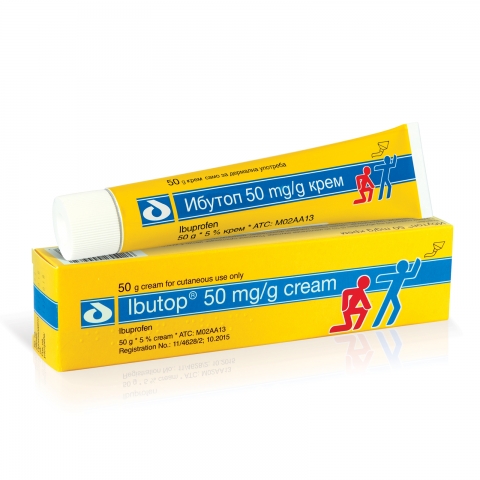
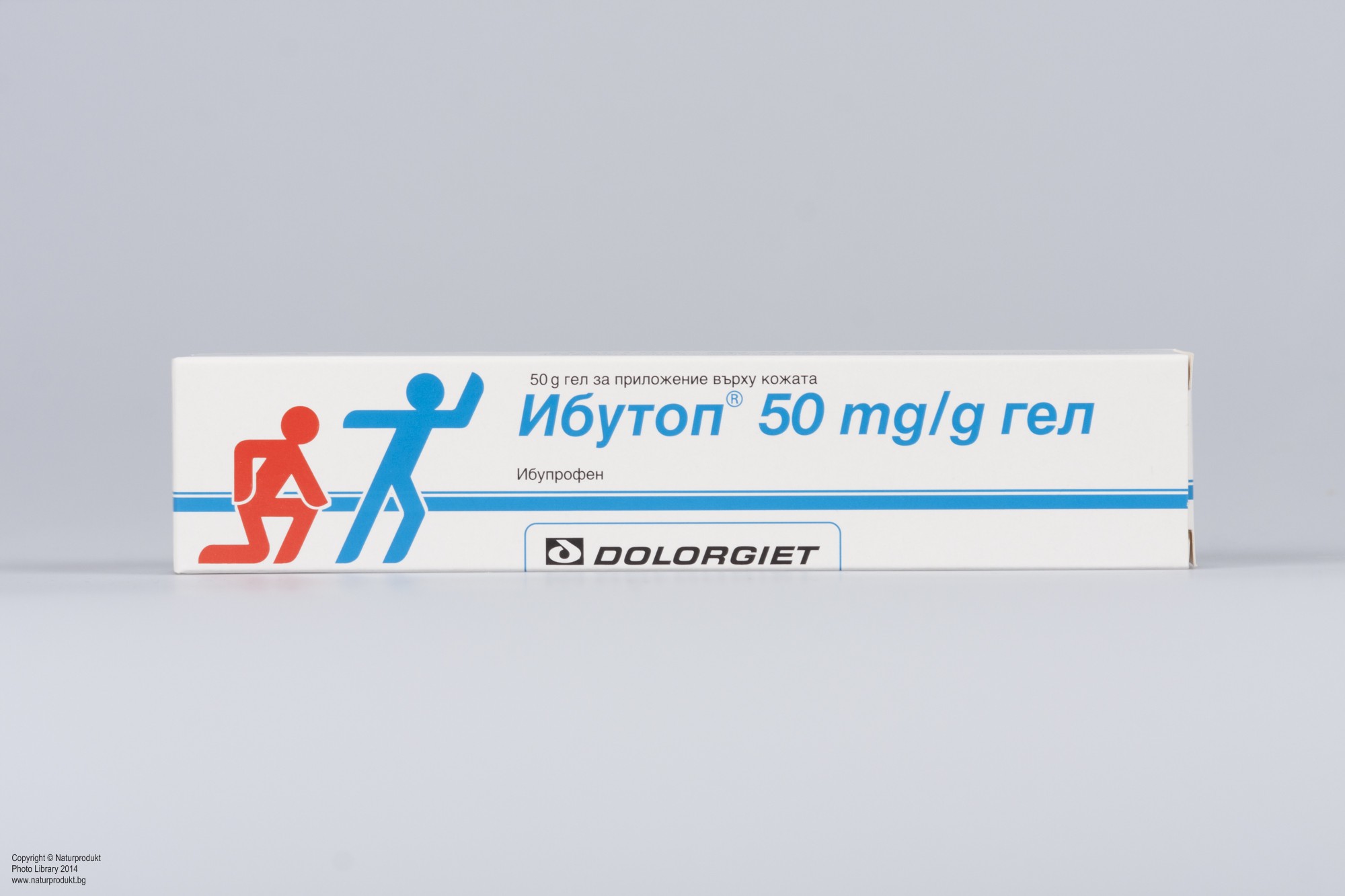
IBUTOP cream 50mg/g 50g
Patient information leaflet
IBUTOP 50 mg/g cream
Ibuprofen
IBUTOP 50 mg/g cream
Ibuprofen
Read all of this leaflet carefully before you start using this medicine because it contains important information for you.
Always use this medicine exactly as described in this leaflet or as your doctor, pharmacist or nurse has told you.
Keep this leaflet. You may need to read it again.
If you need further information or advice, ask your pharmacist.
If you get any side effects, talk to your doctor, pharmacist or nurse. This includes any possible side effects not listed in this leaflet. See section 4.
If you do not feel better after 3 days or your condition worsens, you should seek medical attention.
What this leaflet contains:
1. What Ibutop cream is and what it is used for
2. What you need to know before using Ibutop cream
3. How to use Ibutop cream
4. Possible side effects
5. How to store Ibutop cream
6. Contents of the pack and other information
1. What Ibutop cream is and what it is used for
Ibutop cream is a painkiller and anti-inflammatory product for application to the skin.
Indications:
For local or maintenance treatment of:
muscular rheumatism;
painful degenerative joint diseases (arthrosis);
inflammatory rheumatic diseases of the joints and spine;
swelling and inflammation of the periarticular soft tissues (tendons, tendon ligaments and sheaths, and joint capsules);
shoulder stiffness, myalgia, lumbago;
for sports injuries and accidents such as contusions, sprains, strains.
If you do not feel better after 3 days or your condition worsens, you should talk to a doctor.
2. What you need to know before using Ibutop cream
Do not use Ibutop cream:
if you are allergic to ibuprofen, to the preservative methyl-4-hydroxybenzoic acid, propylene glycol, to other analgesic or antirheumatic agents or to any of the other ingredients (listed in section 6);
on open wounds; inflammations or infections of the skin, as well as on eczema or mucous membranes;
in the last trimester of pregnancy.
Warnings and precautions
Talk to your doctor, pharmacist or nurse before using Ibutop cream.
In patients who suffer from asthma, hay fever, nasal mucosal edema or chronic obstructive pulmonary disease (especially associated with hay fever symptoms) and in patients with hypersensitivity to analgesics and antirheumatic products there is a higher risk of developing an asthma attack (analgesic intolerance / analgesic asthma), local swelling of the skin or mucous membranes (Quincke's edema), or urticaria compared to other patients.
In these patients, Ibutop cream should be used with caution and under medical supervision. This also applies to patients with hypersensitivity to other substances, manifested by skin reactions, itching or urticaria.
Be careful not to let children touch the treated areas of skin.
If the complaints persist for more than three days, it is necessary to consult a doctor.
Other medicines and Ibutop cream
Tell your doctor or pharmacist if you are taking, have recently taken or might take any other medicines.
When used according to instructions, interactions of Ibutop gel with other medicinal products have not been established.
Pregnancy, breastfeeding and fertility
If you are pregnant or breast-feeding, think you may be pregnant or are planning to become pregnant, ask your doctor or pharmacist for advice before using this medicine.
Pregnancy
Contact your doctor if you become pregnant while using Ibutop cream. Do not use ibuprofen during the first and second trimesters of pregnancy without consulting your doctor. Ibutop cream should not be used during the last trimester of pregnancy due to increased risk to the mother and child.
Breastfeeding
Only small amounts of the active substance ibuprofen and its breakdown products pass into breast milk. Since no negative effects on the child are known to date, breastfeeding does not need to be discontinued during short-term therapy. However, the daily dose of 3-4 applications of a 4-10 cm strip of cream should not be exceeded and discontinuation of breastfeeding should be considered during long-term therapy. If you are breastfeeding, you should not use this medicine on your breasts to avoid ingestion of the medicine by your baby.
Driving and using machines
No special precautions are necessary.
Ibutop cream contains propylene glycol.
Propylene glycol may cause skin irritation.
3. How to use Ibutop cream
Always use Ibutop cream exactly as described in this leaflet or as your doctor, pharmacist or nurse has told you. If you are not sure, ask your doctor or pharmacist.
The recommended dose is:
Apply Ibutop cream 3-4 times a day. Depending on the size of the painful area to be treated, apply a 4-10 cm strip of cream, corresponding to 2-5 g of cream (100-250 mg ibuprofen). The maximum daily dose is up to 20 g of cream, corresponding to 1000 mg ibuprofen.
Method of use:
For skin application only! Do not swallow!
Apply Ibutop cream to the skin and rub in gently. In cases of acute hematoma and sprains, Ibutop cream can be applied under an occlusive dressing at the beginning of treatment.
The penetration of the active substance through the skin can be enhanced by iontophoresis (a special form of electrotherapy). Ibutop cream should be applied to the cathode (negative pole). The current strength should be 0.1-0.5 mA per 5 cm2 of the electrode area and the duration of treatment should be approximately 10 minutes.
Duration of use
The duration of treatment is determined by your doctor. In most cases, administration for 2-3 weeks is sufficient.
A therapeutic effect after this period has not been proven.
If you have the feeling that the effect of Ibutop cream is too strong or too weak, please contact your doctor or pharmacist.
If you use more Ibutop cream than you should
In cases of exceeding the recommended dose, the cream should be removed and the treated area washed with water. In case of application of too large a quantity or accidental ingestion, it is necessary to contact a doctor.
There is no specific antidote.
4. Possible side effects
Like all medicines, Ibutop cream can cause side effects, although not everybody gets them.
The following frequency criteria are used to assess adverse drug reactions:
Very common: (=> 1/10);
Common: (=>1/100 to <1/10));
Uncommon: (=> 1/1,000 to <1/100);
Rare: (=> 1/10,000 to <1/1,000);
Very rare: (=< 1/10,000);
Unknown: (cannot be estimated from the available data).
Adverse reactions that may occur:
Common side effects: skin reactions such as erythema, itching, burning, exanthema with pustules and urticaria.
Uncommon side effects: Hypersensitivity reactions such as local allergic reactions (contact dermatitis) may occur.
In very rare cases, bronchospastic reactions have been observed in predisposed patients.
In the case of application of Ibutop gel for a long time and on large areas of skin, the occurrence of adverse drug reactions affecting individual organs or the entire organism, which generally occur with systemic administration of drugs containing ibuprofen, cannot be ruled out.
Sodium methyl 4-hydroxybenzoate may cause hypersensitivity reactions, some of which may occur later.
Reporting side effects
If you get any side effects, tell your doctor or pharmacist. This includes any side effects not listed in this leaflet. You can also report side effects directly via the national reporting system, at:
The Executive Agency for Medicines,
8 Damyan Gruev Street,
1303 Sofia,
tel. +35 928903417,
website: www.bda.bg.
By reporting side effects, you can help provide more information about the safety of this medicine.
5. How to store Ibutop cream
Keep out of reach of children!
Do not use Ibutop cream after the expiry date which is stated on the packaging. The expiry date refers to the last day of that month.
This medicinal product does not require any special storage conditions.
The shelf life after first opening is 3 months.
Do not throw away any medicines via wastewater or household waste. Any unused medicinal product or waste materials derived from such medicinal products should be disposed of in accordance with local requirements. These measures will help to protect the environment.
6. Contents of the pack and other information
What Ibutop cream contains
The active substance is: Ibuprofen
1 g of Ibutop cream contains 50 mg of ibuprofen in an oil-in-water emulsion.
The other ingredients are: sodium methyl-4-hydroxybenzoate, medium chain triglycerides, glycerol monostearate, macrogol stearate 1500, macrogol stearate 5000, propylene glycol, xanthan gum, lavender oil, bitter orange blossom oil, purified water.
What Ibutop cream looks like and what the pack contains:
Tube containing a smooth, soft cream with a white to cream color.
Ibutop cream is available in packs of 50 g and 100 g cream.
Not all types of packaging can be released for sale.
Marketing Authorisation Holder and Manufacturer:
Dolorgiet GmbH & Co.KG, Germany.
Express Delivery (within 2 hours)
- Valid only for the city of Sofia
- Valid only for orders over €25.56 | 50.00 BGN
- Valid only for cash on delivery (cash or card payment upon receipt)
Delivery to a Pharmacy
- Completed within up to 2 business days
- Valid for Sofia, Bozhurishte, and Mramor
- Free delivery
- Valid only for online payment
Courier Delivery to an Address
- Completed within up to 3 business days
- €2.30 | 4.50 BGN for orders under €25.56 | 50.00 BGN
- Free for orders over €25.56 | 50.00 BGN
Delivery to a Speedy Office
- Completed within up to 3 business days
- €2.30 | 4.50 BGN for orders under €25.56 | 50.00 BGN
- Free for orders over €25.56 | 50.00 BGN
BOX NOW
- Completed within up to 3 business days
- €1.53 | 2.99 BGN for orders under €25.56 | 50.00 BGN
- Free delivery for orders over €25.56 | 50.00 BGN
* Delivery times may change during large-scale campaigns and busy periods (Black Friday, public holidays, etc.).
* When ordering to a Speedy office, the customer has 5 business days from the delivery date to collect their order. After this period, the order is canceled and returned to the warehouse at subra.bg.

Express delivery for Sofia city Learn more

Free shippingover 50.00 lv / 25.56 €

Click and collect Learn more

Check the shipment Learn more
Book and collect from pharmacy
Availability in store
IBUTOP cream 50mg/g 50g
Please add your email, to receive notification when the product is in stock