

 Click & collect


Ще се изтрие най-старият артикул от любими и ще се добави новият
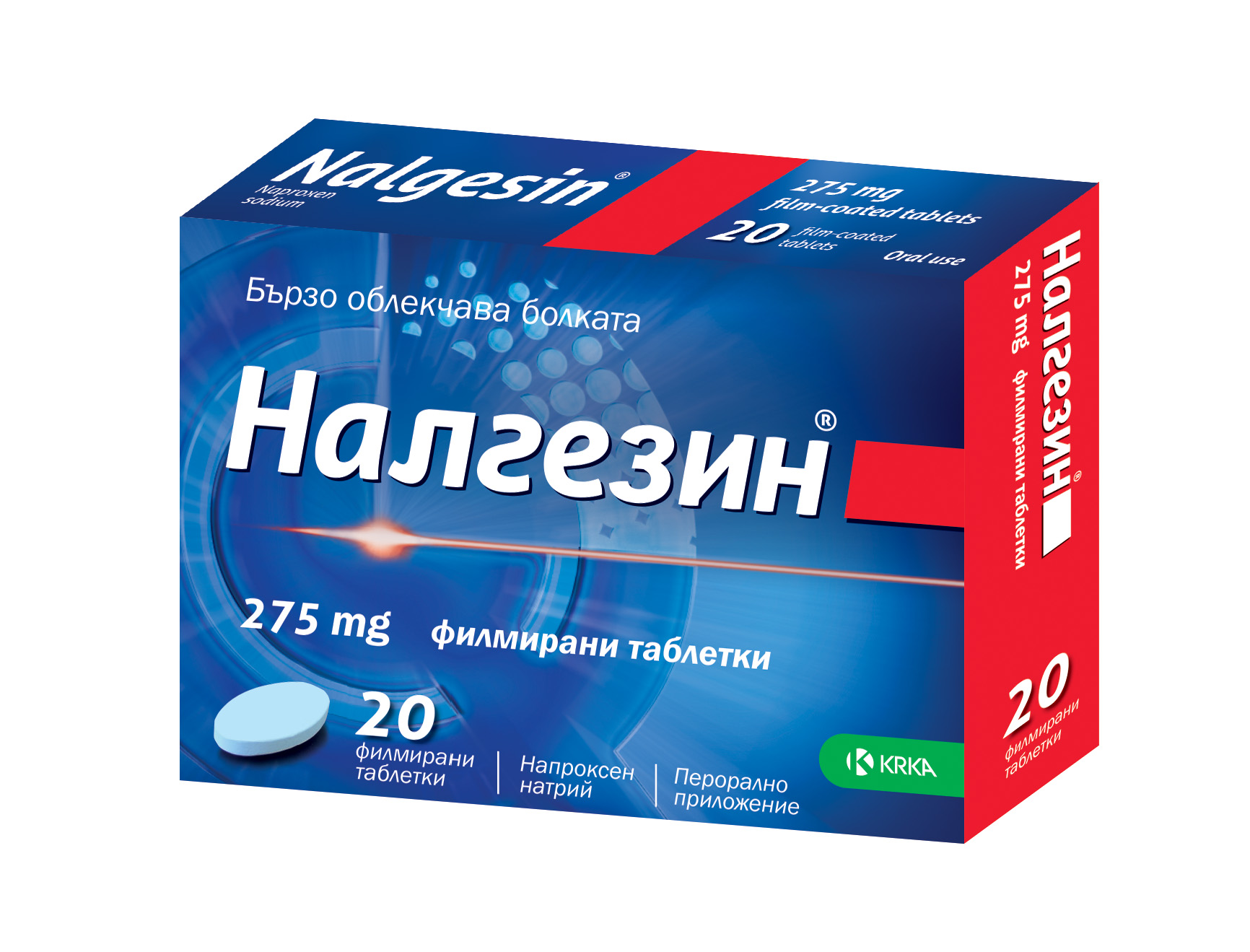
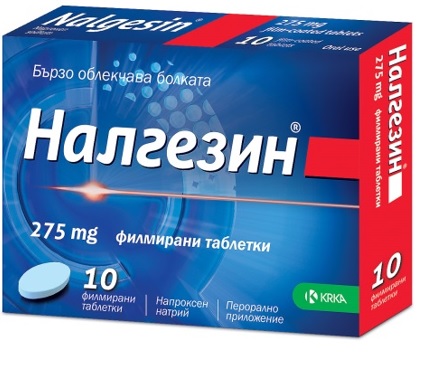
NALGESIN 275mg x 20 film tabl
Leaflet: information for the user
Nalgesin Ò 275 mg film-coated tablets
Naproxen sodium
Nalgesin Ò 275 mg film-coated tablets
Naproxen sodium
Read all of this leaflet carefully before you start using this medicine because it contains important information for you.
Always use this medicine exactly as described in this leaflet or as your doctor or pharmacist has told you.
- Keep this leaflet. You may need to read it again.
- If you need further information or advice, ask your pharmacist.
- If you get any side effects, please tell your doctor or pharmacist. This includes any possible side effects not listed in this leaflet. See section 4.
- If you do not feel better after 3 days or your condition worsens, you should seek medical attention.
What this leaflet contains:
1. What Nalgesin is and what it is used for
2. What you need to know before you take Nalgesin
3. How to take Nalgesin
4. Possible side effects
5. How to store Nalgesin
6. Contents of the pack and other information
- What Nalgesin is and what it is used for
Nalgesin relieves pain and inflammation and lowers elevated body temperature.
It works by inhibiting the synthesis of prostaglandins. The tablets are rapidly soluble, which results in a rapid analgesic effect.
It is used for short-term symptomatic treatment of pain.
Nalgesin relieves:
- headache and toothache,
- pain in muscles, joints and spine,
- migraine,
- menstrual pains,
- muscle and joint pain due to flu and cold.
In infectious diseases, it lowers elevated body temperature and relieves the inflammatory process.
- What you need to know before you take Nalgesin
Inform your doctor if you suffer from a chronic or metabolic disease, if you are hypersensitive or are taking other medications.
Do not take Nalgesin
- if you are allergic (hypersensitive) to the active substance or any of the other ingredients of this medicine, to acetylsalicylic acid or other non-steroidal anti-inflammatory drugs,
- if you have an ulcer or other gastrointestinal disease,
- if you have ever had stomach bleeding,
- if you are taking other pain-relieving medicines at the same time (acetylsalicylic acid or non-steroidal anti-inflammatory drugs),
- more than 10 days for pain relief,
- more than 3 days with a fever
You should not give Nalgesin to children under 12 years of age unless prescribed by a doctor.
Warnings and precautions
Talk to your doctor or pharmacist before taking Nalgesin.
- when the painful area is red or swollen;
- if you regularly take other medicines;
- if you are under medical supervision because you suffer from certain chronic diseases;
- if you have had serious side effects after taking certain other pain-relieving medicines.
You should stop taking Nalgesin and consult a doctor:
- if new or unexpected symptoms occur;
- if symptoms persist or even worsen;
- if you have difficulty swallowing;
- if heartburn or stomach pain occurs.
Medicines such as Nalgesin may be associated with a small increased risk of heart attack (myocardial infarction) or stroke. Each risk is more likely with high doses and long-term treatment. Do not exceed the recommended dose and duration of treatment (3 days for lowering high body temperature or 10 days for relieving pain).
If you have heart problems, have had a stroke or think you may be at risk of these conditions (for example, if you have high blood pressure, diabetes or high cholesterol or are a smoker), you should discuss your treatment with your doctor or pharmacist.
If you drink alcoholic beverages regularly (three or more drinks per day), discuss the use of Nalgesin with your doctor. In combination with alcohol, Nalgesin may increase the risk of stomach bleeding.
If you have already taken other medicines to relieve pain or reduce elevated body temperature and have experienced hives, facial swelling, an asthma attack or even shock, do not take Nalgesin without consulting a doctor.
Nalgesin contains sodium
This medicine contains 25.08 mg sodium (main ingredient of cooking/table salt) per film-coated tablet. This amount is equivalent to 1.25% of the recommended maximum daily intake of sodium for an adult.
Other medicines and Nalgesin
Tell your doctor or pharmacist if you are taking, have recently taken or might take any other medicines.
Interactions with other drugs may lead to an increase or decrease in the effects of Nalgesin or other drugs. This happens with:
- other painkillers (acetylsalicylic acid or other non-steroidal anti-inflammatory drugs),
- medicines that contain the same active ingredient, naproxen,
- medicines that prevent blood clotting (anticoagulants) or medicines that dissolve existing clots (fibrinolytics),
- medicines to prevent blood clots (Aspirin/acetylsalicylic acid)
- medicines to treat diabetes (sulfonylureas),
- medicines to treat epilepsy (hydantoin derivatives),
- medicines to treat high blood pressure,
- medicines that increase urine output (furosemide),
- medicines to treat mental illness (lithium),
- immunosuppressants (cyclosporine),
- medicines to treat malignant diseases (methotrexate).
Nalgesin with food and drink
Swallow the tablets whole with liquid. You can take them before, during or after a meal.
Pregnancy, breastfeeding and fertility
If you are pregnant or breast-feeding, think you may be pregnant or are planning to become pregnant, ask your doctor or pharmacist for advice before using this medicine.
Preclinical studies in animals have not shown any adverse effects on pregnancy and fetal development.
Naproxen is not recommended during pregnancy. The doctor will assess whether the potential benefit to the pregnant woman outweighs the risk to the fetus. Therefore, during pregnancy, you should take medication only after consulting a doctor.
You should not take the medicine during the last trimester of pregnancy.
Breastfeeding is not recommended during treatment with Nalgesin.
Driving and using machines
Naproxen is not known to have a significant effect on the ability to drive and use machines.
Nalgesin contains sodium
Each Nalgesin tablet contains approximately 25 mg of sodium. Please keep this in mind if you are on a salt-restricted diet.
- How to take Nalgesin
Always take this medicine exactly as described in this leaflet or as your doctor or pharmacist has told you. If you are not sure, ask your doctor or pharmacist.
The usual dose is 1 tablet every 12 hours (up to a maximum of 2 tablets per day), for as long as symptoms persist, but not longer than indicated in section 2.
Initially, you can take a double dose: two tablets at the same time or the second tablet after an hour interval.
If you have the impression that the effect of the medicine is too strong or too weak, consult your doctor or pharmacist.
Old age
If you are over 65 years of age, take 1 tablet every 12 hours as needed, unless your doctor has advised you otherwise.
Adverse drug reactions can be reduced by using the lowest effective dose for the shortest possible period of time to control symptoms.
If you take more Nalgesin than you should
If you have taken more Nalgesin than you should, consult your doctor or pharmacist immediately .
Excessively high doses of those already prescribed can cause stomach pain, nausea, vomiting, dizziness, tinnitus, irritability, and in more severe cases even vomiting blood (hematemesis), blood in the feces (melena), sensory disturbances, respiratory disorders, convulsions, and kidney failure.
In case of intentional ingestion of a large number of tablets, the doctor will take appropriate measures.
If you forget to take Nalgesin
Do not take a double dose to make up for a missed dose.
Take Nalgesin only if needed. Never double the doses.
If you stop taking Nalgesin
If you are taking it for short-term pain relief, you can stop taking it as soon as you no longer need it.
If you have any further questions on the use of this medicine, ask your doctor or pharmacist.
- Possible side effects
Like all medicines, this medicine can cause side effects, although not everybody gets them.
Abdominal pain, vomiting, nausea, dizziness, lightheadedness, fatigue, sleep disturbances, ringing in the ears or swelling of the legs may occur. These are all mild side effects, but if you notice them, please tell your doctor.
Gastrointestinal bleeding, facial swelling, hives, asthma attack or loss of consciousness may occur extremely rarely. These are serious side effects that require immediate medical attention.
Medicines such as Nalgesin may be associated with a slightly increased risk of heart attack (“myocardial infarction”) or stroke.
If you notice any side effects, tell your doctor or pharmacist.
Reporting suspected adverse reactions
If you get any side effects, tell your doctor, pharmacist or nurse. This includes any possible side effects not listed in this leaflet. You can also report side effects directly via the Bulgarian Medicines Agency, 8 Damyan Gruev Street.
1303 Sofia
Tel.: +35 928903417
website: www.bda.bg.
By reporting side effects, you can help provide more information about the safety of this medicine.
- How to store Nalgesin
Keep out of the reach of children.
Do not use this medicine after the expiry date which is stated on the packaging after “EXP”. The expiry date refers to the last day of that month.
Store below 25°C.
Do not throw away medicines via wastewater or household waste. Ask your pharmacist how to throw away medicines you no longer use. These measures will help protect the environment.
- Package contents and additional information
What Nalgesin contains
- The active substance is: naproxen sodium . Each film-coated tablet contains 275 mg of naproxen sodium.
- the other ingredients are: povidone, microcrystalline cellulose, talc, magnesium stearate, hydroxypropyl methylcellulose, titanium dioxide (E 171), macrogol, indigo (E 132).
See section 2 “Nalgesin contains sodium”.
What Nalgesin looks like and contents of the pack
The film-coated tablets are oval, slightly biconvex and coated with a blue film.
The tablets are available in cardboard boxes with 10 or 20 film-coated tablets in blister packs. Each box contains 1 blister or 2 blisters of 10 film-coated tablets.
Not all types of packaging can be released for sale.
Marketing Authorisation Holder and Manufacturer
KRKA, dd, Novo mesto, Šmarješka cesta 6, 8501 Novo mesto, Slovenia
Date the leaflet was last revised
August 2018
Express Delivery (within 2 hours)
- Valid only for the city of Sofia
- Valid only for orders over €25.56 | 50.00 BGN
- Valid only for cash on delivery (cash or card payment upon receipt)
Delivery to a Pharmacy
- Completed within up to 2 business days
- Valid for Sofia, Bozhurishte, and Mramor
- Free delivery
- Valid only for online payment
Courier Delivery to an Address
- Completed within up to 3 business days
- €2.30 | 4.50 BGN for orders under €25.56 | 50.00 BGN
- Free for orders over €25.56 | 50.00 BGN
Delivery to a Speedy Office
- Completed within up to 3 business days
- €2.30 | 4.50 BGN for orders under €25.56 | 50.00 BGN
- Free for orders over €25.56 | 50.00 BGN
BOX NOW
- Completed within up to 3 business days
- €1.53 | 2.99 BGN for orders under €25.56 | 50.00 BGN
- Free delivery for orders over €25.56 | 50.00 BGN
* Delivery times may change during large-scale campaigns and busy periods (Black Friday, public holidays, etc.).
* When ordering to a Speedy office, the customer has 5 business days from the delivery date to collect their order. After this period, the order is canceled and returned to the warehouse at subra.bg.

Express delivery for Sofia city Learn more

Free shippingover 50.00 lv / 25.56 €

Click and collect Learn more

Check the shipment Learn more
Book and collect from pharmacy
Availability in store
NALGESIN 275mg x 20 film tabl
Please add your email, to receive notification when the product is in stock