


 Click & collect
Ще се изтрие най-старият артикул от любими и ще се добави новият

Coming soon
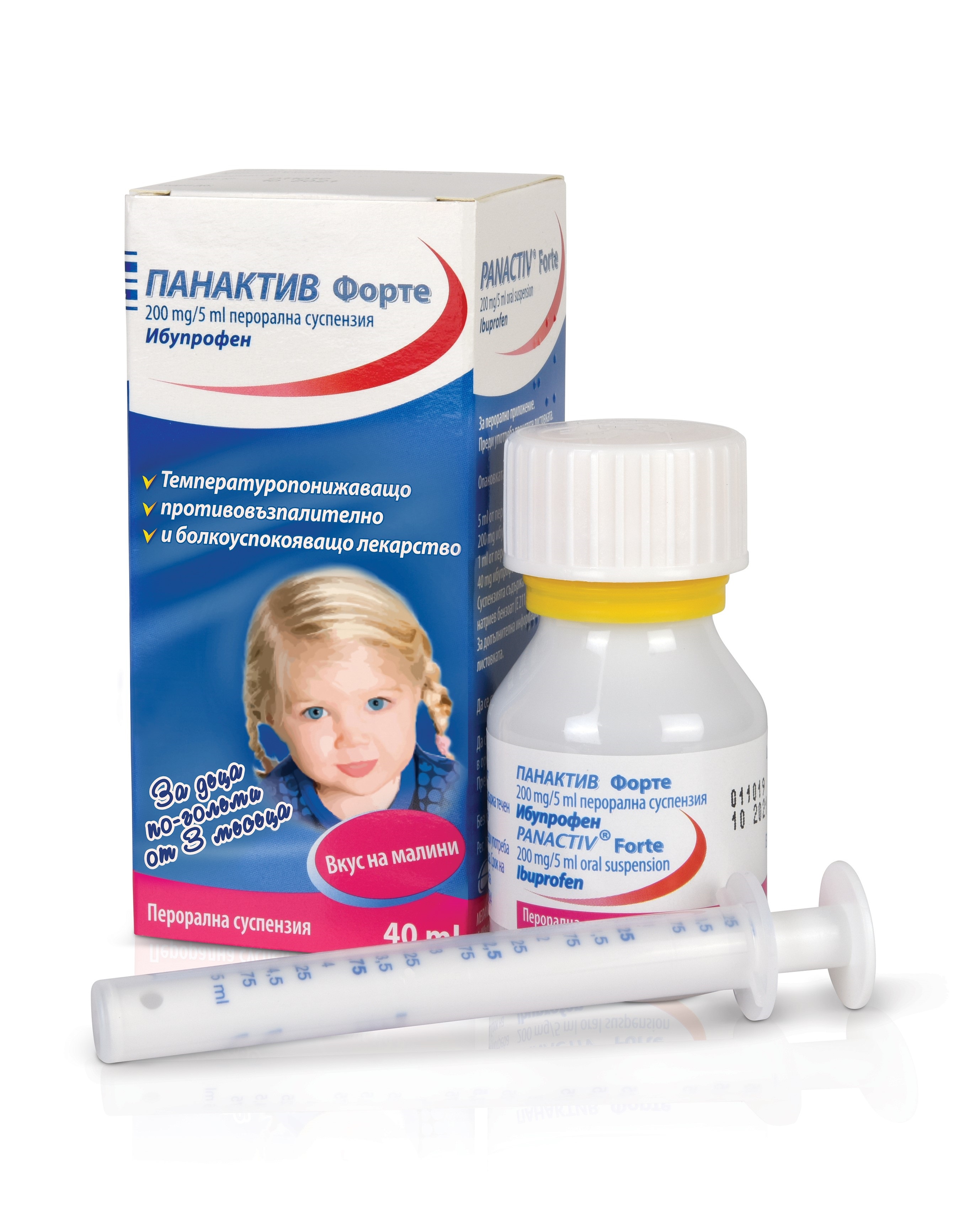
PANACTIV FORTE susp 200mg/5ml 40ml
лекарствена информация Last retail price: 2.81 €
Add to Favourites
PANACTIV FORTE susp 200mg/5ml 40ml
Patient information leaflet
Panactiv Forte 200 mg/5 ml oral suspension
Ibuprofen
Panactiv Forte 200 mg/5 ml oral suspension
Ibuprofen
Read all of this leaflet carefully before you or your child starts using this medicine because it contains important information for you.
Always take this medicine exactly as described in this leaflet or as your child's doctor or your doctor or pharmacist has told you.
- Keep this leaflet. You may need to read it again.
- If you need further information or advice, ask your pharmacist.
- If you or your child get any side effects, tell your doctor or pharmacist. This includes any possible side effects not listed in this leaflet. See section 4.
- You should seek medical attention:
- if your child is 3 to 5 months old and does not feel better or his condition worsens after 24 hours;
- if your child is 6 months or older and does not feel better or gets worse after 3 days;
- if you do not feel better or your condition worsens after 3 days in case of fever and 4 days in case of pain.
What this leaflet contains
1. What Panactiv Forte is and what it is used for
2. What you need to know before you use Panactiv Forte
3. How to use Panactiv Forte
4. Possible side effects
5. How to store Panactiv Forte
6. Contents of the pack and other information
1. What Panactiv Forte is and what it is used for
The active ingredient in Panactiv Forte is ibuprofen, which belongs to a group of medicines called non-steroidal anti-inflammatory drugs (NSAIDs). The medicine has pain-relieving, antipyretic and anti-inflammatory effects.
The medicine is intended for use in children from 3 months of age, adolescents and adults for short-term symptomatic treatment in the following cases:
• fever of various origins (also in viral infections)
• pain of various origins, from mild to moderate:
headache, sore throat and muscle aches due to viral infections;
muscle, joint and bone pain due to damage to the musculoskeletal system (sprains, joint dislocations);
pain caused by soft tissue injury;
postoperative pain;
toothache, pain after tooth extraction;
headache (also migraine);
- ear pain due to inflammation of the middle ear (only on the advice of a doctor).
2. What you need to know before you use Panactiv Forte
Do not use Panactiv Forte and do not give it to your child:
• if you are allergic to ibuprofen, other non-steroidal anti-inflammatory drugs (NSAIDs) or any of the other ingredients of this medicine (listed in section 6);
• if you have ever had allergy symptoms in the past, such as runny nose, hives, swelling of the face, tongue, lips or throat, bronchospasm or asthma after taking acetylsalicylic acid or other non-steroidal anti-inflammatory drugs;
• if you have had a stomach and/or duodenal ulcer with perforation or bleeding, which occurred as a result of treatment with NSAIDs;
• if you have (have had two or more episodes of) stomach ulcer or bleeding;
• if you have severe liver failure, severe kidney failure or severe heart failure;
• if you are taking other non-steroidal anti-inflammatory drugs at the same time, including COX-2 inhibitors (increased risk of developing side effects);
• if you have conditions involving an increased tendency to bleed (e.g. blood clotting disorders, low platelet count);
• if you have a brain hemorrhage or other active bleeding;
• if you have severe dehydration (due to vomiting, diarrhea or insufficient fluid intake).
Do not use products containing ibuprofen if you are a woman in the third trimester of pregnancy (see section “Pregnancy, breast-feeding and fertility”).
Warnings and precautions
Adverse reactions may be reduced by using the lowest effective dose for the shortest period of time necessary to control symptoms.
Elderly patients have an increased incidence of adverse drug reactions, especially gastrointestinal bleeding and perforation, which can be fatal.
Talk to your doctor or pharmacist if you have an infection - see the heading 'Infections' below.
Talk to your doctor before using or giving your child Panactiv Forte if you have previously been diagnosed with:
• lupus erythematosus and mixed connective tissue disease;
• gastrointestinal diseases and chronic intestinal diseases (ulcerative colitis, Crohn's disease);
• arterial hypertension and/or heart problems;
• impaired renal function;
• liver function disorder;
• blood clotting problems;
• active or past bronchial asthma, or symptoms of an allergic reaction (bronchospasm may occur as a result of taking the medicine);
• chickenpox - see below under the heading "Infections".
There is a risk of gastrointestinal bleeding, ulceration or perforation, which may be life-threatening and may not necessarily be preceded by warning symptoms. In case of gastrointestinal bleeding or ulceration, the use of the drug should be discontinued immediately. Patients with a history of gastrointestinal diseases, especially the elderly (the medicinal product Panactiv Forte in the form of an oral suspension can also be used by adults), should inform the doctor of any atypical symptoms in the digestive tract (especially bleeding), especially in the initial phase of treatment.
Simultaneous long-term use of various analgesics may lead to kidney damage with a risk of kidney failure (analgesic nephropathy).
Anti-inflammatory/painkilling medicines such as ibuprofen may be associated with a small increased risk of heart attack or stroke, especially when used in high doses. Do not exceed the recommended dose or duration of treatment.
You should discuss your treatment with your doctor or pharmacist before taking Panactiv Forte if:
- you have heart problems, including heart failure, angina (chest pain), or if you have had a heart attack, bypass surgery, peripheral arterial disease (poor blood circulation in the legs or feet due to narrow or blocked arteries) or any type of stroke (including a "mini-stroke" or transient ischemic attack "TIA");
-you have high blood pressure, diabetes, high cholesterol, a family history of heart disease or stroke, or if you are a smoker.
Skin reactions
Serious skin reactions have been reported in connection with the use of Panactiv Forte. You should stop taking Panactiv Forte and seek medical help immediately if you develop a skin rash, lesions on the mucous membranes, blisters or other signs of allergy, as these may be the first signs of a very serious skin reaction. See section 4.
Stop using ibuprofen and contact a doctor immediately if you or your child develop any of the following symptoms (angioedema):
• swelling of the face, tongue or throat;
• difficulty swallowing;
• hives and difficulty breathing.
Patients with systemic lupus erythematosus and mixed connective tissue disease may be at increased risk of aseptic meningitis.
Infections
Panactiv Forte may mask the signs of infection, such as fever and pain. Panactiv Forte may therefore delay appropriate treatment of the infection, which may lead to an increased risk of complications. This is seen in pneumonia caused by bacteria and bacterial skin infections associated with chickenpox. If you are taking this medicine while you have an infection and the symptoms of the infection persist or worsen, you should consult a doctor immediately.
Ibuprofen, the active substance of Panactiv Forte, may temporarily suppress platelet function (platelet aggregation). Therefore, patients with bleeding disorders should be carefully monitored.
With prolonged use of Panactiv Forte, regular monitoring of liver enzymes, kidney function and blood counts is required.
There is a risk of kidney damage in dehydrated children and adolescents.
Headache, which may occur with prolonged use of analgesics, should not be treated by administering higher doses of the product.
Isolated cases of toxic amblyopia (reduced visual acuity) have been reported during ibuprofen use, therefore any visual disturbances should be reported to a doctor.
Some medicines such as anticoagulants (used to thin the blood/prevent blood clotting) (e.g. acetylsalicylic acid/aspirin, warfarin, ticlopidine), medicines for high blood pressure (ACE inhibitors, e.g. captopril, beta-blockers, angiotensin II antagonists) and even some other medicines (see the section below “Other medicines and Panactiv Forte”) may affect or be affected by treatment with ibuprofen.
Therefore, always consult a doctor before using ibuprofen with other medications.
Other medicines and Panactiv Forte
Tell your doctor or your child's doctor if you are taking, have recently taken or might take any other medicines.
Panactiv Forte may affect or be affected by some other medicines. For example:
• analgesics, acetylsalicylic acid/aspirin or other non-steroidal anti-inflammatory drugs;
• medicines that lower high blood pressure (ACE inhibitors such as captopril, beta-blockers such as atenolol, angiotensin II receptor antagonists such as losartan);
• anticoagulants (i.e. blood thinners/prevents blood clotting, e.g. aspirin/acetylsalicylic acid, warfarin, ticlopidine);
• lithium or selective serotonin reuptake inhibitors – used to treat depression;
• methotrexate – used for some types of cancer;
• corticosteroids – used for inflammatory conditions;
• cyclosporine – a drug that suppresses the immune system;
• cardiac glycosides (e.g. digoxin) – medicines for heart problems;
• tacrolimus – a medicine that suppresses the immune system;
• mifepristone – used for medical termination of pregnancy;
• zidovudine or ritonavir – used for HIV or AIDS;
• quinolone antibiotics or aminoglycosides – antibiotics against infections;
• voriconazole or fluconazole – used for fungal infections;
• probenecid or sulfinpyrazone – medicines for the treatment of gout;
• oral antidiabetic agents – used against diabetes mellitus;
• cholestyramine – used to lower cholesterol;
• phenytoin – used against epilepsy;
• baclofen – used against skeletal muscle spasms.
Some other medicines may also affect or be affected by treatment with Panactiv Forte. Therefore, you should always consult your doctor or pharmacist before using Panactiv Forte with other medicines.
Pregnancy, breastfeeding and fertility
During pregnancy or breast-feeding, in case of suspected or planned pregnancy, ask your doctor or pharmacist before using this medicine.
Pregnancy
The use of this medicine is not recommended during the first 6 months of pregnancy. During the last 3 months of pregnancy, the use of the medicine is prohibited due to an increased risk of complications for the mother and child during the perinatal period.
Breastfeeding
Ibuprofen may pass into breast milk in small amounts. There are no known cases of adverse reactions in nursing infants. Breastfeeding does not need to be interrupted during short-term treatment with ibuprofen in doses used to treat pain and fever.
Fertility
The drug belongs to a group of drugs (nonsteroidal anti-inflammatory drugs) that may adversely affect a woman's ability to become pregnant. The effect is transient and disappears after the end of therapy.
Driving and using machines
The medicinal product Panactiv Forte may cause a feeling of dizziness or vertigo. If this happens, do not drive or use tools or machines. Do not do anything that requires increased attention.
Panactiv Forte contains liquid maltitol (E 965), sodium benzoate (E 211) and sodium
Panactiv Forte contains 2.4 g of liquid maltitol (E 965) per 5 ml. Patients with rare hereditary problems of fructose intolerance should not take this medicine.
This medicine contains 5 mg sodium benzoate (E 211) in every 5 ml.
This medicine contains less than 1 mmol sodium (23 mg) per 5 ml, i.e. essentially ‘sodium-free’.
3. How to use Panactiv Forte
Always take this medicine exactly as described in this leaflet or as your doctor or pharmacist has told you.
The medicine should be taken orally after a meal with plenty of liquid. Shake the bottle before use.
The package contains a dispenser in the form of a syringe.
The lowest effective dose should be used for the shortest possible time to relieve symptoms. If you have an infection, consult a doctor immediately if symptoms (e.g. fever and pain) persist or worsen (see section 2).
The recommended dose should not be exceeded.
Instructions for using the syringe dispenser
1. Unscrew the bottle cap (press and turn counterclockwise).
2. The dispenser should be pressed tightly against the neck of the bottle.
3. The bottle should be shaken vigorously.
4. To fill the dispenser, the bottle should be turned upside down and then carefully withdraw the desired amount of suspension by pulling the plunger down.
5. Stand the bottle upright again, carefully unscrew the dispenser and separate it from the bottle.
6. The end of the dispenser is placed in the child's mouth and the contents are carefully emptied by slowly pressing the plunger.
7. After application, close the bottle by screwing on the cap; wash and dry the dispenser.
The commonly used single dose of ibuprofen is 7 to 10 mg/kg, up to a maximum daily dose of 20 to 30 mg/kg according to the following schedule:
Body weight
(patient's age)
Single dose Frequency per 24 hours
(maximum daily dose of ibuprofen)
5-7.6 kg (3-6 months) 1.25 ml (1 × 50 mg) 3 times (150 mg)
7.7-9 kg (6-12 months) 1.25 ml (1 × 50 mg) 3 to 4 times (150-200 mg)
10-15 kg (1-3 years) 2.5 ml (1 × 100 mg) 3 times (300 mg)
16-20 kg (4-6 years) 3.75 ml (1 × 150 mg) 3 times (450 mg)
21-29 kg (7-9 years) 5 ml (1 × 200 mg) 3 times (600 mg)
30-40 kg (10-12 years) 7.5 ml (1 × 300 mg) 3 times (900 mg)
More than 40 kg
(children and adolescents over 12 years of age and adults) 5-10 ml (200-400 mg) 3 times (1200 mg)
The dose may be repeated every 6-8 hours. The maximum daily doses should not be exceeded.
For short-term use only.
For children aged 3 to 5 months, a doctor should be consulted if symptoms worsen or no later than 24 hours if symptoms persist.
For children under 6 months of age, the medicinal product can only be administered after consultation with a doctor or on the recommendation of a doctor.
If the medicinal product is to be administered for more than 3 days in children over 6 months of age and adolescents or if symptoms worsen, a doctor should be consulted.
Do not give to children under 3 months of age.
Adults should not take the medicinal product for more than 4 days without consulting a doctor, in case of pain, and more than 3 days, in case of fever.
After opening the package, use within 6 months.
Use of Panactiv Forte in patients with renal and/or hepatic disorders
If you have mild to moderate renal and/or hepatic insufficiency, the dose should be the lowest possible.
The use of ibuprofen is not recommended in people with severe kidney or liver failure.
Use of Panactiv Forte in the elderly
No dosage adjustment is required in the elderly.
If you take more Panactiv Forte than you should
If you have taken more Panactiv Forte than you should or if the medicine has been accidentally taken by children, contact a doctor or the nearest hospital immediately to get an opinion on the risk and advice on what action to take.
Cases of overdose are rare.
In most patients, the following may occur:
- nausea, vomiting, upper abdominal pain or diarrhea;
- tinnitus, headache and bleeding from the stomach or intestines.
Severe poisoning affects the central nervous system and manifests itself in the form of:
- agitation, disorientation or coma (very rare);
- seizures (very rare).
In severe poisoning, the following may occur:
- metabolic acidosis - symptoms may include nausea, stomach pain, vomiting (mixed with blood), headache, ringing in the ears, confusion and rapid and involuntary eye movements. At high doses, drowsiness, chest pain, palpitations, loss of consciousness, seizures (mainly in children), weakness and dizziness, blood in the urine, feeling cold and breathing problems have been reported;
- prolongation of prothrombin time/INR (international normalized ratio);
- acute renal failure or liver damage;
- in patients with bronchial asthma, asthmatic symptoms may worsen.
There is no specific antidote. Treatment is symptomatic and supportive. The doctor will assess the need for oral administration of activated charcoal within one hour of overdose.
If you forget to use Panactiv Forte
Do not take a double dose to make up for a missed dose.
4. Possible side effects
Like all medicines, this medicine can cause side effects, although not everybody gets them.
Panactiv Forte is generally well tolerated. The following side effects have been observed during short-term use of ibuprofen at doses available without a prescription:
Common (affects 1 to 10 users in 100)
• heartburn, abdominal pain, malaise, vomiting, gas, diarrhea, constipation, mild gastrointestinal bleeding, in extremely rare cases causing anemia.
Uncommon (affects 1 to 10 users in 1,000)
• headache, dizziness, insomnia, drowsiness, agitation, irritability and fatigue;
• occurrence of ulcers in the digestive tract, with possible bleeding and perforation, ulcerative stomatitis, inflammation of the stomach, worsening of ulcerative colitis and Crohn's disease;
• blurred vision;
• hypersensitivity reactions with skin rashes and itching, as well as asthma attacks (with possible lowering of blood pressure), various skin rashes.
Rare (affects 1 to 10 users in 10,000)
• vertigo (dizziness);
• fluid retention (edema);
• ringing in the ears (tinnitus);
• decreased hemoglobin level.
Very rare (affects less than 1 in 10,000 users)
• inflammation of the esophagus or pancreas, blockage of the intestines;
• gastric and/or duodenal ulcer, with or without bleeding, sometimes fatal, especially in the elderly, as well as perforation may occur;
• kidney disorders, which may manifest as passing less or more urine than normal, cloudy urine, blood in the urine, back pain and/or swelling (especially of the legs). Increased concentration of urea in the serum, renal failure, nephrotic syndrome, interstitial nephritis possibly accompanied by acute renal failure. In general, the usual use of (various types of) analgesics can in rare cases lead to long-term severe kidney problems;
• liver function disorders, liver damage and acute inflammation of the liver, especially with long-term use, liver failure, jaundice;
• abnormalities observed in blood count parameters (anemia, leukopenia - reduction in the number of white blood cells, thrombocytopenia - reduction in the number of platelets, pancytopenia - a blood disorder representing a deficiency of all normal blood elements: erythrocytes, leukocytes and platelets, agranulocytosis - reduction in the number of granulocytes). Initial symptoms are: fever, sore throat, superficial ulcerations of the oral mucosa, flu-like symptoms, fatigue and bleeding (e.g. bruising, ecchymoses, purpura and nosebleeds).
• erythema multiforme, Stevens-Johnson syndrome and toxic epidermal necrolysis, serious skin infections during chickenpox;
• swelling of the face, larynx and tongue, rapid breathing, tachycardia – heart rhythm disturbance, hypotension – low blood pressure, shock.
In patients with pre-existing autoimmune disease (systemic lupus erythematosus, mixed connective tissue disease) isolated cases of symptoms of aseptic meningitis with stiff neck, headache, nausea, vomiting, fever and disorientation have been observed during treatment with ibuprofen.
• edema, hypertension, heart failure associated with the use of high doses of NSAIDs. Edema, arterial hypertension and heart failure have been reported during treatment with NSAIDs.
• high blood pressure, palpitations, heart failure, vasculitis;
• asthma, worsening of asthma, bronchospasm, dyspnea, wheezing;
• psychotic reactions and depression.
Not known (frequency cannot be estimated from the available data):
• A severe skin reaction known as DRESS syndrome (drug-induced hypersensitivity syndrome) may occur. Symptoms of DRESS include: skin rash, fever, swollen lymph nodes and an increase in eosinophils (a type of white blood cell).
• red, scaly, widespread rash with subcutaneous bumps and blisters, localized mainly in the skin folds, torso and upper limbs, accompanied by high fever at the start of treatment (acute generalized exanthematous pustulosis).
Stop using Panactiv Forte if these symptoms occur and seek medical help immediately. See also section 2.
• the skin becomes sensitive to light.
Medicines such as Panactiv Forte may be associated with a slightly increased risk of heart attack ("myocardial infarction") or stroke.
Reporting side effects
If you get any side effects, please tell your doctor or pharmacist. This includes any possible side effects not listed in this leaflet. You can also report side effects directly to:
Executive Agency for Medicines
8 Damyan Gruev Street
1303 Sofia
Tel.: +35 928903417
website: www.bda.bg
By reporting side effects, you can help provide more information about the safety of this medicine.
5. How to store Panactiv Forte
Keep out of the reach of children.
Store below 25ºC. Store in the original packaging.
Do not use this medicine after the expiry date which is stated on the carton after “EXP”. The expiry date refers to the last day of that month.
The suspension should be used within 6 months of first opening the bottle. To remind yourself, write the date of opening in the space provided on the box.
Do not throw away any medicines via wastewater or household waste. Ask your pharmacist how to dispose of medicines you no longer use. This will help to protect the environment.
6. Contents of the pack and other information
What Panactiv Forte contains
- The active substance is ibuprofen. 1 ml of the suspension contains 40 mg ibuprofen. 5 ml of the suspension contains 200 mg ibuprofen.
- The excipients are: hypromellose, xanthan gum, glycerol (E 422), sodium benzoate (E 211), liquid maltitol (E 965), sodium citrate, citric acid monohydrate, saccharin sodium (E 954), sodium chloride, raspberry flavour (flavourings, glycerol triacetate (E 1518), water), purified water.
What Panactiv Forte looks like and what the pack contains
Panactiv Forte is a white or off-white raspberry-flavoured oral suspension supplied in 100 ml or 40 ml white PET bottles with a child-resistant cap and a sealing ring. Each pack contains a 5 ml LDPE-polystyrene dosing syringe (with 0.25 ml graduations).
Marketing Authorisation Holder and Manufacturer
Marketing Authorisation Holder
Zakłady Farmaceutyczne POLPHARMA SA
street Pelplińska 19, 83-200 Starogard Gdański
Poland
Manufacturer
Zakłady Farmaceutyczne POLPHARMA SA
Medan Branch in Sieradz
street Władysława Łokietka 10, 98-200 Sieradz
Poland
Date of last revision of the leaflet: 09.07.2021
Express Delivery (within 2 hours)
- Valid only for the city of Sofia
- Valid only for orders over €25.56 | 50.00 BGN
- Valid only for cash on delivery (cash or card payment upon receipt)
Delivery to a Pharmacy
- Completed within up to 2 business days
- Valid for Sofia, Bozhurishte, and Mramor
- Free delivery
- Valid only for online payment
Courier Delivery to an Address
- Completed within up to 3 business days
- €2.30 | 4.50 BGN for orders under €25.56 | 50.00 BGN
- Free for orders over €25.56 | 50.00 BGN
Delivery to a Speedy Office
- Completed within up to 3 business days
- €2.30 | 4.50 BGN for orders under €25.56 | 50.00 BGN
- Free for orders over €25.56 | 50.00 BGN
BOX NOW
- Completed within up to 3 business days
- €1.53 | 2.99 BGN for orders under €25.56 | 50.00 BGN
- Free delivery for orders over €25.56 | 50.00 BGN
* Delivery times may change during large-scale campaigns and busy periods (Black Friday, public holidays, etc.).
* When ordering to a Speedy office, the customer has 5 business days from the delivery date to collect their order. After this period, the order is canceled and returned to the warehouse at subra.bg.

Express delivery for Sofia city Learn more

Free shippingover 50.00 lv / 25.56 €

Click and collect Learn more

Check the shipment Learn more
Book and collect from pharmacy
Availability in store
PANACTIV FORTE susp 200mg/5ml 40ml
Please add your email, to receive notification when the product is in stock