


 Click & collect


Ще се изтрие най-старият артикул от любими и ще се добави новият
Prescription drugs

Coming soon
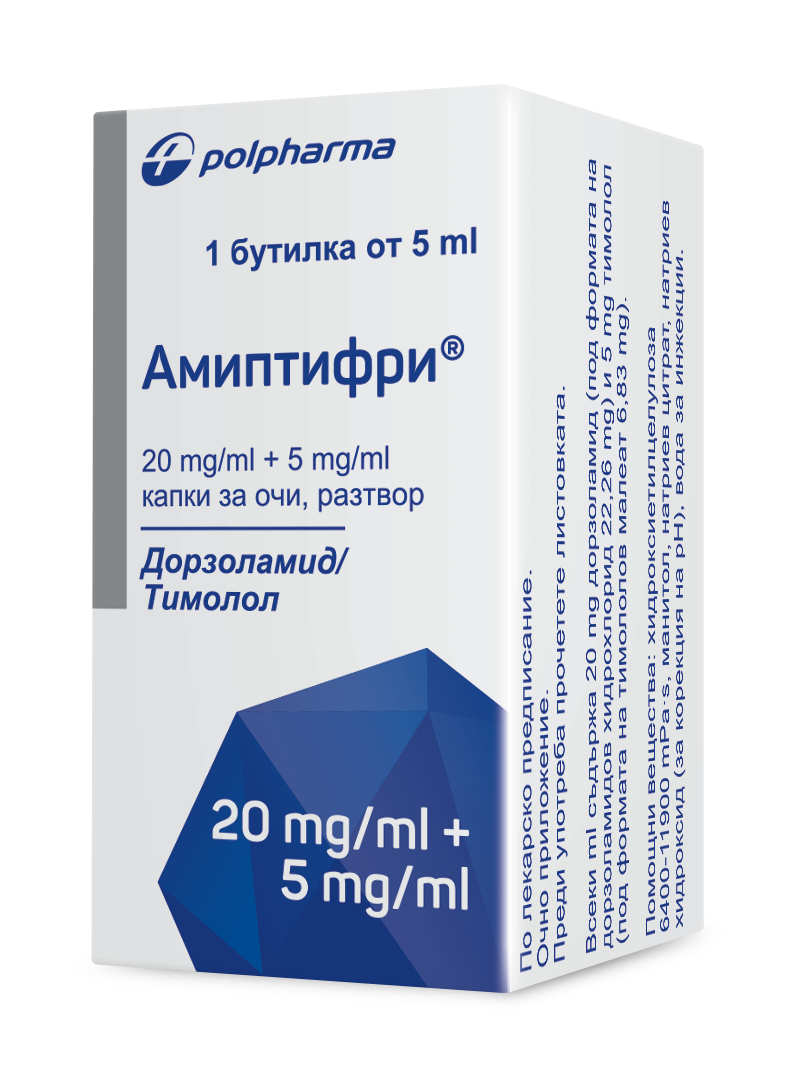
AMIPTIFREE eye drops sol 20mg/ml+5mg/ml 5ml
лекарствена информация
It is not sold online
Add to Favourites
AMIPTIFREE eye drops sol 20mg/ml+5mg/ml 5ml
SUMMARY OF PRODUCT CHARACTERISTICS
1. NAME OF THE MEDICINAL PRODUCT
Amiptifry 20 mg/ml + 5 mg/ml eye drops, solution
Amiptifree 20 mg/ml + 5 mg/ml eye drops, solution
2. QUALITATIVE AND QUANTITATIVE COMPOSITION
Each ml contains 20 mg dorzolamide (as dorzolamide hydrochloride: 22.26 mg) and 5 mg timolol (as timolol maleate: 6.83 mg).
Each drop (approximately 35 µl) contains 0.70 mg dorzolamide and 0.18 mg timolol.
For the full list of excipients, see section 6.1.
3. PHARMACEUTICAL FORM
Eye drops, solution
Clear, colorless, slightly viscous solution
pH: 5.0 - 6.0
Osmolality: 250 - 320 mOsmol/kg
4. CLINICAL DATA
4.1 Therapeutic indications
Indicated for the treatment of elevated intraocular pressure (IOP) in patients with open-angle glaucoma or pseudoexfoliative glaucoma when monotherapy with a topical beta-blocker is insufficient.
4.2 Dosage and administration
Dosage
The dosage is one drop of Amiptifry in the (conjunctival sac of) the affected eye(s) twice daily.
If another topical ophthalmic agent is used, there should be an interval of at least ten minutes between the application of Amiptifry and that agent. Eye ointments should be applied last.
Patients should be instructed to wash their hands before use and to take care not to allow the packaging to come into contact with the eye or surrounding structures as this may cause eye injury (see instructions for use).
Patients should also be instructed that if used incorrectly, eye solutions may become contaminated with common bacteria known to cause eye infections. The use of contaminated solutions may result in serious eye damage and subsequent loss of vision.
Pediatric population
Efficacy in pediatric patients has not been established.
Safety in paediatric patients below 2 years of age has not been established. (For information on safety in paediatric patients aged ≥ 2 to < 6 years, see section 5.1)
Method of administration
Ocular application.
The medical product Amiptifry is a sterile solution that does not contain a preservative.
Before you start applying the eye drops:
- When using for the first time, before putting a single drop into your eye, you will first need to practice using the dropper bottle by squeezing it lightly to drop a single drop into the air, away from your eye.
- When you are sure that you can put one drop in at the specified time, choose a position that you find most comfortable for applying the drops (you can sit, lie on your back, or stand in front of a mirror).
Instructions for use:
1. Before using this medicine, wash your hands thoroughly.
2. If the packaging or bottle is damaged, do not use the medicine.
3. When using the medicine for the first time, unscrew the cap after making sure that the sealing ring on the cap is not broken. You should feel a slight resistance when this tamper-evident ring breaks off.
4. If the tamper-evident ring is loose, discard it as it may fall into the eye and cause injury.
5. Tilt your head back and gently pull down your lower eyelid to form a pocket between your eye and eyelid. Avoid contact between the tip of the bottle, your eye, eyelid or fingers.
6. Gently squeeze the bottle in the middle and put one drop into your eye. Please remember that it may take a few seconds from squeezing the bottle until the drop comes out. Do not squeeze too hard. If you are not sure how to use this medicine, ask your doctor, pharmacist or nurse.
7. Then, apply pressure to the tear duct for about 2 minutes (by pressing your finger on the corner of your eye near your nose), close your eye(s) and help them stay closed during this time. This ensures that the drop is absorbed by the eye and may reduce the amount of medication draining through the tear duct into your nose.
8. Avoid contact between the tip of the bottle and the eye, eyelids or fingers.
9. If necessary, repeat steps 5, 6 and 7 for your other eye.
10. After use and before re-closing, the bottle should be shaken once in a downward direction without touching the dropper tip to remove any residual liquid from the tip. This is necessary to ensure the release of the next drops. After application, screw the bottle cap back on.
If a drop doesn't reach your eye, try again.
Systemic absorption is reduced if nasolacrimal occlusion is used or the eyelids are closed for 2 minutes. This may lead to a reduction in systemic adverse effects and an increase in local action.
4.3 Contraindications
Amiptifry is contraindicated in patients with:
- reactive airway diseases, including bronchial asthma or a history of bronchial asthma, or severe chronic obstructive pulmonary disease
- sinus bradycardia, sick sinus syndrome, sinoatrial block, second or third degree atrioventricular block not controlled by a pacemaker, overt heart failure, cardiogenic shock
- severe renal failure (creatinine clearance < 30 ml/min) or hyperchloremic acidosis
- hypersensitivity to one or both active substances or to any of the excipients listed in section 6.1.
The contraindications listed above are determined by the ingredients and are not specific to the combination.
4.4 Special warnings and precautions for use
Cardiovascular/respiratory system reactions
Like other topically applied ophthalmic products, timolol is subject to systemic absorption. Due to the beta-adrenergic component of timolol, the same types of cardiovascular, pulmonary and other adverse reactions may occur as with systemic beta-blockers. The incidence of systemic adverse reactions following topical ophthalmic administration is lower than with systemic administration. For reduced systemic absorption, see section 4.2.
Cardiac disorders:
In patients with cardiovascular disease (e.g. coronary artery disease, Prinzmetal's angina and heart failure) and arterial hypotension, treatment with beta-blockers should be carefully considered and the possibility of treatment with other active substances should be taken into account. Patients with cardiovascular disease should be monitored for signs of worsening of these diseases and for adverse reactions.
Due to their negative effect on conduction time, beta-blockers should only be prescribed with caution in patients with first-degree heart block.
Vascular disorders:
Patients with severe peripheral circulatory disorders/diseases (e.g., severe forms of Raynaud's disease or Raynaud's syndrome) should be treated with caution.
Respiratory disorders:
Respiratory adverse reactions, including death due to bronchospasm, have been reported in patients with asthma following administration of some ophthalmic beta-blockers.
Amitriptyline should be used with caution in patients with mild/moderate chronic obstructive pulmonary disease (COPD) and only if the potential benefit outweighs the potential risk.
Liver damage
Dorzolamide/timolol 20 mg/ml + 5 mg/ml eye drops, solution has not been studied in patients with hepatic impairment and should therefore be used with caution in such patients.
Immunology and hypersensitivity
As with other topically applied ophthalmic products, this medicinal product may be absorbed systemically. Dorzolamide contains a sulfonamide group, which is also found in sulfonamide products. Therefore, the same adverse reactions as systemic sulfonamides may occur with topical application, including severe reactions such as Stevens-Johnson syndrome and toxic epidermal necrolysis. If signs of serious adverse reactions or hypersensitivity occur, discontinue use of this product.
Local ocular adverse reactions similar to those observed with dorzolamide hydrochloride eye drops have been observed with the use of dorzolamide/timolol 20 mg/ml + 5 mg/ml eye drops, solution. If such reactions develop, discontinuation of Amiptifry treatment should be considered.
While taking beta-blockers, patients with a history of atopy or severe anaphylactic reaction to various allergens may be hyperreactive when re-exposed to such allergens and may not respond to the usual doses of adrenaline used to treat anaphylactic reactions.
Concomitant treatment
When timolol is administered to patients already receiving a systemic beta-blocker, the effect on intraocular pressure or the known effects of systemic beta-blockade may be potentiated. In these patients, the response to treatment should be closely monitored. The concomitant use of two topical beta-blockers is not recommended (see section 4.5).
The concomitant use of dorzolamide and oral carbonic anhydrase inhibitors is not recommended.
Stopping treatment
As with systemic beta-blocker therapy, if the ophthalmic product timolol needs to be discontinued in patients with coronary heart disease, treatment should be discontinued gradually.
Additional effects of beta-blockade
Hypoglycemia/diabetes:
Beta-blockers should be used with caution in patients prone to spontaneous hypoglycemia or in patients with unstable diabetes, as they may mask the signs and symptoms of acute hypoglycemia.
Beta-blockers may also mask the signs of hyperthyroidism. Abruptly stopping treatment with beta-blockers may cause symptoms to worsen.
Corneal diseases:
Ophthalmic beta-blockers may cause dry eyes. Patients with corneal diseases should be treated with caution.
Surgical anesthesia:
Ophthalmic beta-blockers may antagonize the systemic beta-agonist effects of, for example, adrenaline. If the patient is receiving timolol, the anaesthetist should be made aware of this. Treatment with beta-blockers may worsen the symptoms of myasthenia gravis.
Additional effects of carbonic anhydrase inhibition
Treatment with oral carbonic anhydrase inhibitors has been associated with urolithiasis due to acid-base disturbances, particularly in patients with a history of nephrolithiasis. Although no acid-base disturbances have been observed with the product (retained formulation), there have been uncommon reports of urolithiasis. Since Amiptifry contains a topical carbonic anhydrase inhibitor that is systemically absorbed, patients with a history of nephrolithiasis may be at increased risk of developing urolithiasis while taking this medicinal product.
Others
Treatment of patients with acute angle-closure glaucoma requires other therapeutic interventions in addition to intraocular pressure-lowering agents. This medicinal product has not been studied in patients with acute angle-closure glaucoma.
In patients with pre-existing chronic corneal defects and/or a history of intraocular surgery, corneal edema and irreversible corneal decompensation have been reported during the use of dorzolamide. Patients with low endothelial cell counts are at increased risk of developing mucosal edema. Caution should be exercised when prescribing Amitriptyline to these patients.
When administering drugs that suppress the production of intraocular fluid (e.g., timolol, acetazolamide) after filtration procedures, there have been reports of choroidal detachment.
As with other glaucoma medications, there have been reports of a decrease in response to ophthalmic timolol maleate after prolonged use in some patients. However, in clinical trials that followed 164 patients for at least three years, no significant differences in mean intraocular pressure were observed after initial stabilization.
Using contact lenses
Dorzolamide/timolol 20 mg/ml + 5 mg/ml eye drops, solution has not been studied in patients who wear contact lenses. Patients should be instructed to remove contact lenses from their eyes prior to application of the product and to wait at least 15 minutes before reinsertion.
Pediatric population
See point 5.1
4.5 Interaction with other medicinal products and other forms of interaction
No studies have been conducted on specific drug interactions with Amiptifry.
In a clinical study, dorzolamide/timolol 20 mg/ml + 5 mg/ml, eye drops, solution, was used concomitantly with the following systemic drugs without evidence of adverse drug interactions: ACE inhibitors, calcium antagonists, diuretics, nonsteroidal anti-inflammatory drugs including aspirin, and hormones (e.g. estrogen, insulin, thyroxine).
There is a potential for synergism leading to hypotension and/or marked bradycardia when ophthalmic beta-blocker solution is used concomitantly with oral calcium antagonists, catecholamine-depleting drugs or beta-blockers, antiarrhythmic drugs (including amiodarone), cardiac glycosides, parasympathomimetics, guanethidine, narcotics and monoamine oxidase (MAO) inhibitors.
There have been reports of potentiation of systemic effects of beta-blockade (e.g. decreased heart rate, depression) with concomitant administration of CYP2D6 inhibitors (e.g. quinidine, fluoxetine, paroxetine) and timolol.
Although the product (proprietary formula) itself has only a weak effect or no effect on pupil diameter, there have been sporadic reports of mydriasis resulting from the concomitant administration of ophthalmic beta-blockers and adrenaline (epinephrine).
Beta-blockers may potentiate the hypoglycaemic effect of antidiabetic agents.
Oral beta-blockers may enhance rebound hypertension upon discontinuation of clonidine.
4.6 Fertility, pregnancy and lactation
Pregnancy
Amiptifry should not be used during pregnancy.
Dorzolamide
There are no adequate clinical data on exposure during pregnancy. Dorzolamide was teratogenic in rabbits at maternally toxic doses (see section 5.3).
Timolol
There are no adequate data from the use of timolol in pregnant women. Timolol should not be used during pregnancy unless clearly necessary. For reduced systemic absorption see section 4.2.
Epidemiological studies with oral beta-blockers have not shown any malformative effects, but have shown a risk of intrauterine growth retardation. In addition, signs and symptoms of beta-blockade (e.g. bradycardia, hypotension, respiratory distress and hypoglycaemia) have been observed in neonates if beta-blockers have been administered antenatally. If this medicinal product is administered antenatally, the neonate should be closely monitored during the first days of life.
Breastfeeding
It is not known whether dorzolamide is excreted in human milk. In lactating rats receiving dorzolamide, a delay in weight gain of the offspring was observed.
Beta-blockers are excreted in human milk. However, at therapeutic doses of timolol in eye drops, it is unlikely that sufficient quantities will be present in human milk to cause clinical symptoms of beta-blockade in the newborn. For reduction of systemic absorption, see section 4.2. If treatment with Amitriptyline is necessary, breast-feeding is not recommended.
4.7 Effects on ability to drive and use machines
No studies on the effects on the ability to drive and use machines have been performed. Possible side effects, such as blurred vision, may affect the ability to drive and/or use machines in some patients.
4.8 Adverse drug reactions
In a clinical study of dorzolamide/timolol 20 mg/ml + 5 mg/ml eye drops, solution, the adverse reactions observed were similar to those previously reported with the preservative-containing dorzolamide hydrochloride and/or timolol maleate product.
During clinical trials, 1035 patients were treated with a preservative-containing formulation of dorzolamide hydrochloride and timolol maleate. Approximately 2.4% of all patients discontinued treatment with dorzolamide hydrochloride and timolol maleate preservative-containing formulation due to local ocular adverse reactions; approximately 1.2% of all patients discontinued treatment due to local ocular adverse reactions suggestive of allergy or hypersensitivity (such as eyelid inflammation and conjunctivitis).
In a double-masked, multiple-dose comparative study, dorzolamide hydrochloride and timolol maleate (in a preservative-free formulation) was found to have a similar safety profile to dorzolamide hydrochloride and timolol maleate (in a preservative-containing formulation).
Like other topically applied ophthalmic drugs, timolol is absorbed into the systemic circulation. This may cause adverse reactions similar to those seen with systemic beta-blockers. The incidence of systemic adverse reactions following topical ophthalmic products is lower than with systemic administration.
The following adverse reactions have been reported during clinical trials or during post-marketing experience with dorzolamide hydrochloride and timolol maleate in a preservative-free formulation, or with any of the components:
[Very common: (≥ 1/10), Common: (≥ 1/100 to < 1/10), Uncommon: (≥ 1/1,000 to < 1/100) and Rare: (≥ 1/10,000 to < 1/1,000), Not known (frequency cannot be estimated from the available data)]
System organ classes (MedDRA)
Dosage form
Very common
Frequent
Uncommon
Rare
Frequency unknown**
Immune system disorders
Dorzolamide hydrochloride and timolol maleate in preservative-free form
signs and symptoms of systemic allergic reactions, including angioedema, urticaria, pruritus, rash, anaphylaxis
Timolol maleate eye drops, solution
signs and symptoms of allergic reactions, including angioedema, urticaria, localized and generalized rash, anaphylaxis
itching
Metabolic and nutritional disorders
Timolol maleate eye drops, solution
hypoglycemia
Mental disorders
Timolol maleate eye drops, solution
depression*
insomnia*, nightmares*, memory loss
hallucination
(adverse reactions observed with timolol monotherapy)
Nervous system disorders
Dorzolamide hydrochloride eye drops, solution
headache*
dizziness*, paraesthesia*
Timolol maleate eye drops, solution
headache*
dizziness*, syncope*
paraesthesia*, worsening of signs and symptoms of myasthenia gravis, decreased libido*, cerebrovascular accident*, cerebral ischaemia
Eye disorders
Dorzolamide hydrochloride and timolol maleate in preservative-free form
burning and stinging
conjunctival infection, blurred vision, corneal erosions, itchy eyes, tearing
Dorzolamide hydrochloride eye drops, solution
Eyelid inflammation*, eyelid irritation*
iridocyclitis*
irritation, including redness*, pain*, eyelid crusting*, transient myopia (which resolves after discontinuation of treatment), corneal edema*, hypotony of the eyeball*, choroidal detachment (after filtration surgery)*
foreign body sensation in the eye
Timolol maleate eye drops, solution
signs and symptoms of eye irritation, including blepharitis*, keratitis*, decreased corneal sensitivity and dry eyes*
visual disturbances, including changes in refraction (in some cases due to discontinuation of miotic therapy)*
ptosis, diplopia, choroidal detachment after filtration surgery* (see Special warnings and precautions for use, 4.4)
itching, tearing, redness, blurred vision, corneal erosions
Ear and labyrinth disorders
Timolol maleate eye drops, solution
tinnitus*
Heart disorders
Timolol maleate eye drops, solution
bradycardia*
chest pain*, palpitations*, edema*, arrhythmia*, congestive heart failure*, cardiac arrest*, heart block
atrioventricular block, heart failure
Dorzolamide hydrochloride eye drops, solution
heartbeat
Vascular disorders
Timolol maleate eye drops, solution
arterial hypotension*, claudication, Raynaud's phenomenon*, cold hands and feet*
Respiratory, thoracic and mediastinal disorders
Dorzolamide hydrochloride and timolol maleate in preservative-free form
sinusitis
shortness of breath, respiratory failure, rhinitis, rarely bronchospasm
Dorzolamide hydrochloride eye drops, solution
epistaxis*
dyspnea
Timolol maleate eye drops, solution
dyspnea*
bronchospasm (predominantly in patients with pre-existing spastic disease)*, respiratory failure, cough*
Gastrointestinal disorders
Dorzolamide hydrochloride and timolol maleate in preservative-free form
dysgeusia
Dorzolamide hydrochloride eye drops, solution
nausea*
throat irritation, dry mouth*
Timolol maleate eye drops, solution
nausea*, dyspepsia*
diarrhea, dry mouth*
dysgeusia, abdominal pain, vomiting
Skin and subcutaneous tissue disorders
Dorzolamide hydrochloride and timolol maleate in preservative-free form
contact dermatitis, Stevens-Johnson syndrome, toxic epidermal necrolysis
Dorzolamide hydrochloride eye drops, solution
rash*
Timolol maleate eye drops, solution
alopecia*, psoriasiform rash or exacerbation of psoriasis*
skin rash
Musculoskeletal and connective tissue disorders
Timolol maleate eye drops, solution
systemic lupus erythematosus
myalgia
Kidney and urinary tract disorders
Dorzolamide hydrochloride and timolol maleate in preservative-free form
urolithiasis
Reproductive system and breast disorders
Timolol maleate eye drops, solution
Peyronie's disease*, decreased libido
sexual dysfunction
General disorders and administration site conditions
Dorzolamide hydrochloride eye drops, solution
asthenia/fatigue*
Timolol maleate eye drops, solution
asthenia/fatigue*
*These adverse reactions have also been observed with dorzolamide hydrochloride and timolol maleate in a preservative-free formulation during the post-marketing period.
**Additional adverse reactions have been observed with other ophthalmic beta-blockers and may also occur with preservative-free dorzolamide hydrochloride and timolol maleate.
Reporting suspected adverse reactions
Reporting of suspected adverse reactions after authorisation of a medicinal product is important. This allows for continued monitoring of the benefit-risk balance of the medicinal product. Healthcare professionals are asked to report any suspected adverse reactions via
Executive Agency for Medicines
8 Damyan Gruev Street
1303 Sofia
Tel.: +35 928903417
website: www.bda.bg
4.9 Overdose
There are no data on overdose due to accidental or intentional ingestion by humans of dorzolamide hydrochloride and timolol maleate in a preservative-containing formulation or of dorzolamide hydrochloride and timolol maleate in a preservative-free formulation.
Symptoms
There have been reports of inadvertent overdose of timolol maleate ophthalmic solution, resulting in systemic effects similar to those seen with overdose of systemic beta-blockers, such as dizziness, headache, shortness of breath, bradycardia, bronchospasm and cardiac arrest. The most common signs and symptoms to be expected with dorzolamide overdose are electrolyte disturbances, development of acidosis and possibly central nervous system effects.
Data on accidental or intentional overdose of dorzolamide hydrochloride in humans are limited. Somnolence has been reported after oral administration. The following effects have been reported after topical administration: nausea, dizziness, headache, fatigue, abnormal dreams and dysphagia.
Treatment
Treatment should be symptomatic and supportive. Serum electrolyte levels (especially potassium) and blood pH should be monitored. Studies have shown that timolol is not readily dialysable.
5. PHARMACOLOGICAL PROPERTIES
5.1 Pharmacodynamic properties
Pharmacotherapeutic group: Antiglaucoma preparations and miotics, beta-blockers, timolol, combinations, ATC code: S01E D51
Mechanism of action
Amiptifry consists of two components: dorzolamide hydrochloride and timolol maleate. Each of these components lowers elevated intraocular pressure by suppressing the secretion of intraocular fluid, but achieves this by a different mechanism.
Dorzolamide hydrochloride is a potent inhibitor of human carbonic anhydrase II. Inhibition of carbonic anhydrase in the ciliary processes of the eye reduces the production of intraocular fluid, probably by slowing the formation of bicarbonate ions, which leads to a subsequent restriction of sodium and water transport. Timolol maleate is a non-selective beta-adrenergic blocker. The exact mechanism of action by which timolol maleate reduces intraocular pressure is currently not fully understood, although fluorescein and tonographic studies suggest that its main action is to reduce the formation of intraocular fluid. However, some studies have noted a slight increase in outflow. The combined effect of these two agents leads to a greater reduction in intraocular pressure (IOP) compared to that achieved by applying either of the two components separately.
After topical administration, Amiptifry reduces elevated intraocular pressure, whether or not associated with glaucoma. Elevated intraocular pressure is a significant risk factor in the pathogenesis of optic nerve damage and visual field loss in glaucoma. This medicinal product reduces intraocular pressure without causing the common adverse effects of miotics, such as night blindness, accommodation spasm and pupillary constriction.
Pharmacodynamic effects
Clinical effects
Clinical trials of up to 15 months duration were conducted to compare the effects of dorzolamide hydrochloride and timolol maleate (preserved formulation) administered twice daily (morning and evening) in lowering intraocular pressure with the effects of timolol 0.5% and dorzolamide 2.0% administered separately and concomitantly in patients with glaucoma or raised intraocular pressure for whom combination therapy was considered appropriate in the trials. This included both untreated patients and patients who were inadequately controlled with timolol monotherapy. Most patients were treated with topical beta-blocker monotherapy prior to study entry. Analysis of the combined studies showed that dorzolamide hydrochloride and timolol maleate (preserved formulation) administered twice daily had a greater effect in lowering intraocular pressure than monotherapy with both dorzolamide 2% three times daily and timolol 0.5% twice daily. The effect of dorzolamide hydrochloride and timolol maleate (preserved formulation) administered twice daily in lowering intraocular pressure was equivalent to that of concomitant administration of dorzolamide twice daily and timolol twice daily. The effect of dorzolamide hydrochloride and timolol maleate (preserved formulation) administered twice daily in lowering intraocular pressure was demonstrated by measuring intraocular pressure at different times of the day, and this effect was maintained with long-term use.
In an active-controlled, parallel, double-masked study in 261 patients with elevated intraocular pressure ≥ 22 mmHg in one or both eyes, dorzolamide hydrochloride and timolol maleate (preserved-free formulation) had an intraocular pressure-lowering effect equivalent to that of dorzolamide hydrochloride and timolol maleate (preserved-free formulation). The safety profile of dorzolamide hydrochloride and timolol maleate (preserved-free formulation) was similar to that of dorzolamide hydrochloride and timolol maleate (preserved-preserved formulation).
Pediatric population
A three-month controlled study was conducted with the primary objective of documenting the safety of dorzolamide hydrochloride 2% ophthalmic solution in children less than 6 years of age. In this open-label study, 30 patients less than 6 years of age and greater than or equal to 2 years of age whose intraocular pressure was not adequately controlled with dorzolamide or timolol monotherapy received dorzolamide hydrochloride and timolol maleate (preserved formulation). Efficacy in these patients has not been established. In this small group of patients, twice daily administration of dorzolamide hydrochloride and timolol maleate (preserved formulation) was generally well tolerated, with 19 patients completing the study and 11 withdrawing due to surgery, change of treatment, or other reasons.
5.2 Pharmacokinetic properties
Dorzolamide hydrochloride
In contrast to oral administration of carbonic anhydrase inhibitors, topical administration of dorzolamide hydrochloride allows the active substance to exert its effects directly in the eye at a significantly lower dose and therefore lower systemic exposure. In clinical studies, this resulted in a reduction in intraocular pressure without the acid-base or electrolyte disturbances characteristic of oral carbonic anhydrase inhibitors.
When applied topically, dorzolamide reaches the systemic circulation. In order to assess the potential for systemic inhibition of carbonic anhydrase after topical application, the concentrations of the active substance and its metabolites in erythrocytes (red blood cells) and plasma, as well as the inhibition of erythrocyte carbonic anhydrase, were measured. With prolonged administration, dorzolamide accumulates in erythrocytes as a result of selective binding to carbonic anhydrase-II, while the concentration of free active substance in plasma is maintained extremely low. The parent active substance forms an N-desethyl metabolite, which is a weaker inhibitor of carbonic anhydrase-II compared to the parent active substance, but also inhibits one of the less active isoenzymes (carbonic anhydrase-I). This metabolite also accumulates in erythrocytes, where it binds predominantly to carbonic anhydrase-I. Dorzolamide is moderately bound to plasma proteins (approximately 33%). Dorzolamide is excreted mainly unchanged in the urine; its metabolite is also excreted in the urine. After discontinuation of the drug, erythrocytes clear dorzolamide in a non-linear manner, resulting in an initial rapid decline in the concentration of the active substance, followed by a slower elimination phase with a half-life of about four months.
When dorzolamide is administered orally to simulate maximum systemic exposure after long-term topical ocular administration, steady state is achieved within 13 weeks. At steady state, there is virtually no free active substance or metabolite in plasma; inhibition of carbonic anhydrase in erythrocytes is less pronounced than expected to be necessary to exert a pharmacological effect on renal function or respiration. Similar pharmacokinetic results have been obtained after long-term topical administration of dorzolamide hydrochloride. However, some elderly patients with renal insufficiency (estimated creatinine clearance 30-60 ml/min) have higher erythrocyte concentrations of the metabolite, but without significant differences in carbonic anhydrase inhibition and without clinically significant systemic adverse effects directly attributable to this finding.
Timolol maleate
A plasma concentration study in six subjects determined the systemic exposure to timolol following twice daily topical administration of 0.5% timolol maleate ophthalmic solution. The mean peak plasma concentration after morning administration was 0.46 ng/ml and after evening administration was 0.35 ng/ml.
5.3 Preclinical safety data
The ocular and systemic safety profiles of the individual components are well known.
Dorzolamide
In rabbits given dorzolamide at maternally toxic doses associated with metabolic acidosis, malformations of the vertebral bodies were observed.
Timolol
Animal studies have not shown any teratogenic effect.
In addition, no adverse ocular effects were observed in animals treated with topical dorzolamide hydrochloride and timolol maleate ophthalmic solution or in animals treated with dorzolamide hydrochloride and timolol maleate together. In vitro and in vivo studies of each of the components did not indicate any mutagenic potential. Therefore, no particular risk to humans is expected when Amiptifry is administered at therapeutic doses.
6. PHARMACEUTICAL PARTICULARS
6.1 List of excipients
Hydroxyethylcellulose 6400-11900 mPa·s
Mannitol
Sodium citrate
Sodium hydroxide (for pH adjustment)
Purified water
6.2 Incompatibilities
Not applicable.
6.3 Shelf life
2 years
The shelf life of this product after first opening the bottle is 90 days.
For storage conditions after first opening the bottle, see section 6.4.
6.4 Special storage conditions
Store below 30°C.
Chemical and physical in-use stability has been demonstrated for 90 days at 25 ± 2ºC.
From a microbiological point of view, once opened, the product may be stored for a maximum of 90 days below 25ºC. Other storage times and conditions of use are the responsibility of the user.
6.5 Nature and contents of container
The packaging consists of a white low-density polyethylene bottle (5 ml) with a multi-dose high-density polyethylene dropper applicator, which prevents back-contamination of the contents thanks to a silicone valve system and the return of filtered air to the bottle, a tamper-evident high-density polyethylene screw cap and a cardboard box.
1 x 5ml
3 x 5 ml
Not all types of packaging can be released for sale.
6.6 Special precautions for disposal and handling
There are no special requirements.
7. MARKETING AUTHORISATION HOLDER
Pharmaceutical Works POLPHARMA SA
19 Pelplińska Street
83-200 Starogard Gdański
Poland
8. MARKETING AUTHORISATION NUMBER(S)
Reg. No.: 20170272
9. DATE OF FIRST AUTHORISATION/RENEWAL OF THE AUTHORISATION
Date of first authorisation: 07.09.2017
10. DATE OF TEXT UPDATE
Express Delivery (within 2 hours)
- Valid only for the city of Sofia
- Valid only for orders over €25.56 | 50.00 BGN
- Valid only for cash on delivery (cash or card payment upon receipt)
Delivery to a Pharmacy
- Completed within up to 2 business days
- Valid for Sofia, Bozhurishte, and Mramor
- Free delivery
- Valid only for online payment
Courier Delivery to an Address
- Completed within up to 3 business days
- €2.30 | 4.50 BGN for orders under €25.56 | 50.00 BGN
- Free for orders over €25.56 | 50.00 BGN
Delivery to a Speedy Office
- Completed within up to 3 business days
- €2.30 | 4.50 BGN for orders under €25.56 | 50.00 BGN
- Free for orders over €25.56 | 50.00 BGN
BOX NOW
- Completed within up to 3 business days
- €1.53 | 2.99 BGN for orders under €25.56 | 50.00 BGN
- Free delivery for orders over €25.56 | 50.00 BGN
* Delivery times may change during large-scale campaigns and busy periods (Black Friday, public holidays, etc.).
* When ordering to a Speedy office, the customer has 5 business days from the delivery date to collect their order. After this period, the order is canceled and returned to the warehouse at subra.bg.

Express delivery for Sofia city Learn more

Free shippingover 50.00 lv / 25.56 €

Click and collect Learn more

Check the shipment Learn more
Book and collect from pharmacy
Availability in store
AMIPTIFREE eye drops sol 20mg/ml+5mg/ml 5ml
Please add your email, to receive notification when the product is in stock