


 Click & collect






Ще се изтрие най-старият артикул от любими и ще се добави новият
In stock
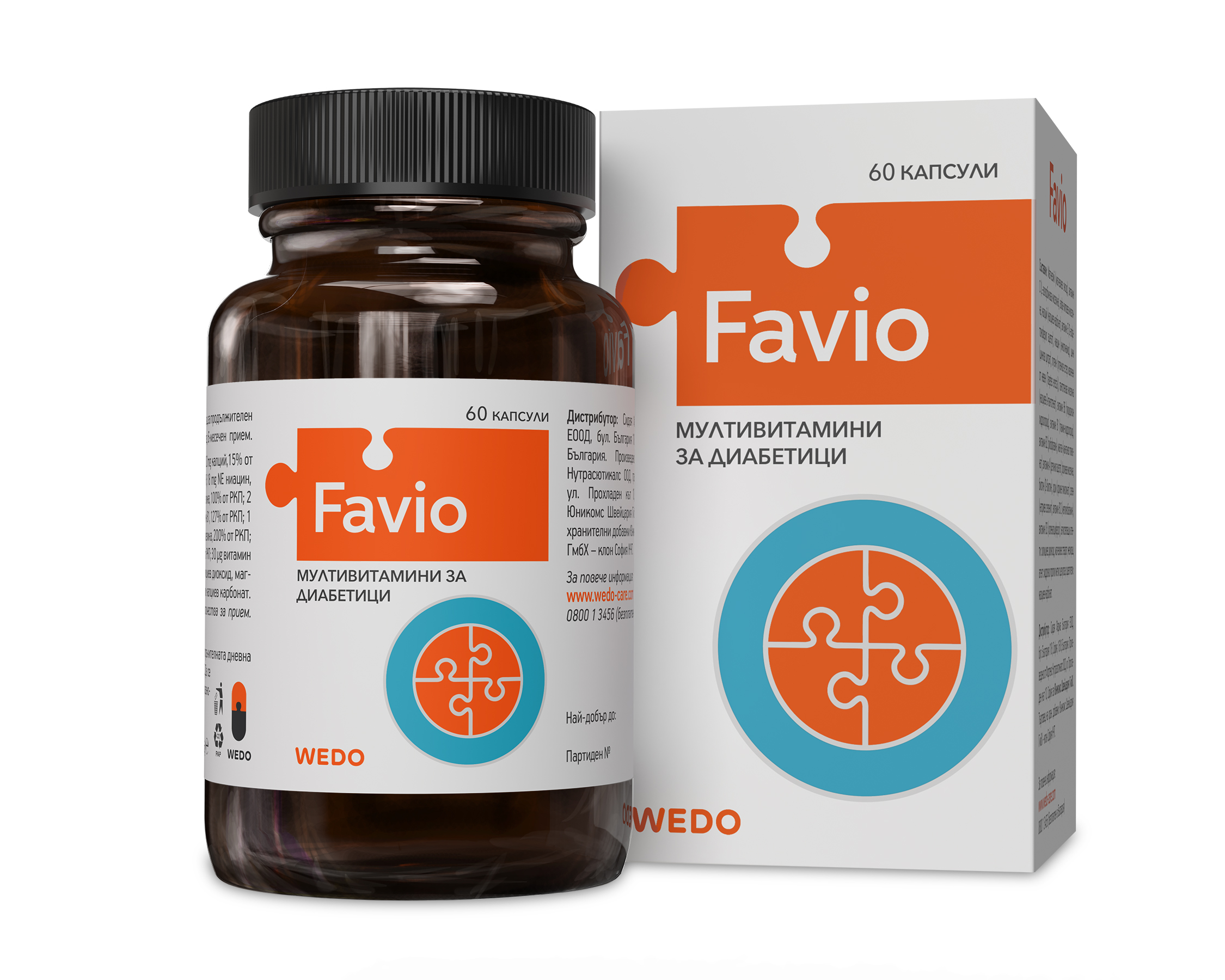
FAVIO for diabetics x 60 tabl
10.98 €
Add to Favourites
FAVIO for diabetics x 60 tabl
FAVIO vitamins for diabetics tablets * 60
MULTIVITAMINS TAILORED TO THE SPECIFIC REQUIREMENTS AND NEEDS OF PEOPLE
WITH DIABETES
Why do diabetics have a specific need for vitamins?
Impaired glucose metabolism in diabetics and people with prediabetes is the cause of specific vitamin and mineral deficiencies, which determines the need for their additional intake.
Favio is a specialized multivitamin formula. It aims to cover the daily needs of vitamins, minerals and trace elements necessary to maintain normal functions in the body in a state of impaired glucose metabolism. The formula, enriched with alpha lipoic acid and lutein, is specifically designed for:
diabetics and people with prediabetes;
predisposed to diabetes.
What are the advantages of Favio?
Favio helps achieve optimal antioxidant protection and regulate blood sugar levels, thanks to the rich combination of alpha lipoic acid and lutein combined with 20 vitamins and minerals.
Chromium, magnesium and alpha lipoic acid improve the body's insulin and energy metabolism. In combination, the three ingredients have a mutually reinforcing effect and help achieve a balance in metabolic processes. This is especially important for the proper functioning of the nerves and blood vessels. In this way, adverse effects such as numbness and loss of sensitivity in the extremities, characteristic of diabetes, can be reduced.
Favio provides the recommended daily intake of lutein. Numerous studies show that taking 6 mg of lutein daily reduces the risk of eye damage.
The role of antioxidants in diabetes:
In the presence of diabetes, the cells of the body age very quickly and are gradually destroyed. Therefore, it is necessary to take a rich complex of antioxidants. Antioxidants help block harmful chemical waste products (so-called free radicals) in the body. In this way, the destruction of the cell is prevented.
How does alpha lipoic acid work?
Improves glucose metabolism:
Alpha lipoic acid is responsible for the cell's energy metabolism by helping to convert glucose into energy.
This leads to a decrease in blood sugar levels.
Provides powerful antioxidant protection:
Alpha lipoic acid is among the strongest antioxidants. It favors the neutralization of free radicals. Unlike most known antioxidants, alpha lipoic acid also has the unique property of acting in both aqueous and fatty environments. Thus, it is distributed to all parts of the
the body, which makes it extremely valuable.
A common disability resulting from diabetes is the appearance of numbness, numbness, or burning pain in the extremities.
Alpha lipoic acid reduces the manifestations of these symptoms, thanks to its following functions:
• Improves glucose metabolism and the absorption of the necessary amounts of energy by the nerve cell;
• Reduces the harmful effects of radicals on cells. This preserves normal functions of peripheral nerves and reduces the risk of cell damage;
• Protects and stimulates the action of antioxidant vitamins C and E.
What is the impact of lutein?
In diabetic condition, vision is at serious risk of damage. This is due to high blood sugar levels, which are a prerequisite for a significant increase in free radicals in the body. Therefore, daily intake of lutein is important. In addition to a strong antioxidant effect, the plant extract of lutein:
• has a beneficial effect on visual functions;
• slows down the processes of optic nerve damage.
The combination of chromium and biotin:
Numerous clinical studies have proven the beneficial effects of the combination of chromium picolinate and biotin on glucose metabolism. The two elements have a mutually reinforcing effect and help to:
reducing bad cholesterol levels;
improving fat metabolism, often problematic in people with diabetes.
Chromium stimulates insulin activity and lowers blood sugar.
Biotin helps convert glucose into energy and its absorption by muscle and nerve cells.
The role of B vitamins in diabetes:
The B vitamins group includes a total of 8 vitamins: Thiamine (B1), Riboflavin (B2), Niacin (B3), Pyridoxine hydrochloride (B6), Folic acid (B9), Cyanocobalamin (B12), Pantothenic acid (B5) and Biotin (B7). They are of great importance for the proper functioning of the nervous system. For example, B vitamins help lower blood sugar by promoting the absorption of fats, proteins and sugars. B vitamins are responsible for converting nutrients into absorbable cellular energy.
Vitamin B1 is important for metabolism, supports heart function, and has a positive effect on concentration, the endocrine system, and the digestive system. Vitamin B1 also has antioxidant properties.
Vitamin B2 is involved in the production of red blood cells, strengthens the immune system, and facilitates the functioning of the excretory system.
Vitamin B6 in combination with B12 and folic acid helps prevent kidney damage - one of the most common complications of diabetes. Alpha lipoic acid and B6 help reduce the risk of peripheral nerve damage. Vitamin B6 helps normalize insulin secretion and is recommended for high blood pressure, arthritis, and fatigue. Vitamin B12 helps maintain normal nerve cell function.
Niacin supports the function of the pancreas, which is responsible for the secretion of insulin. In combination with vitamin B2, it also has a positive effect on vision.
The impact of other vitamins and minerals on diabetes:
Vitamins E and C are powerful antioxidants. Vitamin E supports the action of insulin. It is also responsible for reducing the harmful effects on the heart. This is extremely valuable for diabetics, since their risk of developing heart disease is very high. Vitamin C helps insulin penetrate cells more easily. This directly affects metabolic processes and lowers blood sugar levels.
Zinc helps increase the body's resistance to external infections. This is extremely important for people with diabetes, as they are at a very high risk of developing infectious diseases.
Selenium contributes to increasing overall antioxidant protection. In addition, selenium has an antitoxic effect and regulates the function of the thyroid and pancreas.
Method of use:
Taking two tablets daily during meals provides the necessary balance of vitamins, minerals and trace elements, tailored to the needs of diabetics.
Tips for safe use:
Daily intake of Favio cannot replace the treatment prescribed by the doctor.
Food supplement. Do not exceed the recommended daily dose. Store in a dry and ventilated place at a temperature below 25°C.
Do not use after the date marked on the package. Do not use as a substitute for a varied diet.
Keep out of the reach of small children.
TABLE of energy values:
Contents: in 2 capsules
MON6X 123mg / 0.12g
Vitamin A 800 µg
Vitamin C 120 mg
Vitamin D3 5 µg
Vitamin E 30 mg α-TE
Vitamin B1 1.4 mg
Vitamin B2 1.6 mg
Niacin 18 mg NE
Vitamin B6 2 mg
Folic acid 400 µg
Vitamin B12
10 µg
Biotin 150 µg
Pantothenic acid 6 mg
Calcium 80 mg
Iodine 100 µg
Magnesium 200 mg
Zinc 15 mg
Selenium 60 µg
Manganese 1 mg
Chromium 100 µg
Potassium 100 mg
Alpha lipoic acid 100 mg
Lutein 6 mg
+ Daily dose not established
Does not contain: sugar, artificial colors and flavors, yeast, barley, wheat, corn, dairy products and derivatives, preservatives.
Made for: Switzerland.
Manufacturer: India
Express Delivery (within 2 hours)
- Valid only for the city of Sofia
- Valid only for orders over €25.56 | 50.00 BGN
- Valid only for cash on delivery (cash or card payment upon receipt)
Delivery to a Pharmacy
- Completed within up to 2 business days
- Valid for Sofia, Bozhurishte, and Mramor
- Free delivery
- Valid only for online payment
Courier Delivery to an Address
- Completed within up to 3 business days
- €2.30 | 4.50 BGN for orders under €25.56 | 50.00 BGN
- Free for orders over €25.56 | 50.00 BGN
Delivery to a Speedy Office
- Completed within up to 3 business days
- €2.30 | 4.50 BGN for orders under €25.56 | 50.00 BGN
- Free for orders over €25.56 | 50.00 BGN
BOX NOW
- Completed within up to 3 business days
- €1.53 | 2.99 BGN for orders under €25.56 | 50.00 BGN
- Free delivery for orders over €25.56 | 50.00 BGN
* Delivery times may change during large-scale campaigns and busy periods (Black Friday, public holidays, etc.).
* When ordering to a Speedy office, the customer has 5 business days from the delivery date to collect their order. After this period, the order is canceled and returned to the warehouse at subra.bg.

Express delivery for Sofia city Learn more

Free shippingover 50.00 lv / 25.56 €

Click and collect Learn more

Check the shipment Learn more
Book and collect from pharmacy
Availability in store
FAVIO for diabetics x 60 tabl
Please add your email, to receive notification when the product is in stock