


 Click & collect


Ще се изтрие най-старият артикул от любими и ще се добави новият

Out of stock
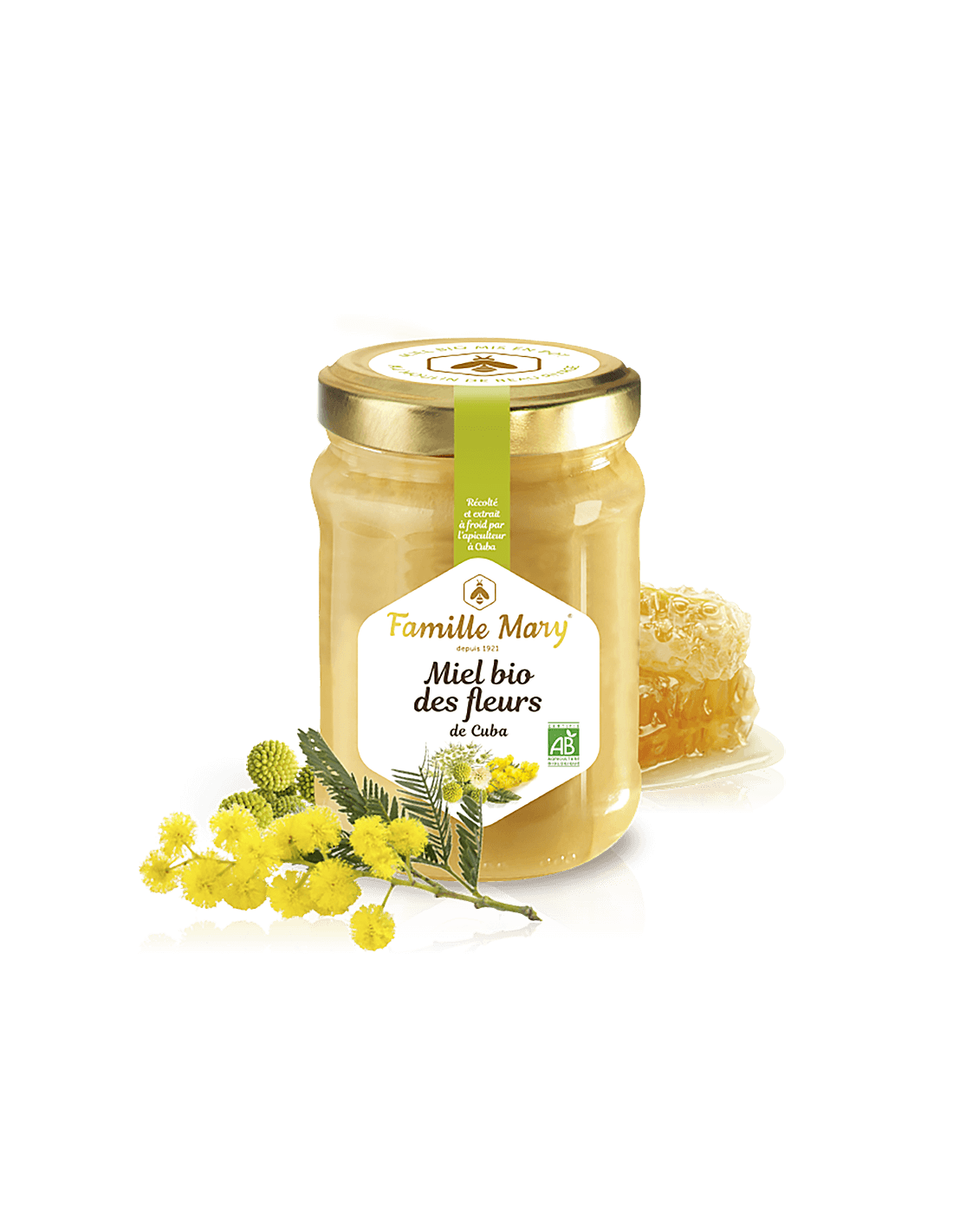
FAMILLE MARY Miel bio de fleurs de Cuba BIO Wildflower honey (from the island of Cuba) 230 g
Last retail price: 13.49 €
Add to Favourites
FAMILLE MARY Miel bio de fleurs de Cuba BIO Wildflower honey (from the island of Cuba) 230 g
Let's try honey from Cuba...True exoticism and one of the ways to transport ourselves to this fabulous Caribbean paradise, which for some is an "island of freedom", and for others - a "paradise of bees".
Cuban honey is unique and for many reasons. Local beekeepers like to say that honey is like wine – just as quality wine is made from good grapes, for real honey, bees look for a beautiful color. Cuban honey is very popular and considered exceptional due to the island’s position in the Caribbean and the low toxicity of its sources – it is one of the purest honeys in the world! It is collected from nectars that do not contain pesticides and insecticides and has a high nutritional value, a pleasant aroma and taste that satisfy even the most demanding consumers. For true honey lovers, Cuban polyfloral honey caresses the palate, letting the receptors capture its subtle yet rich, tropical essence. What makes Cuban honey unique is the natural and ecologically clean environment in a privileged climate, where an exquisite variety of rich and lush flora grows all year round. It is a living food because it has naturally occurring live enzymes, a full nutritional spectrum of natural pollens, and antioxidants.
The French honey house Famille Mary, faithful to the gastronomic challenge and driven by the desire to provide its customers with honeys of all tastes and aromas, succumbs to the temptation to expand its product range with honey from Cuba, in collaboration with its partners on the island. Miel bio dе fleurs de Cuba will not only satisfy your curiosity and fill you with a pinch of exoticism, but will also make you fall in love forever with this bee product, collected from the nectar of mimosa and royal palms during their flowering from May to July. It is a nectar with fruity notes and a golden color that you can taste directly with a spoon or spread on a slice of bread. Its aroma is irresistible, and the quality is guaranteed by a certificate of origin from organic farming (FR-BIO-01).
Honey from Cuba – justifiably famous throughout the world
The history of beekeeping in Cuba began more than 250 years ago, when European honey bees were first brought to the island in 1763. They found their natural habitat among the lush local vegetation, and today the country is an important exporter of honey, much of which is of organic origin. Over 160,000 bee colonies tirelessly pollinate thousands of plant species, with 95% of the honey coming from acacia, mangroves, palms and other wild species. The fact that the cultivation of GMO crops is prohibited in Cuba makes local honey particularly sought after. This is also facilitated by the Cuban ban on the use of chemicals and antibiotics to treat bees and control their parasites, which has a positive effect on the quality of the bee product.
The unique healing properties of Miel bio de fleurs de Cuba
Miel bio dе fleurs de Cuba contains pollen from many flowers, with the dominant presence of the royal palm (palm pollen) and the mimosa. The royal palm is the national tree of Cuba and is distinguished by its abundant flowering, which attracts bees. It produces honey with a rich mineral content. The mimosa, in turn, contains the non-protein amino acid mimosine, alkaloids, flavonoids C-glycosides, sterols, terpenoids, tannins and fatty acids.
Organic honey from Cuba flowers is characterized by the following action:
Antioxidant
Antibacterial and antifungal
Immunostimulating
Sedative
Stimulates sexual function
Tones
Stimulates the brain
Improves the circulatory system
Detoxifies
Health benefits
Palm pollen (royal palm)
Palm pollen is made up of about 17% sugarcane, 22% protein, 54% calcium, B vitamins, and minerals like phosphorus and iron. It also contains antioxidant compounds like vitamins C and E, beta carotene, and flavonoids, as well as an isotonic hormone that activates the ovaries.
Palm pollen honey provides the following health benefits:
Improving brain function and memory.
Restores body tissues.
Lowers blood pressure.
Reduces "bad" cholesterol.
Promotes sexual functions.
It has a positive effect on the nervous system.
Delays the signs of aging.
Stimulates the digestive system.
Helps with detoxification after poisoning.
It treats infertility.
It is useful for children and pregnant women.
Palm pollen contains hormones that stimulate and accelerate the production of eggs in the ovaries. It also helps regulate the menstrual cycle.
In men, it improves the quality of sperm, making it capable of fertilizing the egg. It also increases male sexual potency, improving the chances of fertilization and reproduction.
Main benefits
A sexual stimulant
Palm pollen enhances sexual sensations for both partners during intercourse. It also activates sperm and increases sexual desire in both women and men.
Useful for breastfeeding women
Palm pollen contains calcium and iron, which are necessary for the formation of breast milk. It helps accelerate the formation and strengthening of blood cells and bone marrow in infants, making them grow faster, healthier, and smarter.
Promotes pregnancy and facilitates childbirth
Scientific studies have shown that the use of palm pollen gives positive results in women suffering from low ovulation. It provides energy, endurance and ease of childbirth by strengthening the endometrium. It also compensates for the blood deficiency resulting from childbirth.
Stimulates body functions
Palm pollen provides relief for women during menopause: the period when bodily functions begin to slow down due to the lack of hormone production in sufficient quantities. Palm pollen can compensate for the lack of these hormones. It also helps to avoid the feeling of discomfort at the beginning of menopause. It should be noted that an increase in iron and vitamin content has been observed after consuming palm pollen. This helps to saturate the body's tissues with oxygen.
Nourishes the skin
A series of studies have shown that palm pollen can rejuvenate the body. It cleanses and removes all types of toxins. It provides intensive nutrition to the skin, improving its condition. It becomes firm and elastic due to increased elastin production. It can also be used to treat acne and eczema. Palm pollen is used in the production of moisturizing creams, as it is rich in vitamins, amino acids, enzymes, sugars and proteins.
Treats insomnia
Palm pollen treats nervous disorders and is suitable for people with depression and those under severe mental stress. It makes it easier to fall asleep and ensures sound sleep.
Protects the body
Palm pollen is characterized by antioxidant compounds such as vitamin C, vitamin E, beta-carotene, and flavonoids. These compounds help protect the body from cell damage caused by free radicals.
Treats anemia
It is recommended for people suffering from anemia (iron deficiency) and low immunity.
Strengthens the body
Palm pollen is a natural food supplement that helps restore appetite and stimulates metabolism, which has a positive effect on the body's condition. Palm pollen is rich in vitamins, minerals, trace elements, enzymes and amino acids, as well as flavonoids, beneficial for the health of the body.
General tonic
Palm pollen is used as a health tonic and natural remedy. Studies show that it slows down the aging process and lowers blood cholesterol levels.
Treats digestive system problems
Palm pollen stimulates digestion, helps with intestinal infections and ulcers. Promotes the absorption of nutrients. Helps with diarrhea.
Increases energy
Rich in B vitamins, palm pollen is used to increase energy and vitality. It is also recommended for improving athletic performance, reducing the side effects of chemotherapy, and controlling stress. Palm pollen promotes strength and human endurance during fasting.
Strengthens bones
Palm pollen is used to treat rickets and osteoporosis. It strengthens bones, maintains their integrity, and keeps them healthy due to its rich calcium content.
Mimosa nectar
Mimosa has been called “nature’s medicine cabinet in one plant.” It has a long history of use in Ayurveda, the holistic healing system that originated in India in ancient times—it has been used as a “head-to-toe cure,” from neuroses to wound healing.
The amino acid mimosine in mimosa has potent antiproliferative properties (inhibits cell growth on tumor cells) and apoptosis (programmed cell death) effects.
It has been shown to relieve pain and is also used as an antispasmodic, muscle relaxant, and anti-inflammatory. It acts as an antidepressant. Studies have shown that it protects liver tissue and has hepatoprotective activity, which is due to the antioxidant properties of mimosa.
It stimulates digestion and cleanses the body of toxins.
Ensures excellent intestinal health.
Inhibits the development of pathogens and microorganisms.
Supports mental health. Helps with depression, panic attacks, increased stress and nervous excitability.
It is characterized by a high content of antioxidants, which help stop the formation of damaging molecules called free radicals.
Accelerates wound healing.
Since 1921, Famille Mary has offered a wide selection of the finest pure honeys, with guaranteed laboratory analysis.
Express Delivery (within 2 hours)
- Valid only for the city of Sofia
- Valid only for orders over €25.56 | 50.00 BGN
- Valid only for cash on delivery (cash or card payment upon receipt)
Delivery to a Pharmacy
- Completed within up to 2 business days
- Valid for Sofia, Bozhurishte, and Mramor
- Free delivery
- Valid only for online payment
Courier Delivery to an Address
- Completed within up to 3 business days
- €2.30 | 4.50 BGN for orders under €25.56 | 50.00 BGN
- Free for orders over €25.56 | 50.00 BGN
Delivery to a Speedy Office
- Completed within up to 3 business days
- €2.30 | 4.50 BGN for orders under €25.56 | 50.00 BGN
- Free for orders over €25.56 | 50.00 BGN
BOX NOW
- Completed within up to 3 business days
- €1.53 | 2.99 BGN for orders under €25.56 | 50.00 BGN
- Free delivery for orders over €25.56 | 50.00 BGN
* Delivery times may change during large-scale campaigns and busy periods (Black Friday, public holidays, etc.).
* When ordering to a Speedy office, the customer has 5 business days from the delivery date to collect their order. After this period, the order is canceled and returned to the warehouse at subra.bg.

Express delivery for Sofia city Learn more

Free shippingover 50.00 lv / 25.56 €

Click and collect Learn more

Check the shipment Learn more
Book and collect from pharmacy
Availability in store
FAMILLE MARY Miel bio de fleurs de Cuba BIO Wildflower honey (from the island of Cuba) 230 g
Please add your email, to receive notification when the product is in stock