


Infant colic is defined as sudden, episodic excessive crying in otherwise healthy and well-developing babies up to three months of age. Colic is not a disease but a physiological condition, a phase in every baby’s life that coincides with the adaptation and maturation of their digestive system.
Two things are certain:
- The baby experiences discomfort in the abdomen.
- The baby is extremely irritable.
Constant, unexplained crying in infants is not harmful to the baby but causes stress within the family. The primary concern of parents is prolonged and inconsolable crying, which usually begins within the first three weeks. Although the baby may cry throughout the day, the peak often occurs in the late afternoon or evening. The crying is intense, high-pitched, and piercing, lasting for hours. It is usually accompanied by tensing of the abdominal muscles, pulling up of the legs, arching of the back, facial redness, and gas release. Other symptoms include restless sleep and feeding difficulties. Persistent crying typically subsides by the time the baby reaches 3–4 months of age.
Colic affects 40–60% of infants worldwide and occurs equally in both genders. It usually manifests in the second week after birth.
Temporary Physiological Lactose Intolerance – What Is Lactase Deficiency?
Lactase is an enzyme naturally produced by the human small intestine. It is essential for breaking down lactose, the sugar found in breast milk, infant formula, and dairy products, into simple sugars—glucose and galactose—allowing the baby’s body to fully absorb it.
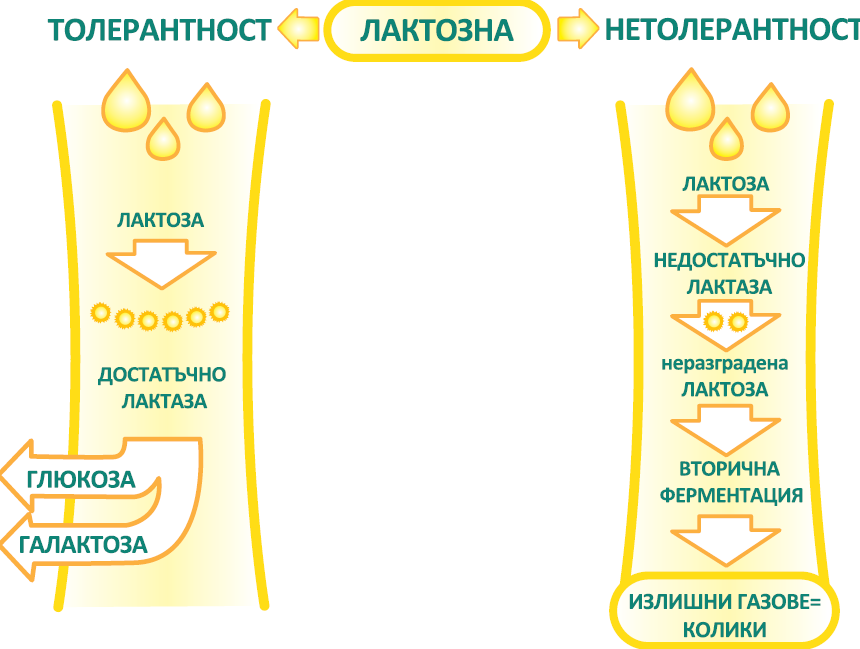 Milk is the only source of nutrition for babies in their first months of life. Constant milk consumption may lead to difficulties in digesting lactose due to a temporary deficiency of lactase produced by the baby. This condition, known as temporary physiological lactase deficiency, results in abdominal discomfort and gas due to undigested lactose, commonly referred to as infant colic.

There is a proven link between transient lactase deficiency and infant colic. Insufficient lactase production leads to an inability to digest lactose. As a result, undigested lactose is broken down by gut bacteria into lactic acid and hydrogen, causing bloating and gas. Some babies may be born with an underdeveloped digestive system that does not produce enough lactase. However, by the age of 3–4 months, the digestive system matures to the point where sufficient lactase is produced for normal food digestion.
How Do Colief Infant Drops Work?
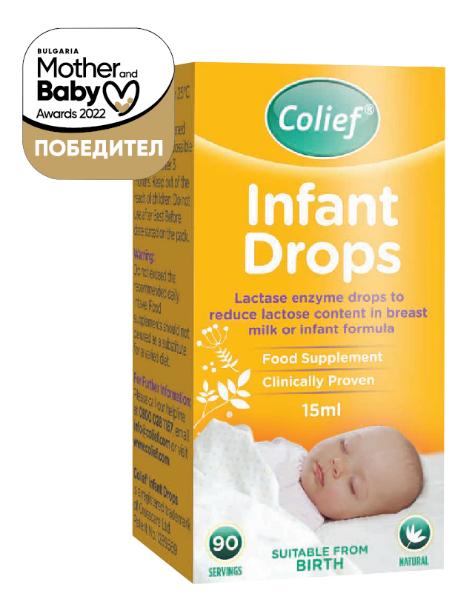
Colief Infant Drops contain the enzyme lactase, which is added to milk or breast milk at each feeding, reducing its lactose content.
How Do Colief Infant Drops Work?
Colief Infant Drops contain the enzyme lactase, which is added to milk or breast milk at each feeding, reducing its lactose content.
The lactase enzyme in Colief is naturally derived and works best at pH 7, matching the acidity of milk. When added to the baby’s food, it helps break down lactose into simple, easily digestible sugars—galactose and glucose—facilitating absorption. This supports digestion and helps prevent gas, stomach discomfort, and colic.
Colief Infant Drops are not a medication for infant colic but a dietary supplement that reduces the lactose content in milk. Adding Colief to milk compensates for the temporary lactase deficiency in the infant’s digestive system. Research indicates a significant reduction in the total hours of crying in infants.
Sources:
Raiha H, Lehtonen L, Huhtala V, et al. Excessively crying infant in the family: mother-infant, father-infant, and mother-father interactions. Child Care Health Dev. 2002;28(5):419-429.
Rautava P, Lehtonen L, Helenius H, et al. Infantile colic: child and family three years later. Pediatrics. 1995;96(1, pt1):43-47.
Lehtonen L. From colic to toddlerhood. In: Barr RG, St. James-Roberts I, Keefe MR, eds. New Evidence on Unexplained Early Infant Crying: Its Origins, Nature and Management. Skillman, NJ: Johnson and Johnson Pediatric Institute; 2001:257-272.
Papousek M, von Hofacker N. Persistent crying in early infancy: a non-trivial condition of risk for the developing mother-infant relationship. Child Care Health Dev. 1998;24(5):395-424.
Pinyerd B. Infant colic and maternal mental health: nursing research and practice concerns. Issues Compr Pediatr Nurs. 1992;15(3):155-167.
Stifter CA, Bono MA. The effect of infant colic on maternal self-perceptions and mother-infant attachment. Child Care Health Dev. 1998;24(5):339-351.
Kanabar D, Randhawa M, Clayton P. Improvement of symptoms in infant colic following reduction of lactose load with lactase. J Hum Nutr Diet. 2001;14(5):359-363.
Kearney PJ, Malone AJ, Hayes T, et al. A trial of lactase in the management of infant colic. J Hum Nutr Diet. 1998;11(4):281-285.
Moore DJ, et al. Breath hydrogen response to milk containing lactose in colicky and non-colicky infants. The Journal of Pediatrics. Dec 1988;113(6):979-984.
Miller JJ, et al. Breath hydrogen excretion in infants with colic. Arch Dis Child. 1989;64:725-729.