


 Click & collect

Ще се изтрие най-старият артикул от любими и ще се добави новият
Prescription drugs

Coming soon
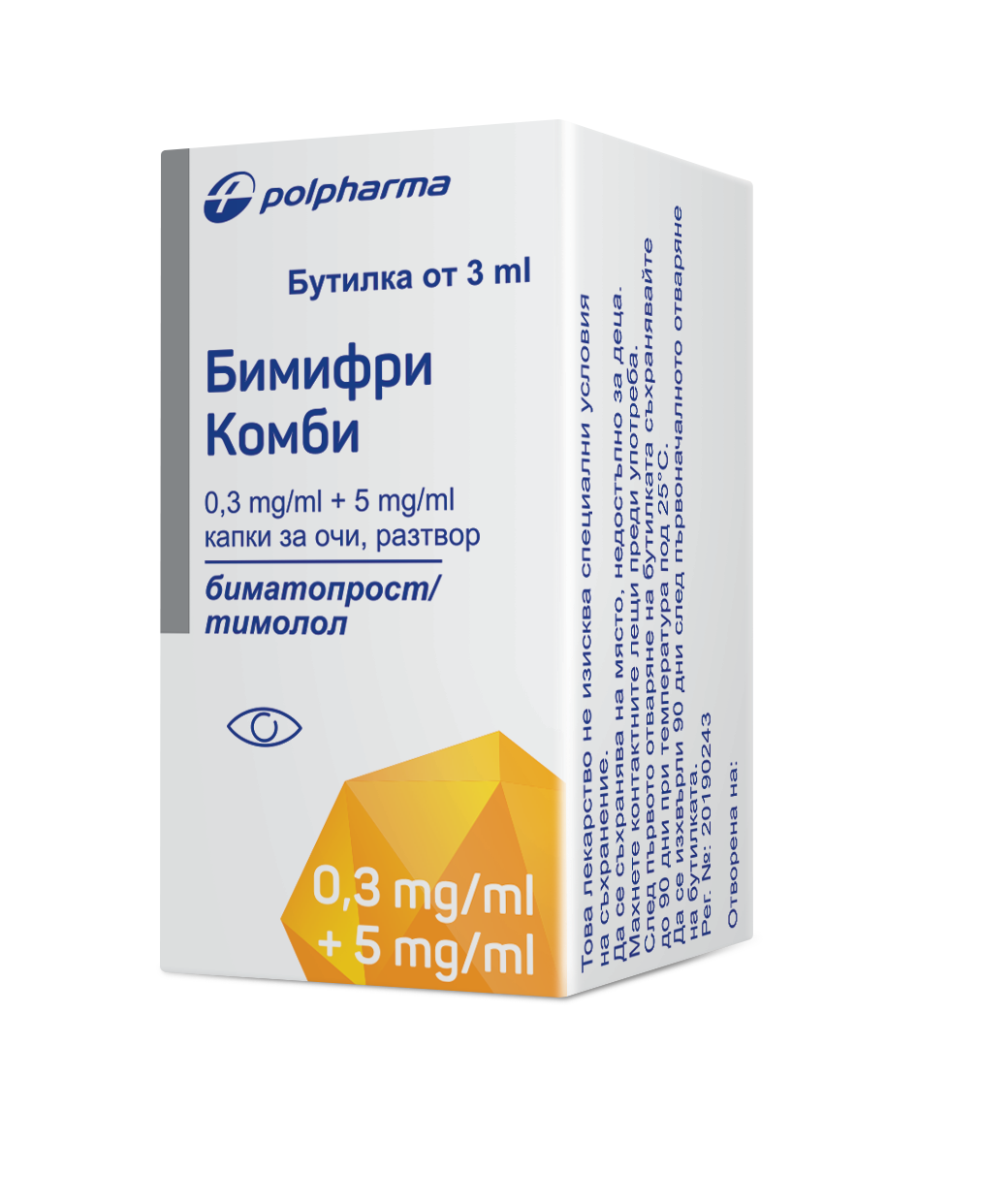
BIMIFREE COMBI eye drops 0,3mg/ml+5mg/ml 3ml
лекарствена информация
It is not sold online
Add to Favourites
BIMIFREE COMBI eye drops 0,3mg/ml+5mg/ml 3ml
SUMMARY OF PRODUCT CHARACTERISTICS
1. NAME OF THE MEDICINAL PRODUCT
Bimifree Combi 0.3 mg/ml + 5 mg/ml eye drops, solution
Bimifree Combi 0.3 mg/ml + 5 mg/ml eye drops, solution
2. QUALITATIVE AND QUANTITATIVE COMPOSITION
Each ml of solution contains 0.3 mg bimatoprost and 5 mg timolol (equivalent to 6.83 mg timolol maleate).
Each bottle contains 3 ml of solution.
Excipient with known effect: phosphates.
Each ml of solution contains approximately 1.4 mg of phosphates.
For the full list of excipients, see section 6.1.
3. PHARMACEUTICAL FORM
Eye drops, solution
Colorless, clear solution
pH: 6.8 – 7.6
Osmolality: 270 to 320 mosmol/kg
4. CLINICAL DATA
4.1 Therapeutic indications
Reduction of intraocular pressure (IOP) in adult patients with open-angle glaucoma or ocular hypertension who are not adequately controlled by topical beta-blockers or prostaglandin analogues.
4.2 Dosage and administration
Dosage
Recommended dose for adults (including the elderly)
The recommended dose is one drop of Bimifree Combi in the affected eye(s), once daily, administered either in the morning or in the evening. The dose should be administered at the same time each day.
Existing literature data for bimatoprost/timolol (formulation containing the preservative benzalkonium chloride (BAC)) suggest better efficacy of evening administration compared to morning administration in terms of IOP lowering. Nevertheless, consideration should be given to the possibility of achieving consistency when considering morning or evening administration (see section 5.1).
If a dose is missed, treatment should be continued with the next scheduled dose. The dose should not exceed one drop per day in the affected eye(s).
Kidney and liver damage
Bimatoprost/timolol (0.3 mg + 5 mg)/ml eye drops has not been studied in patients with hepatic or renal impairment. Therefore, it should be used with caution in treating such patients.
Pediatric population
The safety and efficacy of Bimatoprost/Timolol (0.3 mg + 5 mg)/ml in children aged 0 to 18 years have not been established. There are no data.
Method of administration
For ocular use only.
Bimifree Combi is a sterile solution that does not contain preservatives.
Before putting in the eye drops:
- When using for the first time, before placing in the eye, you should check the dropper on the bottle by squeezing one drop into the air, away from the eye.
- When you are sure that you can put one drop at a time, take a comfortable position (you can sit, lie on your back, or stand facing the mirror).
Instructions for use:
1. The patient should wash their hands thoroughly before using this medication.
2. If the packaging or bottle is damaged, the medicine should not be used.
3. When using the medicine for the first time, unscrew the cap after making sure that the sealing ring is not broken. You should feel some resistance when breaking the ring.
4. If the sealing ring is loose, it should be discarded because it may fall into the eye and cause injury.
5. The patient should tilt their head back and gently pull down the lower eyelid until a small pocket is formed between the eye and the eyelid. Contact between the tip of the bottle and the eye, eyelid or fingers should be avoided.
6. The patient should squeeze the bottle gently and place one drop into the pocket. It may take a few seconds between squeezing and the drop falling. Do not squeeze the bottle too hard.
7. Press the tear duct for about 2 minutes (with a finger on the corner of the closed eye, where the eye meets the nose), and keep the eye closed. This ensures that the drop is absorbed into the eye and stops it from entering the tear duct into the nose.
8. Repeat steps 5, 6 and 7, if the doctor so decides.
9. After use and before the next drop, shake the bottle downwards without touching the tip of the dropper to remove any residual liquid from the tip. This is necessary to ensure the release of the next drop. After the drop, close the bottle by turning the cap.
When the nasolacrimal duct is pressed or the eyelids are closed for 2 minutes, systemic absorption is reduced. This may lead to a decrease in systemic side effects and an increase in local activity.
If other topical eye products are used, wait at least 5 minutes between them. Eye ointment should be used last.
4.3 Contraindications
• Hypersensitivity to the active substances or to any of the excipients listed in section 6.1;
• Disease with increased airway reactivity, including bronchial asthma or a history of bronchial asthma and severe chronic obstructive pulmonary disease;
• Sinus bradycardia, sick sinus syndrome, sino-atrial block, second and third degree atrioventricular block, not controlled by a pacemaker. Overt heart failure and cardiogenic shock.
4.4 Special warnings and precautions for use
Like other topically applied ophthalmic medicinal products, the active substances (timolol/bimatoprost) in Bimifree Combi may be absorbed systemically. No increased systemic absorption of the individual active substances has been observed. Due to the beta-adrenergic component timolol, the same cardiovascular, pulmonary and other adverse reactions as seen with systemic beta-blockers may occur. The incidence of systemic adverse reactions after topical ocular administration is lower than with systemic administration. To reduce systemic absorption, see section 4.
Cardiac disorders
Patients with cardiovascular disease (e.g. coronary heart disease, angina pectoris)
Prinzmetal's disease and heart failure) and blood pressure lowering therapy with beta-blockers should be critically evaluated and therapy with other active substances should be considered. Patients with cardiovascular disease should be monitored for signs of worsening of these diseases and adverse reactions.
Due to their negative effects on conduction time, beta-blockers should be prescribed with caution in patients with first-degree heart block.
Vascular disorders
Patients with severe peripheral circulatory disturbances/disorders (e.g. severe forms of Raynaud's disease or Raynaud's syndrome) should be treated with caution.
Respiratory disorders
Respiratory reactions, including death due to bronchospasm in patients with asthma, have been reported with the use of some ophthalmic beta-blockers.
Bimifree Combi should be used with caution in patients with mild/moderate chronic obstructive pulmonary disease (COPD) and only if the potential benefits outweigh the potential risks.
Endocrine system disorders
Beta-adrenergic blocking medicinal products should be administered with caution to patients with spontaneous hypoglycaemia or to patients with labile diabetes, as beta-blockers may mask the signs and symptoms of acute hypoglycaemia.
Beta-blockers can also mask the signs of hyperthyroidism.
Corneal diseases
Ophthalmic beta-blockers may cause dry eye. Patients with corneal diseases should be treated with caution.
Other beta-blockers
The effect of intraocular pressure or the known effects of systemic beta-blockade may be potentiated when timolol is administered to patients already receiving systemic beta-blockers. The response of these patients should be closely monitored. The use of two topical beta-adrenergic blocking agents is not recommended (see section 4.5).
Anaphylactic reactions
When taking beta-blockers, patients with a history of atopy or severe anaphylactic reaction to a variety of allergens may demonstrate a more severe allergic reaction upon rechallenge with such allergens and may not respond to the usual dose of adrenaline used to treat anaphylactic reactions.
Choroidal detachment
Choroidal detachment has been reported with the use of aqueous depleting therapy (e.g. timolol, acetazolamide) following filtration procedures.
Surgical anesthesia
Beta-blocking ophthalmic preparations may block the systemic beta-agonist effects of, for example, adrenaline. The anaesthetist should be informed when the patient is taking timolol.
Liver
In patients with a history of mild liver disease or abnormal baseline alanine aminotransferase (AST), aspartate aminotransferase (AST) and/or bilirubin, bimatoprost did not produce any hepatic adverse reactions over 24 months.
There are no known adverse effects on liver function due to ocular timolol.
Eye
Before initiating treatment, patients should be informed of the possibility of prostaglandin analogue (PPA)-associated periorbitopathy and increased iris pigmentation, as these have been observed with bimatoprost and bimatoprost/timolol. Some of these changes may be permanent and may result in visual field defects and differences in appearance between the two eyes if only one eye is treated (see section 4.8).
Macular oedema, including cystoid macular oedema, has been reported with bimatoprost/timolol (0.3 mg + 5 mg)/ml without BAC. Therefore, Bimifry Combi should be used with caution in aphakic patients, in pseudophakic patients with a torn posterior lens capsule or in patients with known risk factors for macular oedema (e.g. intraocular surgery, retinal vein occlusion, inflammatory eye disease and diabetic retinopathy).
Bimifree Combi should be used with caution in patients with active intraocular inflammation (e.g. uveitis) as the inflammation may be exacerbated.
Leather
There is a potential for hair growth in areas where Bimifree Combi solution comes into repeated contact with the skin surface. Therefore, it is important to apply Bimifree Combi as directed and not allow it to run onto the cheek or other skin areas.
Other conditions
Bimatoprost/timolol (0.3 mg + 5 mg)/ml without BAC has not been studied in patients with inflammatory eye diseases, neovascular, inflammatory, angle-closure glaucoma, congenital glaucoma or narrow-angle glaucoma.
Studies of bimatoprost 0.3 mg/l in patients with glaucoma or ocular hypertension have shown that more frequent exposure of the eye to more than 1 dose of bimatoprost per day may reduce the IOP-lowering effect. Patients using Bimifry Combi with other prostaglandin analogues should be monitored for changes in their intraocular pressure.
4.5 Interaction with other medicinal products and other forms of interaction
No specific interaction studies have been conducted with the fixed combination bimatoprost/timolol.
There is a potential for an additive effect leading to hypotension and/or marked bradycardia when ophthalmic solutions containing beta-blockers are administered concomitantly with oral calcium channel blockers, guanethidine, beta-adrenergic blocking agents, parasympathomimetics, antiarrhythmics (including amiodarone) and digitalis glycosides.
Potential systemic beta-blockade (e.g. decreased heart rate, depression) has been reported with combined treatment with CYP2D6 inhibitors (e.g. quinidine, fluoxetine, paroxetine) and timolol.
Mydriasis has occasionally been reported following concomitant administration of ophthalmic beta-blockers and adrenaline (epinephrine).
4.6 Fertility, pregnancy and lactation
Pregnancy
There are no adequate data from the use of the fixed combination bimatoprost/timolol in pregnant women. Bimifry Combi should not be used during pregnancy unless clearly necessary. For reduced systemic absorption, see section 4.2.
Bimatoprost
There are no adequate clinical data on exposure during pregnancy. Animal studies have shown reproductive toxicity at a high maternally toxic dose (see section 5.3).
Timolol
Epidemiological studies have not shown malformative effects, but suggest a risk of intrauterine growth retardation with oral beta-blockers. In addition, signs and symptoms of beta-blockade (e.g. bradycardia, hypotension, respiratory distress and hypoglycaemia) have been observed in neonates when beta-blockers have been administered antenatally. If Bimifree Combi is administered antenatally, the neonate should be closely observed during the first days of life. Animal studies with timolol have shown reproductive toxicity at doses considerably higher than those expected to be used in clinical practice (see section 5.3).
Breastfeeding
Timolol
Beta-blockers are excreted in breast milk. However, at therapeutic doses of timolol in eye drops, it is unlikely that sufficient amounts will be present in breast milk to cause clinical symptoms of beta-blockade in the infant. For reduced systemic absorption, see section 4.2.
Bimatoprost
It is not known whether bimatoprost is excreted in human milk, but it is excreted in the milk of lactating rats. Bimifry Combi should not be used in nursing women.
Fertility
There are no data on the effect of bimatoprost/timolol (0.3 mg + 5 mg)/ml eye drops, solution without BAC on fertility in humans.
4.7 Effects on ability to drive and use machines
Bimatoprost/timolol (0.3 mg + 5 mg)/ml eye drops, preservative-free solution, has negligible influence on the ability to drive and use machines. As with any topical ophthalmic treatment, if transient blurred vision occurs after application, the patient should wait until the vision clears before driving or using machines again.
4.8 Adverse drug reactions
Bimatoprost/timolol (0.3 mg + 5 mg)/ml eye drops, solution preservative-free solution (BAC)
Summary of the safety profile
The adverse reactions reported during clinical trials with bimatoprost/timolol (0.3 mg + 5 mg)/ml eye drops, solution, preservative-free, are limited to those described in previous reports for either of the two active substances bimatoprost and timolol. No new adverse reactions specific to bimatoprost/timolol (0.3 mg + 5 mg)/ml eye drops, solution, preservative-free have been observed in clinical trials.
The majority of adverse reactions reported with bimatoprost/timolol (0.3 mg + 5 mg)/ml eye drops, solution, preservative-free are ocular, mild and not serious.
Based on a 12-week trial of bimatoprost/timolol (0.3 mg + 5 mg)/ml eye drops, preservative-free solution administered once daily, the most commonly reported ADR was conjunctival hyperemia (mostly minor to mild and considered non-inflammatory in origin) in almost 21% of patients, which led to discontinuation of therapy in 1.4% of patients.
Tabulated list of adverse reactions
Table 1 presents the adverse reactions that have been reported during clinical trials with bimatoprost/timolol (0.3 mg + 5 mg)/ml eye drops, solution without preservative and bimatoprost/timolol (0.3 mg + 5 mg)/ml eye drops, solution with preservative, within each frequency grouping, adverse reactions are listed in descending order of seriousness) or in the post-marketing period.
The frequency of possible side effects listed below is defined according to the following convention:
Very common ≥1/10
Common ≥1/100 to <1/10
Uncommon ≥1/1,000 to <1/100
Rare ≥1/10,000 to <1/1,000
Very rare <1/10,000
Not known Frequency cannot be estimated from the available data
Table 1
System Organ Class Frequency Adverse Reaction
Immune system disorders
Systemic reactions with unknown frequency
hypersensitivity, including signs and symptoms of allergic dermatitis, angioedema, eye allergy
Psychiatric disorders Not known insomnia2, nightmares2
Nervous system disorders Common headache, dizziness2
Not known: dysgeusia2
Eye disorders Very common conjunctival hyperaemia, prostaglandin analogue-related periorbitopathy
Common punctate keratitis, corneal erosion2, burning sensation2, conjunctival irritation1, eye pruritus, stinging2, foreign body sensation, dry eye, eyelid erythema, eye pain, photophobia, eye discharge2, visual disturbances2, eyelid pruritus, visual acuity reduced2, blepharitis2, eyelid oedema, eye irritation, lacrimation increased, eyelash growth
Uncommon iritis2, conjunctival oedema2,
eyelid pain2,
unusual sensation in the eye1,
asthenopia, trichiasis2,
hyperpigmentation of the iris2,
eyelid retraction2, eyelash color change (darkening)1.
Not known: cystoid macular oedema2,
eye swelling, blurred vision2
Cardiac disorders Not known: bradycardia
Respiratory, thoracic and
Mediastinal disorders Common Rhinitis2
Uncommon dyspnoea
Not known: bronchospasm (mainly in
patients with pre-existing bronchospastic disease)2, asthma
Skin disorders and
Subcutaneous tissue Common blepharal pigmentation, hirsutism2, skin hyperpigmentation (periocular).
Frequency not known: alopecia2
General disorders and effects
at the site of application Not known: fatigue
1. adverse reactions observed only with the composition of the dosage form without preservative
2. adverse reactions observed only when the dosage form is composed of a preservative
Description of selected adverse reactions
Prostaglandin analogue (PPA)-associated periorbitopathy
Prostaglandin analogues, including Bimifry Combi, may cause periorbital lipodystrophic changes, which may result in deepening of the eyelid sulcus, ptosis, enophthalmos, eyelid retraction, dermatochalasis involution and lower sclera exposure. The changes are usually mild, may occur as early as one month after initiation of Bimifry Combi treatment and may cause visual field defects without the patient even noticing them. PPA has also been associated with periocular skin hyperpigmentation or discoloration and hypertrichosis. All changes have been observed to be partially or completely reversible upon discontinuation of treatment or switching to alternative treatments.
Hyperpigmentation of the iris
Increased iris pigmentation may be permanent. The change in pigmentation is due to increased melanin content in melanocytes rather than an increase in the number of melanocytes. The long-term effects of increased iris pigmentation have not been established. Changes in iris colour observed with ocular administration of bimatoprost may not be apparent for several months to years. Typically, brown pigmentation around the pupil spreads concentrically towards the periphery of the iris and the whole iris or parts of it become browner. Neither nevi nor freckles in the iris are affected by treatment. After 12 months of treatment with bimatoprost/timolol, the incidence of iris pigmentation was 0.2%. After 12 months of treatment with bimatoprost drops alone, the incidence of iris pigmentation was 1.5% and did not increase over a subsequent 3 years of treatment.
Like other topically applied ophthalmic drugs, bitamoprost/timolol is absorbed into the systemic circulation. Absorption of timolol may lead to similar adverse reactions as with systemic beta-blockers. The incidence of systemic adverse reactions following topical ophthalmic administration is lower than with systemic administration. To reduce systemic absorption, see section 4.2.
Additional adverse reactions that have been observed with each of the active substances (bimatoprost or timolol) and could potentially occur with the combination are listed below in Table 2:
Table 2
System Organ Class Adverse Reaction
Immune system disorders systemic allergic reactions including
anaphylaxis1
Metabolism and nutrition disorders hypoglycaemia1
Psychiatric disorders depression1, memory loss1, hallucination1
Nervous system disorders syncope1, cerebrovascular accident1,
exacerbation of signs and symptoms of myasthenia gravis1, paraesthesia1, cerebral ischaemia1
Eye disorders decreased corneal sensitivity1,
diplopia1, ptosis1, choroidal detachment after filtering surgery (see section 4.4)1, keratitis1, blepharospasm2,
retinal hemorrhage2, uveitis2
Cardiac disorders atrioventricular block1, cardiac arrest1,
arrhythmia1, heart failure1, congestive heart failure1, chest pain1, palpitations1, edema1
Vascular disorders hypotension1, hypertension2, vasculitis phenomenon
Raynaud's1, cold palms and soles1
Respiratory, thoracic and mediastinal
disorders Asthma exacerbation2, COPD exacerbation2,
cough1
Gastrointestinal disorders nausea1,2, diarrhoea1, dyspepsia1, dry mouth
mouth1, abdominal pain1, vomiting1
Skin and subcutaneous tissue disorders
tissue psoriasiform rash1 or exacerbation of
psoriasis1, skin rashes1
Musculoskeletal disorders
system and connective tissue myalgia1
Reproductive disorders
system and breast sexual dysfunction1, decreased libido1
General disorders and administration site conditions
application asthenia 1,2
Research Abnormalities in functional
liver indicators2
1. side effects observed with timolol
2. adverse reactions observed with bimatoprost monotherapy
Adverse reactions reported in association with phosphate-containing eye drops
There have been very rare reports of corneal calcifications in association with the use of phosphate-containing eye drops in some patients with significantly damaged corneas.
Reporting suspected adverse reactions
Reporting of suspected adverse reactions after authorisation of a medicinal product is important. This allows for continued monitoring of the benefit-risk balance of the medicinal product. Healthcare professionals are asked to report any suspected adverse reactions via
Executive Agency for Medicines
8 Damyan Gruev Street
1303 Sofia
Tel.: +35 928903417
website: www.bda.bg
4.9 Overdose
It is unlikely that a topical overdose of bimatoprost/timolol will occur or be associated with toxicity.
Bimatoprost
The following information may be useful if bimatoprost/timolol (0.3 mg + 5 mg)/ml eye drops, solution without preservative is accidentally ingested: in 2-week studies in rats and mice, oral doses of bimatoprost up to 100 mg/kg/day did not produce any toxicity. This dose, expressed in mg/m2, is at least 7.5 times higher than the dose that would be accidentally ingested by a child weighing 10 kg from one bottle of bimatoprost/timolol (0.3 mg + 5 mg)/ml eye drops, solution without preservative. [(36 ml*0.3 mg/ml bimatoprost)/10 kg; 1.08 mg/kg].
Timolol
Symptoms of systemic timolol overdose include: bradycardia, hypotension, bronchospasm, headache, dizziness, shortness of breath and cardiac arrest. A study in patients with renal failure demonstrated that timolol is not readily dialysable.
In case of overdose, treatment should be symptomatic and supportive.
5. PHARMACOLOGICAL PROPERTIES
5.1 Pharmacodynamic properties
Pharmacotherapeutic group: Ophthalmic - beta-blockers - ATC code: S01ED51
Mechanism of action
Bimifry Combi consists of two active substances: bimatoprost and timolol. These two substances reduce elevated intraocular pressure (IOP) through complementary mechanisms of action and the combined effect results in an additional reduction in IOP compared to each component administered alone. Bimifry Combi has a rapid onset of action.
Bimatoprost is a potent intraocular pressure-lowering active substance. It is a synthetic prostamide, structurally similar to prostaglandin F2α (PGF2α), which does not act through any of the known prostaglandin receptors. Bimatoprost selectively mimics the effects of newly discovered biosynthesized substances called prostamides. However, the prostamide receptor has not yet been structurally identified. The mechanism of action by which bimatoprost reduces intraocular pressure in humans is associated with increased aqueous humor secretion through the trabecular meshwork and increased uveoscleral detachment.
Timolol is a beta1 and beta2 non-selective adrenergic receptor blocking agent that has no significant intrinsic sympathomimetic, direct myocardial depressant or local anesthetic (membrane-stabilizing) activity. Timolol lowers IOP by reducing the formation of aqueous humor in the eye. The exact mechanism of action is not clearly established, but it is possible that it inhibits the increased synthesis of cyclic AMP induced by endogenous beta-adrenergic stimulation.
Clinical effects
A 12-week clinical trial (double-masked, randomised, parallel-group) compared the efficacy and safety of bimatoprost/timolol (0.3 mg + 5 mg)/ml eye drops, solution without preservative and bimatoprost/timolol (0.3 mg + 5 mg)/ml eye drops, solution with preservative in patients with glaucoma and ocular hypertension. The solution without preservative showed non-inferior IOP-lowering activity compared to that with preservative: the upper limit of the 95% CI of the differences between treatments was within 1.5 mm Hg at each measured time point (hours 0, 2, and 8) at week 12 (for the primary analysis), and also at weeks 2 and 6, for the average worst IOP values from baseline (worst IOP values refer to the eye with the highest average daily IOP at baseline). The de facto upper limit of the 95% CI was not reached at 0.14 mm Hg at week 12.
Both groups demonstrated statistically and clinically significant mean reductions in worst IOP at all subsequent study time points (p < 0.001). Mean changes from baseline in worst IOP ranged from -9.16 to -7.98 mm Hg for the bimatoprost/timolol (0.3 mg + 5 mg)/ml eye drops, solution, preservative-free group and from -9.03 to -7.72 mm Hg for the bimatoprost/timolol (0.3 mg + 5 mg)/ml eye drops, solution, preservative-free group during the 12-week study.
Bimatoprost/timolol (0.3 mg + 5 mg)/ml eye drops, solution without preservative achieved equivalent IOP-lowering efficacy to bimatoprost/timolol (0.3 mg + 5 mg)/ml eye drops, solution with preservative at each subsequent time point of weeks 2, 6 and 12.
Based on studies, bimatoprost/timolol (0.3 mg + 5 mg)/ml eye drops, preservative-free solution shows non-inferiority to bimatoprost (once daily) and timolol (twice daily).
The available literature data for bimatoprost/timolol (0.3 mg + 5 mg)/ml eye drops, solution with preservative suggest that evening dosing is more effective in lowering IOP than morning dosing. However, conclusions should be made with the similarity in mind when discussing both morning and evening dosing.
Pediatric population
The safety and efficacy of bimatoprost/timolol (0.3 mg + 5 mg)/ml eye drops, solution, preservative-free in children aged 0 to 18 years have not been established.
5.2 Pharmacokinetic properties
Medicinal product bimatoprost/timolol
Plasma concentrations of bimatoprost and timolol were determined in a crossover study comparing monotherapy treatments with treatment with bimatoprost/timolol (0.3 mg + 5 mg)/ml eye drops, solution with preservative in healthy subjects. Systemic absorption of the individual components is minimal and is not affected by their co-administration in the same dosage form.
In two 12-month studies of bimatoprost/timolol (0.3 mg + 5 mg)/ml eye drops, solution with preservative, in which systemic absorption was measured, no accumulation of either component was observed.
Bimatoprost
Bimatoprost penetrates well through the human cornea and sclera in vitro. Following ocular administration, systemic exposure to bimatoprost is very low and does not accumulate over time. Following single daily ocular administration of one drop of 0.03% bimatoprost to both eyes for two weeks, blood concentrations peaked 10 minutes after administration and declined below the detection limit (0.025 ng/ml) 1.5 hours after administration. Mean Cmax and AUC0-24hrs values were similar on days 7 and 14 and were approximately 0.08 ng/ml and 0.09 ng•hr/ml, respectively, indicating that steady-state drug concentrations were reached within the first week of ocular administration.
Bimatoprost is moderately distributed in body tissues and the systemic volume of distribution in humans at steady state is 0.67 l/kg. In human blood, bimatoprost is found primarily in plasma. Bimatoprost is approximately 88% bound to plasma proteins.
Bimatoprost is the main circulating compound in the blood after entering the systemic circulation following ocular administration. Bimatoprost undergoes oxidation, N-deethylation and glucuronidation to form a variety of metabolites.
Bimatoprost is eliminated primarily by renal excretion, with up to 67% of an intravenously administered dose in healthy volunteers being excreted in the urine, 25% of the dose being excreted in the feces. The elimination half-life determined after intravenous administration is approximately 45 minutes; total blood clearance is 1.5 l/hr/kg.
Characteristics in older people
After twice daily dosing, the mean AUC0-24hr value of 0.0634 ng hr/ml of bimatoprost in elderly subjects (65 years of age or older) was significantly higher than 0.0218 ng hr/ml in younger healthy adults. However, these data are not clinically relevant because systemic exposure in both elderly and younger subjects remains very low following ocular administration. No accumulation of bimatoprost in the blood over time was observed and the safety profile was similar in elderly and young subjects.
Timolol
Following ocular administration of 0.5% eye drops, solution to humans undergoing cataract surgery, peak concentrations of timolol were 898 ng/ml in the aqueous humor of the eye one hour after dosing. A portion of the dose was absorbed systemically, where it was extensively metabolized in the liver. The plasma half-life of timolol is approximately 4 to 6 hours. Timolol is partially metabolized by the liver, with timolol and its metabolites excreted by the kidneys. Timolol is not extensively bound to plasma proteins.
5.3 Preclinical safety data
Medicinal product bimatoprost/timolol
Repeated dose ocular toxicity studies with bimatoprost/timolol (0.3 mg + 5 mg)/ml eye drops, solution with preservative revealed no special hazard for humans. The ocular and systemic safety profiles of the individual components are well established.
Bimatoprost
Non-clinical data reveal no special hazard for humans based on conventional studies of safety pharmacology, genotoxicity, carcinogenic potential. Species-specific abortions were observed in rodent studies at systemic exposure levels 33 to 97 times higher than those achieved in humans after ocular administration.
Ocular administration of bimatoprost to monkeys at concentrations ≥ 0.03% daily for 1 year resulted in increased iris pigmentation and reversible dose-dependent periocular effects characterized by a prominent superior and/or inferior sulcus, and widening of the palpebral fissure. The increased iris pigmentation is likely caused by increased stimulation of melanin production in melanocytes rather than by an increase in their number. No functional or microscopic changes were observed associated with the observed periocular effects, and the mechanism of action for these periocular changes is unknown.
Timolol
Non-clinical data reveal no special hazard for humans based on conventional studies of safety pharmacology, repeated dose toxicity, genotoxicity, carcinogenic potential, reproductive toxicity.
6. PHARMACEUTICAL PARTICULARS
6.1 List of excipients
Disodium phosphate dodecahydrate
Citric acid monohydrate
Sodium chloride
Sodium hydroxide or dilute hydrochloric acid (for pH adjustment)
Unpurified water
6.2 Incompatibilities
Not applicable
6.3 Shelf life
2 years
Discard 90 days after first opening the bottle.
6.4 Special storage conditions
This medicinal product does not require any special storage conditions.
Chemical and physical in-use stability has been demonstrated for 90 days at 25°C.
From a microbiological point of view, in-use storage times and conditions are the responsibility of the user and would normally not be longer than 90 days at a temperature below 25°C.
6.5 Nature and contents of container
The packaging is a white LDPE bottle (5 ml) containing 3 ml of solution, with a multi-dose HDPE dropper that protects the contents from contamination thanks to a silicone valve system that filters the air entering the bottle and an HDPE cap with a protective ring in a cardboard box.
1 bottle of 5 ml containing 3 ml of solution
3 bottles of 5 ml containing 3 ml of solution.
Not all types of packaging can be released for sale.
6.6 Special precautions for disposal and handling
There are no special requirements.
7. MARKETING AUTHORISATION HOLDER
Zakłady Farmaceutyczne POLPHARMA SA
street Pelplińska 19, 83-200 Starogard Gdański, Poland
8. MARKETING AUTHORISATION NUMBER(S)
Reg. No.: 20190243
9. DATE OF FIRST AUTHORISATION/RENEWAL OF THE AUTHORISATION
Date of first authorisation: 29.10.2019
10. DATE OF TEXT UPDATE
Express Delivery (within 2 hours)
- Valid only for the city of Sofia
- Valid only for orders over €25.56 | 50.00 BGN
- Valid only for cash on delivery (cash or card payment upon receipt)
Delivery to a Pharmacy
- Completed within up to 2 business days
- Valid for Sofia, Bozhurishte, and Mramor
- Free delivery
- Valid only for online payment
Courier Delivery to an Address
- Completed within up to 3 business days
- €2.30 | 4.50 BGN for orders under €25.56 | 50.00 BGN
- Free for orders over €25.56 | 50.00 BGN
Delivery to a Speedy Office
- Completed within up to 3 business days
- €2.30 | 4.50 BGN for orders under €25.56 | 50.00 BGN
- Free for orders over €25.56 | 50.00 BGN
BOX NOW
- Completed within up to 3 business days
- €1.53 | 2.99 BGN for orders under €25.56 | 50.00 BGN
- Free delivery for orders over €25.56 | 50.00 BGN
* Delivery times may change during large-scale campaigns and busy periods (Black Friday, public holidays, etc.).
* When ordering to a Speedy office, the customer has 5 business days from the delivery date to collect their order. After this period, the order is canceled and returned to the warehouse at subra.bg.

Express delivery for Sofia city Learn more

Free shippingover 50.00 lv / 25.56 €

Click and collect Learn more

Check the shipment Learn more
Book and collect from pharmacy
Availability in store
BIMIFREE COMBI eye drops 0,3mg/ml+5mg/ml 3ml
Please add your email, to receive notification when the product is in stock