


 Click & collect
Ще се изтрие най-старият артикул от любими и ще се добави новият
In stock
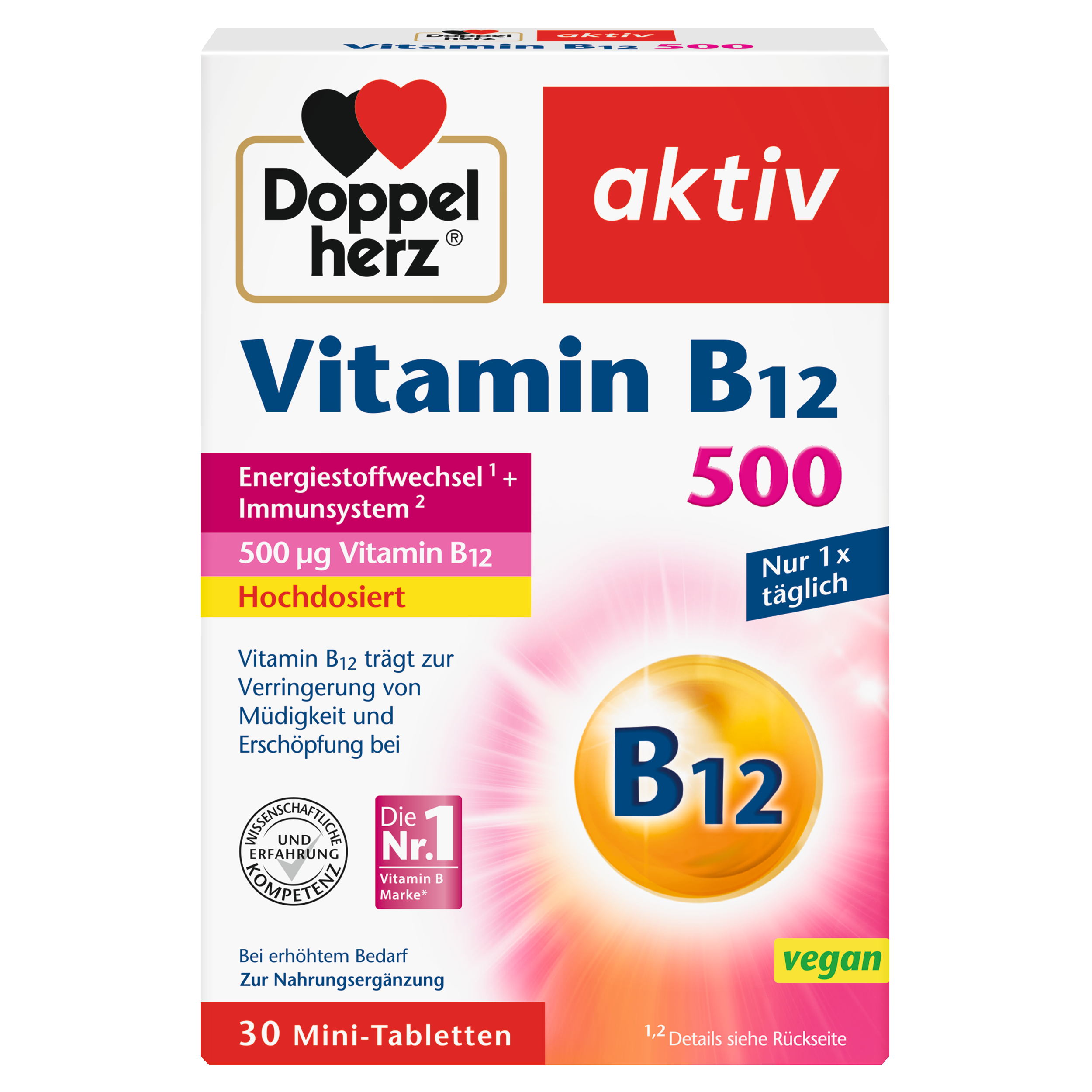
DOPPELHERZ AKTIV Vitamin B12 500mg x 30 tabl
2.59 €
Add to Favourites
DOPPELHERZ AKTIV Vitamin B12 500mg x 30 tabl
Vitamin B12, also known as cyanocobalamin, is a water-soluble vitamin from the B group. Our body cannot produce it on its own and we need to obtain it through food. In certain cases, our body has increased needs for vitamin B12, for example in old age or on a vegan and vegetarian diet, when its additional intake in the form of a nutritional supplement is recommended.
Vitamin B12 is involved in various processes in the body and contributes to:
reduced fatigue and exhaustion and more energy
good condition of the nervous and immune systems
normal mental function
the formation of red blood cells
Who are Doppelherz Vitamin B12 500 tablets suitable for?
The high dose of vitamin B12 is included in small and easy-to-take tablets. They are suitable for use by vegans and vegetarians, as well as for people who eat an unbalanced diet, have an established deficiency or increased needs.
Where can we get vitamin B12?
Vitamin B12 is found in foods of animal origin, as it is produced by microorganisms in the digestive tract of animals. The best sources are:
Meat
Fish
Seafood
Eggs
Milk and dairy products
Plant foods generally do not contain vitamin B12. Exceptions are fermented foods such as sauerkraut, which may contain small amounts1. Interestingly, the microorganisms that live in our large intestine also produce vitamin B12, but because we absorb the vitamin in the small intestine, the body cannot use it4.
When does vitamin B12 deficiency occur and what are the symptoms?
Low levels of vitamin B12 can be due to various factors related to diet, health, age or taking certain medications. For example, statistics for Germany show that one in four adults is deficient3.
In vegan and vegetarian diets – plant foods contain only trace amounts of vitamin B12. People who follow a completely vegan diet, as well as vegetarians, are at risk of vitamin B12 deficiency and its associated symptoms1.
In cases of vitamin B12 absorption problems – for vitamin B12 to pass through the intestinal mucosa into the blood, a special protein, “intrinsic factor” (IF), is needed, which is produced by the parietal cells in the stomach. The presence of an autoimmune process can affect the absorption of vitamin B12, affecting the cells that produce the binding protein, the protein itself, or the complex between intrinsic factor and vitamin B12.
As we age, the body produces less gastric juice, which impairs the absorption of vitamin B122.
The use of medications to reduce stomach acidity.
Diseases of the stomach or intestines, such as gastritis or chronic inflammatory bowel diseases, as well as an unbalanced diet are among the risk factors leading to deficiency.
Our liver stores a large amount of vitamin B12, which it uses as a reserve in case of deficiency. However, this means that in case of low intake, the deficiency will remain unnoticed for a long time. And therefore, the symptoms of vitamin B12 deficiency appear late1.
Vitamin B12 deficiency is associated with:
Anemia (pale skin, weakness, dizziness)
Memory and attention impairment
Mood swings and depression
Fatigue and exhaustion
FAQ: Frequently Asked Questions About Vitamin B12
What is the best way to take vitamin B12 tablets?
Take the tablets whole, with enough liquid.
How long should I take the vitamin B12 tablets?
What is the maximum number of tablets I should take?
Do Doppelherz® Active Vitamin B12 tablets contain lactose and gluten?
Are the tablets suitable for vegetarians and vegans?
How much vitamin B12 is contained in one tablet of the product Doppelherz® Active Vitamin B12?
Do Doppelherz® Vitamin B12 500 tablets have side effects?
Can they be taken during pregnancy and breastfeeding?
Attention
Do not exceed the recommended daily dose! Food supplements cannot replace a varied and balanced diet and a healthy lifestyle. Not suitable for adolescents, pregnant and lactating women.
Storage
Keep out of the reach of small children. Store at a temperature below 25°C.
Food supplement No. T222501421/Date: 24.2.2025
Manufacturer
QUEISSER PHARMA
Schleswiger Strasse 74, 24941 Flensburg, Germany
Contact with the Bulgarian representative office: phone 02 441 27 64
Express Delivery (within 2 hours)
- Valid only for the city of Sofia
- Valid only for orders over €25.56 | 50.00 BGN
- Valid only for cash on delivery (cash or card payment upon receipt)
Delivery to a Pharmacy
- Completed within up to 2 business days
- Valid for Sofia, Bozhurishte, and Mramor
- Free delivery
- Valid only for online payment
Courier Delivery to an Address
- Completed within up to 3 business days
- €2.30 | 4.50 BGN for orders under €25.56 | 50.00 BGN
- Free for orders over €25.56 | 50.00 BGN
Delivery to a Speedy Office
- Completed within up to 3 business days
- €2.30 | 4.50 BGN for orders under €25.56 | 50.00 BGN
- Free for orders over €25.56 | 50.00 BGN
BOX NOW
- Completed within up to 3 business days
- €1.53 | 2.99 BGN for orders under €25.56 | 50.00 BGN
- Free delivery for orders over €25.56 | 50.00 BGN
* Delivery times may change during large-scale campaigns and busy periods (Black Friday, public holidays, etc.).
* When ordering to a Speedy office, the customer has 5 business days from the delivery date to collect their order. After this period, the order is canceled and returned to the warehouse at subra.bg.

Express delivery for Sofia city Learn more

Free shippingover 50.00 lv / 25.56 €

Click and collect Learn more

Check the shipment Learn more
Book and collect from pharmacy
Availability in store
DOPPELHERZ AKTIV Vitamin B12 500mg x 30 tabl
Please add your email, to receive notification when the product is in stock