


 Click & collect
Ще се изтрие най-старият артикул от любими и ще се добави новият
In stock
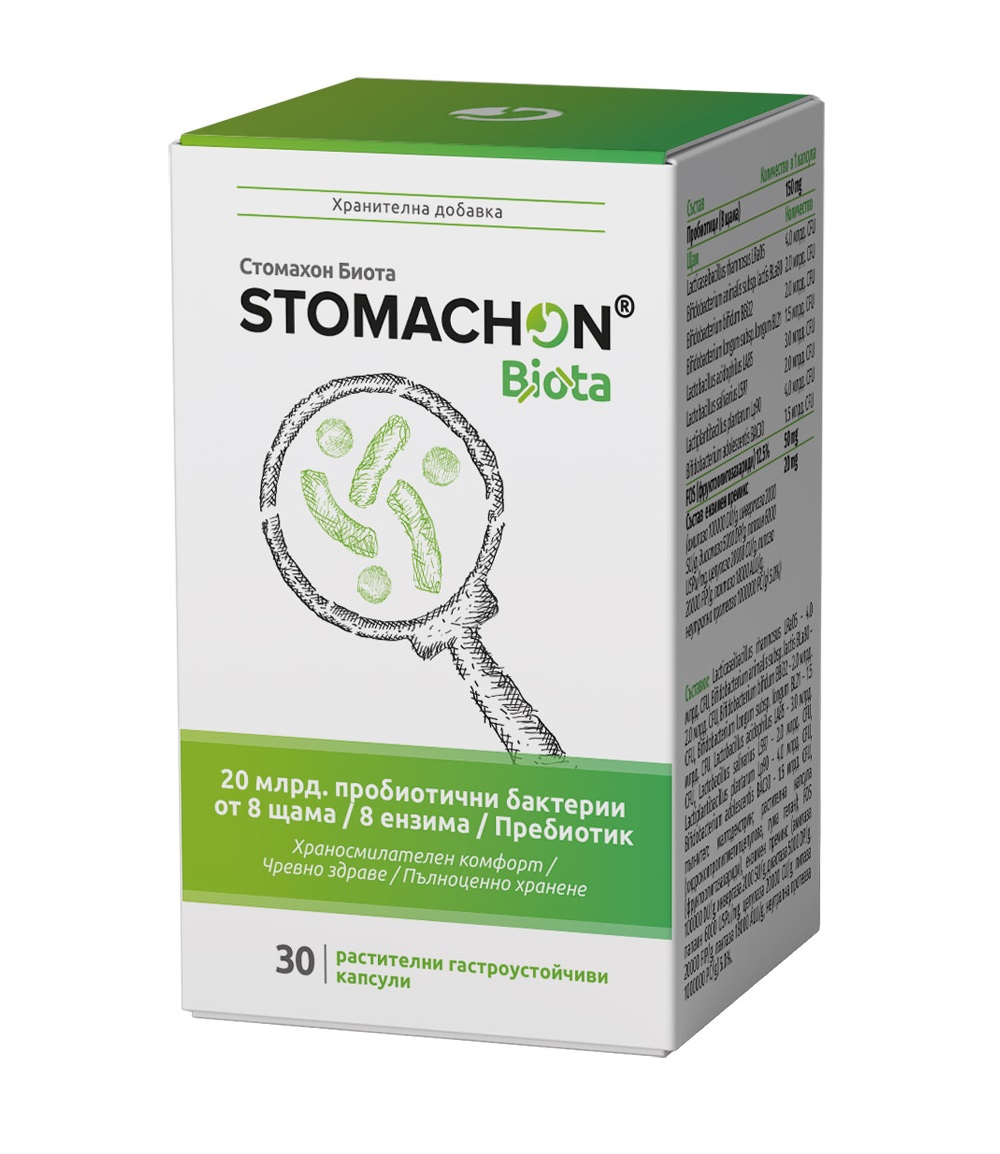
NATURPHARMA STOMACHON BIOTA probiotics x 30 caps
13.79 €
Add to Favourites
NATURPHARMA STOMACHON BIOTA probiotics x 30 caps
Stomahon Biota synbiotic with enzymes gastrointestinal health and balanced microbiome 30 capsules
20 billion live bacteria I 8 probiotic strains I 8 digestive enzymes I 1 prebiotic for
Digestive comfort
· Gastrointestinal health
· Complete nutrition
Stomahon Biota is a synergistic formula with 20 billion live probiotic bacteria from 8 strains, supplemented with a premix of 8 digestive enzymes and a fructooligosaccharide prebiotic to support good intestinal health, reliable digestive function, gastrointestinal comfort, and complete nutrition.
Stomahon Biota is in a special capsule with an enteric coating, which protects the beneficial microorganisms from stomach acid and ensures their survival to the intestines. The probiotic strains are additionally protected with microcapsule technology, ensuring their even higher resistance.
Composition
Probiotics: 150 mg
Strain
Quantity
Lacticaseibacillus rhamnosus LRa05
4.0 billion CFU
Bifidobacterium animalis subsp. lactis BLa80
2.0 billion CFU
Bifidobacterium bifidum BBi32
2.0 billion CFU
Bifidobacterium longum subsp. longum BL21
1.5 billion CFU
Lactobacillus acidophilus LA85
3.0 billion CFU
Lactobacillus salivarius LS97
2.0 billion CFU
Lactiplantibacillus plantarum Lp90
4.0 billion CFU
Bifidobacterium adolescentis BAC30
1.5 billion CFU
FOS (fructooligosaccharides) 12.5%: 50 mg
Enzyme premix (amylase 100000 DU/g, invertase 2000 SU/g, diastase 5000 DP/g, papain 6000 USPu/mg, cellulase 20000 CU/g, lipase 20000 FIP/g, lactase 18000 ALU/g, neutral protease 1000000 PC/g) 5.0%): 20 mg,
Maltodextrin 45.0%: 180 mg
Does not contain GMOs.
Recommended dosage:
Take 1 capsule of Stomahon Biota daily.
Packaging: 30 capsules of 500 mg
Learn more about the active ingredients in Stomahon Biota
Gut health and microbiological balance are fundamental to digestive function and overall human well-being. It is well known that 70–80% of the immune system cells are located in the gut and that the gastrointestinal tract and its flora are in continuous two-way communication with the central nervous system, also known as the gut-brain axis.
Imbalances in the gut microbiota and deficiencies in digestive enzymes can lead to impaired nutrient absorption, gas, abdominal pain and bloating, constipation, and diarrhea. Left untreated, these problems often worsen and are a major contributor to the global burden of disease. Digestive disorders are currently the 13th leading cause of years of life lost due to disability and premature mortality, with a rising trend (Wang et al., 2023).
This is why maintaining good intestinal health and promptly addressing troubling gastrointestinal symptoms is important not only for improving immediate comfort, but also for long-term health and quality of life.
Lacticaseibacillus rhamnosus LRa05 modulates the microbiome, reduces a number of inflammatory markers, and promotes the clearance of H. pylori, as well as alleviates the negative effects of antibiotic therapy (Zhang et al., 2024; Huang et al., 2024). Its intake leads to increased synthesis of short-chain fatty acids and normalization of intestinal motility (Wang et al., 2023).
Short-chain fatty acids are natural metabolites produced by intestinal bacteria through fermentation of prebiotic fibers and are considered a key biomarker for the effectiveness of probiotics and prebiotics. They are involved in maintaining intestinal acidity, strengthening the intestinal barrier, regulating the immune response, and exerting systemic effects on metabolism and inflammation. Their increased synthesis is associated with the relief of symptoms such as bloating, gas, constipation, and irritation (Koh et al., 2016; Ríos-Covián et al., 2016).
Bifidobacterium animalis subsp. lactis BLa80 significantly improved sleep quality and microbiota in a clinically controlled study in healthy adults and increased the secretion of GABA, an important neurotransmitter associated with sleep, calmness and good mood (Liu et al., 2025). In various experimental conditions, it accelerated intestinal peristalsis, stimulated defecation and significantly improved symptoms of chronic constipation (Salo et al., 2024; Zhang et al., 2025).
Bifidobacterium bifidum supports intestinal mucosal barrier function and short-chain fatty acid production, suggesting a potential role in the management of inflammatory bowel conditions (Al-Sadi et al., 2021). Other studies have found benefits for liver health due to their antioxidant effects on hepatocytes and support for NK cell function (Qin et al., 2024; Bu et al., 2024; Xu et al., 2024).
Bifidobacterium longum subsp. longum BL21 is a probiotic strain with potential benefits for metabolic and reproductive health, studied for its ability to modulate the gut microbiome, high antioxidant capacity, and positive effect on metabolic parameters, especially in overweight and obese patients (Hao et al., 2021; Dong et al., 2025; Wang et al., 2025).
Lactobacillus acidophilus LA85 positively modulates the balance of the intestinal microflora and promotes the development of other species with a beneficial effect, reducing the abundance of opportunistic pathogens such as Escherichia and Shigella (Xue et al., 2022; Han et al., 2023).
Clinical trials show that its intake can reduce the frequency and duration of antibiotic-associated diarrhea, improve stool consistency and gastrointestinal comfort (Zhu et al., 2025).
Lactobacillus salivarius LS97 is known for its ability to inhibit the growth of bacteria with negative health effects, especially streptococci. It is being studied for its potential benefits for oral and dental health (Fang et al., 2022). The species has demonstrated a good ability to colonize the gastrointestinal tract, produce bacteriocins (peptides with antimicrobial properties) and modulate the immune system (Messaoudi et al, 2013).
Lactiplantibacillus plantarum is a type of probiotic bacteria that, in experimental conditions, improves blood sugar control (Oh et al., 2021), immune regulation and inflammation (Zhao et al., 2021), sleep quality and mental health (Ho et al., 2021; Lew et al., 2019; Chong et al., 2019), body composition and sports performance (Huang et al., 2019), as well as intestinal health (Krag et al., 2013; Yang et al., 2021).
These effects are likely due, at least in part, to their ability to modulate the microbiota, counteract pathogenic microorganisms, improve gut barrier function, inflammation levels and immune response, and produce beneficial bioactive molecules (Garcia-Gonzalez et al., 2021).
Bifidobacterium adolescentis is one of the representatives of healthy intestinal flora in adulthood, but its numbers decrease with age, with the exception of some centenarians. Depletion of the species is typical of dysbiosis and is observed in conditions such as inflammatory bowel disease, irritable bowel syndrome and celiac disease, as well as in some types of allergies, diabetes, metabolic syndrome, liver diseases and after antibiotic treatment.
Sufficient B. adolescentis in the body favors the intestinal barrier and immunoregulatory response. A number of studies have shown a positive effect of probiotics on symptoms of intestinal inflammation, allergies, metabolic and liver disorders, and mental health (Leser & Baker, 2023)
Fructooligosaccharides (FOS) are a type of carbohydrate that is naturally found in many fruits and vegetables. They are often used as a low-calorie sweetener, but even more important are their prebiotic properties and their benefits for gut health by stimulating the growth of beneficial bacteria in the colon.
FOS are a substrate for the production of short-chain fatty acids, which in turn can modulate cholesterol levels, support the barrier functions of the intestinal mucosa, and positively affect the symptoms of functional digestive disorders.
Amylase is one of the main enzymes responsible for the digestion of starch. It is so important that it is produced in two places in the body - in the mouth (as part of saliva) and in the pancreas (as part of pancreatic juice).
Diastase was the first enzyme known to science. It is a type of amylase, also known as "alpha-amylase", and is also found in saliva and pancreatic juices, as well as in honey, where it plays an important role in the digestion of carbohydrates. Its main function is to break down starch molecules into smaller, more digestible compounds such as maltose and maltotriose.
Invertase is an enzyme that catalyzes the breakdown of table sugar, also known as "sucrose", into its constituent monosaccharides glucose and fructose.
A protease (also known as a proteolytic enzyme, peptidase, or proteinase) is an enzyme that specializes in breaking down proteins. Proteases come in many different types and are involved in a number of important biological functions – digestion, the breakdown and recycling of old proteins in the body, cell signaling, and more.
Papain is a powerful digestive enzyme found naturally in the fruit, stem, and leaves of the papaya (Carica papaya). Also called papaya proteinase, it can break down not only proteins but also starches and fats. For this reason, in Latin America, papaya is a preferred digestive and a key ingredient in meat tenderizing marinades.
Lactase helps break down milk sugar, also known as lactose. Because lactose is found primarily in milk, lactase production in mammals declines with age. Humans are no exception to this rule, and as a result, many of us suffer from what is known as hypolactasia, a condition known as lactose intolerance or malabsorption. It is estimated that 65%–75% of the world’s population suffers from lactose intolerance, which manifests itself in a number of unpleasant symptoms, such as abdominal pain, severe intestinal rumbling, nausea, bloating, gas, and diarrhea.
Lipase is a digestive enzyme that is responsible for breaking down fats and “unlocking” the important fat-soluble substances they contain, such as vitamins A, D, E, and K. Taking lipase before a high-fat meal significantly reduces the symptoms of indigestion – a feeling of overeating, gas, bloating, and nausea (Levine, ME, et al., 2015).
Cellulase is responsible for the breakdown of cellulose, a complex carbohydrate found in all green plants and the husks of cereals. Our digestive tracts are much shorter than those of herbivores, making us much less suited to dealing with large volumes of plant food, the intake of which is beneficial for health, but is often accompanied by adverse symptoms such as pain, gas, and a feeling of bloating and heaviness in the abdomen.
Contraindications: Do not use during pregnancy, breastfeeding. Do not use in case of hypersensitivity to any of the ingredients.
Warnings: Do not exceed the recommended daily dose. Do not use the food supplement as a substitute for a varied diet. Keep out of the reach of small children.
Storage conditions: Store in a cool, dry place, away from direct light.
Manufacturer: PK Benelux BV, The Netherlands, Vluchtoord 17, 5406 XP Uden
Distributor: "Naturpharma Bulgaria" EOOD, Sofia, 21 Yanko Sofiyski Str., tel. +3599633359, [email protected]
Express Delivery (within 2 hours)
- Valid only for the city of Sofia
- Valid only for orders over €25.56 | 50.00 BGN
- Valid only for cash on delivery (cash or card payment upon receipt)
Delivery to a Pharmacy
- Completed within up to 2 business days
- Valid for Sofia, Bozhurishte, and Mramor
- Free delivery
- Valid only for online payment
Courier Delivery to an Address
- Completed within up to 3 business days
- €2.30 | 4.50 BGN for orders under €25.56 | 50.00 BGN
- Free for orders over €25.56 | 50.00 BGN
Delivery to a Speedy Office
- Completed within up to 3 business days
- €2.30 | 4.50 BGN for orders under €25.56 | 50.00 BGN
- Free for orders over €25.56 | 50.00 BGN
BOX NOW
- Completed within up to 3 business days
- €1.53 | 2.99 BGN for orders under €25.56 | 50.00 BGN
- Free delivery for orders over €25.56 | 50.00 BGN
* Delivery times may change during large-scale campaigns and busy periods (Black Friday, public holidays, etc.).
* When ordering to a Speedy office, the customer has 5 business days from the delivery date to collect their order. After this period, the order is canceled and returned to the warehouse at subra.bg.

Express delivery for Sofia city Learn more

Free shippingover 50.00 lv / 25.56 €

Click and collect Learn more

Check the shipment Learn more
Book and collect from pharmacy
Availability in store
NATURPHARMA STOMACHON BIOTA probiotics x 30 caps
Please add your email, to receive notification when the product is in stock