


 Click & collect
Ще се изтрие най-старият артикул от любими и ще се добави новият
In stock
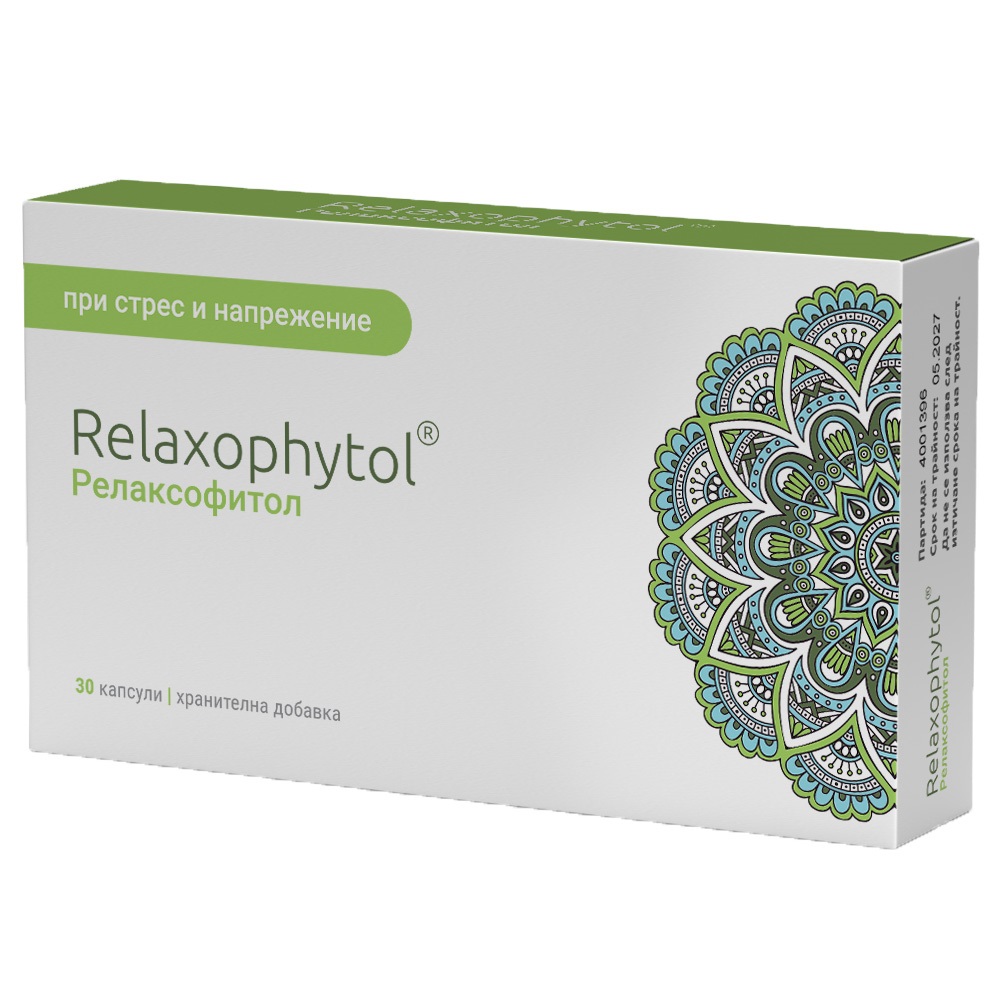
NATURPHARMA RELAXOPHYTOL for a healthy nervous system x 30 caps
14.99 €
Add to Favourites
NATURPHARMA RELAXOPHYTOL for a healthy nervous system x 30 caps
Purpose:
Relaxophytol capsules from Naturpharma are an innovative solution with natural ingredients for the good condition of the nerves and psyche, which are systematically affected by stress, anxiety, nervous tension, depressive states and disturbed sleep.
Relaxophytol contains lemon balm, which helps maintain mental well-being and restful sleep, as well as vitamin B6, which contributes to reducing fatigue and tiredness, proper functioning of the nervous system and normal psyche.
Tryptophan is a raw material for the production of serotonin, which is involved in mood regulation and is key to mental health. Magnesium supports normal muscle relaxation, and low levels are associated with a higher susceptibility to stress disorders.
Ingredients (in 2 capsules)
Trimagnesium dicitrate
812.5 mg
from which magnesium
130 mg
Lemon balm (Melissa officinalis), extract
600 mg
of which rosmarinic acid
66 mg
and hydroxycinnamic acid
117 mg
L-tryptophan
70 mg
Pyridoxine hydrochloride
13,414 mg
from which vitamin B6
10 mg
Other ingredients: vegetable microcrystalline cellulose (bulking agent), magnesium stearate (emulsifier).
Allergen and GMO free.
Recommended dosage:
Take 2 capsules of Relaxofitol daily. The recommended dosage is 1 capsule at lunch, about an hour after a meal, and 1 capsule at night before bed.
Duration of reception:
15 – 30 days to achieve an initial effect and 30 – 90 days for a lasting effect.
Packaging: 30 capsules, enough for a 15-day supply
Do not use simultaneously or in parallel with antidepressants and/or sedatives. Do not use during pregnancy, breastfeeding and by children under 12 years of age. Do not use in case of hypersensitivity to any of the ingredients. The product is a food supplement. Do not exceed the recommended daily dose. The product is not a substitute for a varied diet. Store out of the reach of small children. Do not use after the expiration date. Storage: In a dark and dry place at a temperature of 15–25°C. Due to the natural nature of the ingredients, a variation or change in color is possible, which should not be a cause for concern.
This product contains natural ingredients, therefore there may be variation or change in the color of the capsules, which should not be a cause for concern.
Manufacturer: Goerlich Pharma GmbH, Am Gewerbering 4/6, 83533 Edling/Germany
Distributor: Naturpharma Bulgaria EOOD, Sofia, 21 Yanko Sofiyski Str., tel: +35929633359, [email protected]
Learn more about the active ingredients in Relaxofytol capsules
Lemon balm (Melissa officinalis L.)
Numerous clinical trials have confirmed the ability of lemon balm to affect depressive symptoms. The most recent analysis of published data found that daily use of an extract of the herb significantly improved psychosomatic symptoms, sleep disturbance, anxiety, depression, and impairments in social functioning (Ghazizadeh et al., 2021).
Oral administration of lemon balm is also beneficial in stressful episodes. One study demonstrated that a single dose of the plant extract was sufficient to increase calmness and alertness in a stressful situation (Kennedy et al., 2004). Another experiment also used lemon balm extract secretly added to the participants' food. The effect was improved memory and alertness in a mental stress test (Scholey et al., 2014).
The effect of lemon balm on sleep is interesting, especially in conditions of depression, anxiety, and stress. Several studies have investigated this effect and found that the herb improves sleep quality (Haybaret al., 2018; Soltanpour et al., 2019; Bano et al. 2023) and sleep duration (Aliakbari & Rafieian-Kopaei, 2018), reduces insomnia (Cases et al., 2011; Alijaniha et al., 2015) and time to fall asleep (Aliakbari & Rafieian-Kopaei, 2018), with the presumed mechanism of action being through anxiety reduction.
L-tryptophan
L-tryptophan is an essential amino acid that is involved in the synthesis of proteins and signaling molecules in the brain. The body uses L-tryptophan to produce serotonin, and lower tryptophan intake and reduced levels in the body are associated with a higher risk of depression (Lieberman et al, 2016; Maes et al, 1996).
Several studies have shown that increasing intake of the amino acid through diet or supplementation may play a role in the management of mood disorders. Adding tryptophan to the diet has been associated with a lower risk of depression, anxiety, and irritability (Shaw, Turner & Del Mar, 2002; Sarris et al, 2016; Lindseth, Helland & Caspers, 2015).
Vitamin B6
Pyridoxine or vitamin B6 is involved in the synthesis and function of brain chemicals important for mental well-being and sleep, such as dopamine (Delitala, et al., 1976), serotonin (Sharma & Dakshinamurti, 1994), and gamma-aminobutyric acid (GABA) (Holtz & Palm, 1964; Martin, 1987), and its deficiency is associated with decreased serotonin levels (Sharma & Dakshinamurti, 1994).
In 2017, vitamin B6 was found to reduce nervous excitability (Smith et al., 2017), and has a beneficial effect on symptoms of anxiety and depression (Field et al., 2022). Other studies have found that pyridoxine supplementation helps reduce nervous tension, mood swings, irritability, and anxiety in premenopausal women (De Souza et al., 2000).
Vitamin B6 levels in the body are likely associated with the risk of depression, as evidenced by a recent meta-analysis of the literature, which found that populations with the highest vitamin B6 intake had a 19% lower risk of depression (Wu et al., 2021).
Magnesium
Magnesium is the fourth most abundant mineral in the body and is deeply involved in the functioning of stress-responsive systems. It is crucial for the balance of neurotransmitters and the activity of their receptors in the brain, thereby exerting a regulatory effect on the nervous system and psyche. Low levels of the mineral can increase susceptibility to stress and the risk of stressful conditions, and high levels of stress can deplete magnesium stores in the body (Cuciureanu & Vink, 2011).
Insufficient magnesium intake is associated with a higher risk of depression (Tarleton & Littenberg, 2015), and current evidence is encouraging that supplemental magnesium intake has a positive effect on depressive symptoms (Moabedi, 2023).
Magnesium is essential for muscle function and contributes to muscle relaxation. On the other hand, its deficiency can cause or worsen muscle tension - one of the main manifestations of stress in modern people.
Due to these and a number of other established properties of the mineral, it is increasingly mentioned in the scientific literature as a potential nutritional factor in the management of anxiety, stress, and other mental disorders (Boyle, Lawton & Dye, 2017; Botturi et al., 2020).
Express Delivery (within 2 hours)
- Valid only for the city of Sofia
- Valid only for orders over €25.56 | 50.00 BGN
- Valid only for cash on delivery (cash or card payment upon receipt)
Delivery to a Pharmacy
- Completed within up to 2 business days
- Valid for Sofia, Bozhurishte, and Mramor
- Free delivery
- Valid only for online payment
Courier Delivery to an Address
- Completed within up to 3 business days
- €2.30 | 4.50 BGN for orders under €25.56 | 50.00 BGN
- Free for orders over €25.56 | 50.00 BGN
Delivery to a Speedy Office
- Completed within up to 3 business days
- €2.30 | 4.50 BGN for orders under €25.56 | 50.00 BGN
- Free for orders over €25.56 | 50.00 BGN
BOX NOW
- Completed within up to 3 business days
- €1.53 | 2.99 BGN for orders under €25.56 | 50.00 BGN
- Free delivery for orders over €25.56 | 50.00 BGN
* Delivery times may change during large-scale campaigns and busy periods (Black Friday, public holidays, etc.).
* When ordering to a Speedy office, the customer has 5 business days from the delivery date to collect their order. After this period, the order is canceled and returned to the warehouse at subra.bg.

Express delivery for Sofia city Learn more

Free shippingover 50.00 lv / 25.56 €

Click and collect Learn more

Check the shipment Learn more

Related products
Book and collect from pharmacy
Availability in store
NATURPHARMA RELAXOPHYTOL for a healthy nervous system x 30 caps
Please add your email, to receive notification when the product is in stock
More from same category
-20%
Regular price:
35.89
€
28.71
€